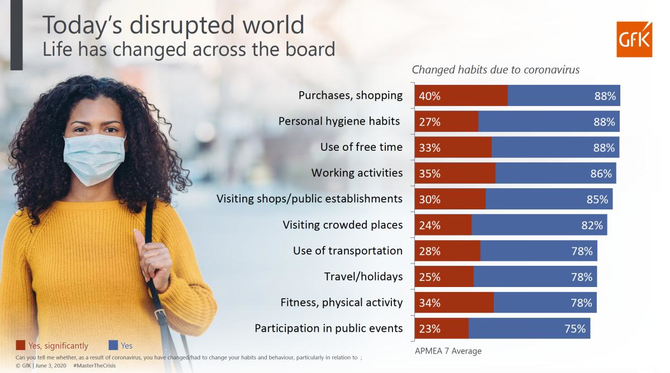
DUBAI: It is no surprise that COVID-19 has disrupted the way we live, function and work. People and businesses have had to adapt to a new normal that is constantly changing.
In this new environment, market research agency GfK conducted a study for a deeper understanding of current and future consumer behaviors, lifestyles and moods across 30 markets globally, including Saudi Arabia, Egypt and South Africa.
The study covers areas such as spending habits, media and product consumption, and travel and mobility trends.
“Consumers around the world are facing unprecedented challenges as the COVID-19 crisis continues to disrupt their employment, travel and lifestyles,” said Rahul Dixit, GfK’s head of digital research for the Middle East, North Africa and Pakistan.
“The resulting anxiety and uncertainty from these disruptions have also brought about significant adjustment to their habits and future plans. GfK’s study investigates key areas such as shopping, travel and use of online tools to gauge the impact on perceptions, mood and behaviors in various industries. These insights identify signs of disruption to brands so that opportunities and risks are seen early and managed effectively.”

Disruption can signify an opportunity for brands as 29 percent in Saudi Arabia, 24 percent in Egypt and 35 percent in South Africa report buying new brands because their usually preferred one was out of stock.
In Saudi Arabia, new practices such as home schooling and working from home led to the biggest increase in demand in the IT sector in March 2020, recording a growth in sales value by a third compared to March 2019. Media tablets led this growth with its 70 percent spike in sales value.
Mobile computing grew by nearly 20 percent in March 2020. With more time being spent at home, consumers are spending more on video game consoles, with the sector seeing a reported increase of 119 percent in sales value compared to 2019.
More time at home has also resulted in an increase in media consumption and subsequently higher exposure to advertising.
More than two-thirds (69 percent) of respondents feel that they are watching more ads now than before, and 59 percent said they are enjoying watching them.
In Asia Pacific, the Middle East and Africa, listening / streaming music online (62 percent) and online videos (61 percent) are the leading forms of entertainment as more people spend time at home.
In Saudi Arabia, 43 percent are planning to subscribe to a paid streaming service or paid apps.

This is an important time for brands to pay attention to their consumers and focus on maintaining a positive relationship rather than trying to sell.
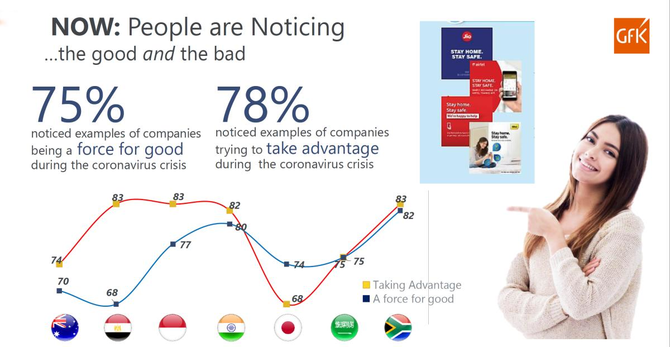
More time at home has resulted in increased media consumption, including ads. Moreover, consumers are paying attention to ads — the good and the bad.

“In a constantly evolving scenario, the impact of an increase in VAT announced recently, oil prices and politics, among other factors, add to the complexities for consideration,” said Dixit.
“Decision makers in business who have access to research will benefit from statistically sound data and will be able to move faster, more surely.”


Shopping and entertainment in the age of COVID-19


https://arab.news/6khgh
Shopping and entertainment in the age of COVID-19

- In Saudi Arabia, home schooling and working from home led to the biggest increase in demand in the IT sector in March
- 43% of participants in the Kingdom are planning to subscribe to a paid streaming service or paid apps


Ramadan recipes: Roasted seabass in a delicious tomato sauce
DUBAI: Chef Elias of Dubai’s La Maison Ani shares the recipe for a refined Mediterranean dish that highlights simplicity, balance and freshness.
Roasted seabass
2 seabass fillets
Salt and freshly ground black pepper
2 tbsp olive oil
¾ cup tomato sauce
2 tsp lemon juice
1 tbsp capers
½ small yellow courgette, thinly sliced
¼ small green courgette, thinly sliced
Fresh basil leaves
Fresh chives
Lemon zest
Sumac rice
¾ cup cooked sumac rice
Tomato sauce
2 cups diced ripe tomatoes (fresh or canned)
½ small white onion, finely diced
1 small garlic clove, minced
3 tbsp olive oil
2 bay leaves
2 tsp sugar
¾ tsp salt
½ cup water
Sumac rice
1¼ cups basmati rice
1¾ cups chicken stock
1 tsp salt
1½ tbsp sumac
3 tbsp butter
2 tsp grated garlic
Method
Seabass
Season the seabass fillets with salt and pepper. Heat olive oil in a pan over medium-high heat. Sear the fish skin-side down for 3 minutes, flip and cook for 1 minute. Transfer to a preheated oven at 180 C and bake for 5 minutes.
Courgettes
Season the sliced courgettes with salt. Sear in a hot pan for 2–3. Finish with a squeeze of lemon juice.
Tomato sauce
Heat olive oil in a saucepan over medium heat. Add onion and garlic and cook gently until soft. Add water and let it reduce. Add tomatoes, bay leaves, sugar and salt. Bring to a simmer and cook for 20–25 minutes, until thickened.
Sumac rice
Rinse rice until the water runs clear. Add rice, chicken stock and salt to a pot. Bring to a boil, reduce heat and cook for 15 minutes. Melt butter in a pan, add garlic and cook gently for 2 minutes. Stir in sumac. Fold the butter mixture through the rice gently.
To serve
Spoon warm tomato sauce onto each plate. Place the seabass on top and arrange the courgettes over the fish. Serve with sumac rice on the side.


