Lebanon to re-open Beirut international airport from July 1

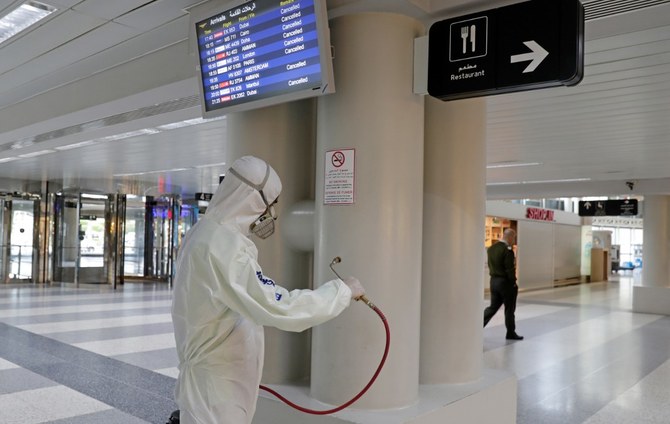
Lebanon will re-open Beirut Rafic Hariri International Airport for commercial flights beginning July 1. (File/AFP)
Short Url
Updated 12 June 2020
Follow

Lebanon to re-open Beirut international airport from July 1

  • Passengers will be tested for COVID-19 upon arrival
  • They will be obliged to practice self-isolate at home if testing positive

BEIRUT: Lebanon will re-open Beirut Rafic Hariri International Airport for commercial flights beginning July 1, but will keep air traffic at 10% of capacity from a year ago, a statement from the prime minister's office said on Friday.
Private flights will resume from June 24, the statement said.
Passengers will be tested for COVID-19 upon arrival and obliged to practice home quarantine if testing positive, it added. 


Morocco’s energy ministry puts gas pipeline project on hold

Updated 03 February 2026
Follow

Morocco’s energy ministry puts gas pipeline project on hold

  • The country’s natural gas demand is expected to rise to 8 billion cubic meters in 2027 from around ‌1 bcm currently, according to ministry estimates

RABAT: Morocco’s energy ministry said on Monday it has paused a tender launched last month ​for a gas pipeline project, without giving details on the reasons for the suspension.
The tender sought bids to build a pipeline linking a future gas terminal at the Nador West Med port ‌on the Mediterranean ‌to an existing ‌pipeline ⁠that ​allows ‌Morocco to import LNG through Spanish terminals and supply two power plants.
It also covered a section that would connect the existing pipeline to industrial zones on the Atlantic in ⁠Mohammedia and Kenitra.
“Due to new parameters and assumptions ‌related to this project... the ‍ministry of ‍energy transition and sustainable development is ‍postponing the receipt of applications and the opening of bids received as of today,” the ministry said in a statement.
Morocco ​is looking to expand its use of natural gas to diversify ⁠away from coal as it also accelerates its renewable energy plan, which aims for renewables to account for 52 percent of installed capacity by 2030, up from 45 percent now.
The country’s natural gas demand is expected to rise to 8 billion cubic meters in 2027 from around ‌1 bcm currently, according to ministry estimates.