

Conspiracy thriller ‘Utopia’: A binge-worthy TV show

The show tells the story of five fans of “The Utopia Experiments” who meet in an online forum. (Supplied)
Short Url
Updated 12 June 2020
Follow

Conspiracy thriller ‘Utopia’: A binge-worthy TV show

DUBAI: Dennis Kelly’s unique conspiracy thriller was cancelled after 12 episodes, much to the chagrin of its many fans. It’s easy to see why it wasn’t a mainstream hit — you’ll need a strong stomach to deal with its ultraviolence (directed at men, women and children alike), and a focused brain to cope with the complex and constantly twisting narrative. But the rewards are plentiful. 

For a start, “Utopia” looks gorgeous, with the kind of vivid colors and languid cinematography of a pastoral art-house movie. It’s also — despite its dense plotlines — slick and constantly engaging. And at times it’s extremely funny (so long as you enjoy dark, dark humor).
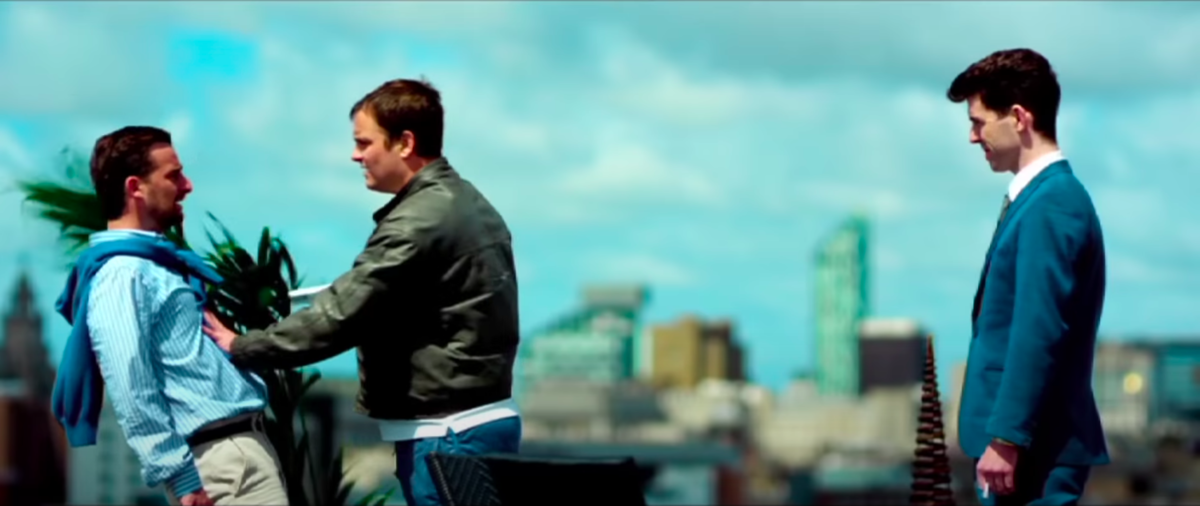


The show was cancelled after 12 episodes. (Supplied)

Five fans of “The Utopia Experiments” — a graphic novel that has garnered a cult following for having predicted global disasters (including SARS and BSE) stretching back decades — meet in an online forum. They are told an unreleased manuscript of a sequel exists. One of them gets his hands on it and arranges to meet the others — IT consultant Ian, conspiracy theorist Wilson, Welsh student Becky and tween tearaway Grant (whom the others believe to be a twenty-something city trader who drives a Porsche). The man with the manuscript never shows up, but just knowing of its existence places the other four in mortal danger from a sinister organization known only as The Network, whose two incredibly laidback hitmen, Arby and Lee, are now on their trail. 

They are quickly exposed to an underground world of blackmail, global geopolitics, genetics and eugenics, frame-ups and cover-ups, big pharma, illegal drug testing, torture and much more, with hardly anyone to help them against the seemingly omniscient, and definitely murderous, Network. 
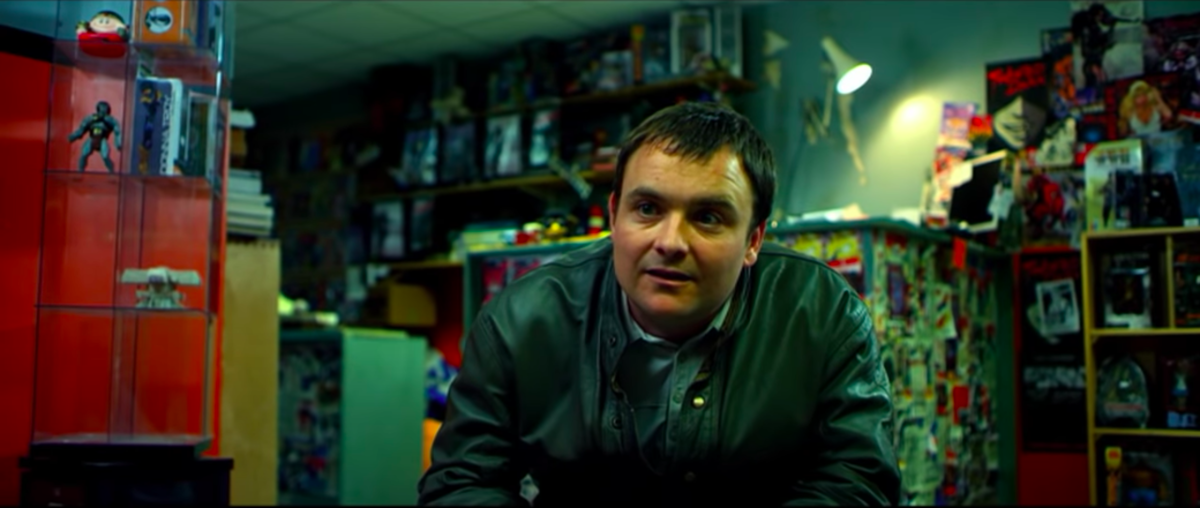


The show was released in 2013. (Supplied)

Hardly anyone. But their main ally is Jessica Hyde — the daughter of the man who wrote (and drew) “The Utopia Experiments.” She has, she informs them, been on the run from The Network since she was four years old. She knows how to survive. “Adjust or die,” she tells them. 

What begins as a fairly standard tale of good and evil morphs into something far less black and white, in which morality may be a luxury mankind cannot afford as the world heads toward disaster caused by overpopulation. 

“Utopia” isn’t for the squeamish (and definitely not for kids), but it is an outstanding dramatic thriller that is brilliantly acted, stylishly shot, and powerfully told.


Art and the deal: market slump pushes galleries to the Gulf

Updated 47 sec ago
Follow

Art and the deal: market slump pushes galleries to the Gulf

DOHA: With global sales mired in a slump, art dealers have turned to buyers in the oil-rich Gulf, where culture sector spending is on the rise.
Art Basel, which runs elite fairs in Miami, Hong Kong, Paris and Switzerland, held its Gulf debut in Qatar earlier this month.
“The second you land here, you see the ambition. It’s basically the future,” Andisheh Avini, a senior director at New York-based Gagosian Gallery, told AFP at the Doha fair.
“We see a lot of potential in this region and in Qatar,” Avini said, explaining it was “extremely important” for galleries to be exploring new consumer and collector bases.
“That’s why we’re here. And with patience and a long view, I think this is going to be a great hub,” he added.
A 2025 report on the global art market by Art Basel and the Swiss bank UBS showed sales fell across traditional centers in Europe and North America in the previous year.
Economic volatility and geopolitical tensions have weighed on demand, meaning global art market sales reached an estimated $57.5 billion in 2024 — a 12 percent year-on-year decline, the report said.
“The value of sales has ratcheted down for the past two years now, and I do think we’re at a bit of a turning point in terms of confidence and activity in the market,” Art Basel’s chief executive Noah Horowitz told AFP in Doha.

’Time was right’

“Looking at developments in the global art world, we felt the time was right to enter the (Middle East, North Africa and South Asia) region,” he added.
Gulf states have poured billions into museums and cultural development to diversify their economies away from oil and gas and boost tourism.
In 2021, Abu Dhabi, home to the only foreign branch of the Louvre, announced a five-year plan for $6 billion in investments in its culture and creative industries.
Doha has established the National Museum of Qatar and the Museum of Islamic Art. The gas-rich country’s museums authority has in the past reported an annual budget of roughly $1 billion a year to spend on art.
Last year, Saudi Arabia announced that cultural investments in the Kingdom have exceeded $21.6 billion since 2016.
Gagosian had selected early works by Bulgarian artist Christo to feature at Art Basel Qatar.
Best known for large-scale works with his French partner Jeanne-Claude, like the wrapping of Paris’s Arc de Triomphe in 2021, Berlin’s Reichstag in 1995 and Pont Neuf in 1985, the Doha fair exhibited smaller wrapped sculptures.
Avini said the works had sparked curiosity from an “interesting mix” of individuals and potential buyers.
“Of course, you have the Qataris. You’re meeting other dealers, for instance, from Saudi and other parts of the region,” he said.
Among the Christo works were “Wrapped Oil Barrels,” created between 1958-61 shortly after the artist fled communist Bulgaria for Paris.

‘Turn of the cycle’

The barrels — bound tightly with rope, their fabric skins stiffened and darkened with lacquer — inevitably recall the Gulf’s vast hydrocarbon wealth.
But Vladimir Yavachev, Christo’s nephew and now director for the artists’ estate following their deaths, said the barrels were not developed with “any connotation to the oil industry or criticism.”
“He really liked the proportion of this very simple, everyday object,” Yavachev said. “It was really about the aesthetics of the piece,” he added.
Horowitz said there had been an “evolution that we’ve seen through the growth of the market in Asia and here now in the Middle East.”
“With each turn of the cycle in our industry... we’ve seen new audiences come to the table and new content,” he added.
Hazem Harb, a Palestinian artist living between the UAE and Italy, praised Art Basel Qatar for its range of “international artists, so many concepts, so many subjects.”
Among Harb’s works at the fair were piles of old keys reminiscent of those carried during the “Nakba” in 1948, when around 760,000 Palestinians fled or were forced from their homes.
Next to them was a pile of newer keys — 3D-printed replicas of the key to Harb’s own apartment in Gaza, destroyed in the recent war.
In the Gulf and beyond, Harb said he thought there was a “revolution” happening in Arab art “from Cairo to Beirut to Baghdad to Kuwait... there is a new era, about culture, about art.”