Iran told the UN’s aviation agency on Wednesday that it would send black boxes from a downed Ukrainian jetliner to Paris for analysis, once countries involved in the investigation agree, two sources familiar with the matter said.
The other countries involved are Ukraine, Canada and the United States. Canada previously pressed Iran to send the black boxes to France for analysis.
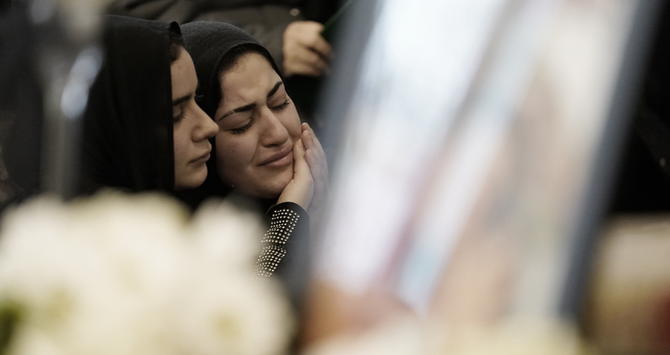
Iran has refused to hand over the flight recorders from the Ukraine International Airlines flight, which was shot down on Jan. 8 near Tehran by an Iranian surface-to-air missile, killing 176 people including 55 Canadian citizens and 30 permanent residents.
In March, Iran told the UN’s aviation agency that it would send the black boxes to Ukraine.
But on Wednesday, a representative from Iran told a virtual meeting of the agency’s governing council that Tehran would now send the heavily damaged recorders to France’s BEA air accident investigation agency.
“Iran said they will send them to Paris soon subject to agreement of the states involved in the investigation,” said one of the sources who spoke on condition of anonymity.
Iranian officials were not immediately available for comment. A spokeswoman for Canadian Transport Minister Marc Garneau declined to comment on discussion of the boxes being sent to Paris.
“Iran made a commitment in March. They showed an openness to transferring the black boxes but we want to see concrete action on their part to see it through,” she said.
Under UN rules, Iran retains overall control of the investigation while the United States and Ukraine are accredited as the countries where the jet was respectively built and operated. Canada has also played a role as the home of many of the accident’s victims. (Reporting By Allison Lampert; Editing by Cynthia Osterman)

Iran says will now send Ukraine airliner black boxes to Paris
Short Url
https://arab.news/b2v3w
Iran says will now send Ukraine airliner black boxes to Paris
- Tehran would now send the heavily damaged recorders to France’s BEA air accident investigation agency
- The plane was shot down on Jan. 8 near Tehran by an Iranian surface-to-air missile
UN force says Israel fired near peacekeepers in south Lebanon
- UNIFIL reports two incidents of gunfire hitting 50 meters away from its patrols
- The force has been working with Lebanon’s army to support a ceasefire between Israel and Hezbollah
BEIRUT: The United Nations Interim Force in Lebanon said gunfire from an Israeli position hit close to its peacekeepers twice on Friday, reporting no casualties but decrying a “concerning trend.”
UNIFIL has repeatedly reported Israeli fire near or toward its personnel in recent months, and last week said an Israeli attack near one of its positions lightly wounded a peacekeeper.
Personnel patrolling in south Lebanon on Friday “reported 15 rounds of small arms fire that struck no more than 50 meters away from them,” a UNIFIL statement said.
Shortly afterwards, “peacekeepers in a second patrol in the same area reported approximately 100 rounds of machine-gun fire struck approximately 50 meters from them,” it added, reporting no damage or injuries.
“Peacekeepers assessed that the fire came from an Israel Defense Forces (IDF) position south of the Blue Line in both cases,” the statement said, referring to the de facto border, and “sent a ‘stop fire’ request through its liaison channels.”
It said UNIFIL had informed the Israeli army about the peacekeepers’ activities in advance.
“Incidents like these are happening on a too-regular basis, and becoming a concerning trend,” the statement said.
“We reiterate our call to the IDF to cease aggressive behavior and attacks on or near peacekeepers working for peace and stability along the Blue Line.”
UNIFIL has acted as a buffer between Israel and Lebanon for decades, and recently has been working with Lebanon’s army to support a year-old ceasefire between Israel and militant group Hezbollah.
The force on Friday noted that “attacks on or near peacekeepers are serious violations” of a 2006 UN Security Council resolution that formed the basis of the current ceasefire.
Under the November 2024 truce, Israel was to withdraw its forces from south Lebanon, but it has kept them at five areas it deems strategic and carries out regular strikes on Lebanon, usually saying it is targeting Hezbollah sites and operatives.
Under heavy US pressure and fears of expanded Israeli strikes, Lebanon has committed to disarming Hezbollah, starting in the south near the frontier.
Last August, the UN Security Council voted for the peacekeepers to leave Lebanon in 2027.
UNIFIL has repeatedly reported Israeli fire near or toward its personnel in recent months, and last week said an Israeli attack near one of its positions lightly wounded a peacekeeper.
Personnel patrolling in south Lebanon on Friday “reported 15 rounds of small arms fire that struck no more than 50 meters away from them,” a UNIFIL statement said.
Shortly afterwards, “peacekeepers in a second patrol in the same area reported approximately 100 rounds of machine-gun fire struck approximately 50 meters from them,” it added, reporting no damage or injuries.
“Peacekeepers assessed that the fire came from an Israel Defense Forces (IDF) position south of the Blue Line in both cases,” the statement said, referring to the de facto border, and “sent a ‘stop fire’ request through its liaison channels.”
It said UNIFIL had informed the Israeli army about the peacekeepers’ activities in advance.
“Incidents like these are happening on a too-regular basis, and becoming a concerning trend,” the statement said.
“We reiterate our call to the IDF to cease aggressive behavior and attacks on or near peacekeepers working for peace and stability along the Blue Line.”
UNIFIL has acted as a buffer between Israel and Lebanon for decades, and recently has been working with Lebanon’s army to support a year-old ceasefire between Israel and militant group Hezbollah.
The force on Friday noted that “attacks on or near peacekeepers are serious violations” of a 2006 UN Security Council resolution that formed the basis of the current ceasefire.
Under the November 2024 truce, Israel was to withdraw its forces from south Lebanon, but it has kept them at five areas it deems strategic and carries out regular strikes on Lebanon, usually saying it is targeting Hezbollah sites and operatives.
Under heavy US pressure and fears of expanded Israeli strikes, Lebanon has committed to disarming Hezbollah, starting in the south near the frontier.
Last August, the UN Security Council voted for the peacekeepers to leave Lebanon in 2027.
© 2026 SAUDI RESEARCH & PUBLISHING COMPANY, All Rights Reserved And subject to Terms of Use Agreement.



