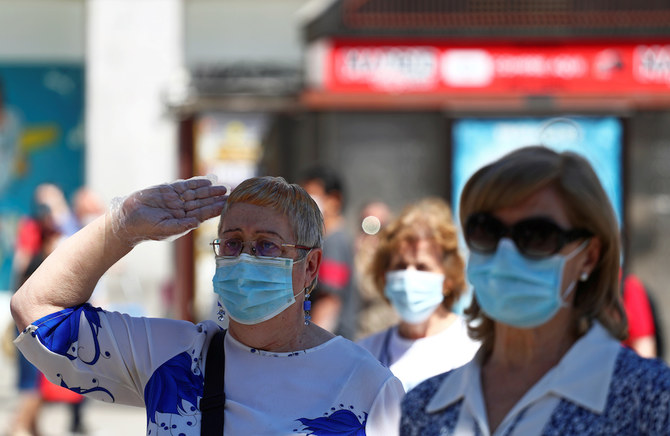


MADRID: A third of the world’s population, around 2.6 billion people, have been forced to live under some kind of lockdown or quarantine to stop the spread of the coronavirus disease (COVID-19). The confinement is having multiple effects, including financial and social, but less visible is the psychological toll.
The lockdown is affecting our mental wellbeing in one way or another, varying depending on factors like age, gender or pre-existing states, just like COVID-19 itself affects different patients.
In Spain, 47 million people had to be confined at home for almost 3 months since the state of emergency was announced by the government. Professionals in the psychology sector subsequently found there were common reactions felt by people confined to their homes.
#WATCH: @Mouna_ElHaimoud reports from Madrid on the impact of the #CoronavirusLockdown on mental health in Spainhttps://t.co/NfNsGmnyTr pic.twitter.com/36YNanjtIV
— Arab News (@arabnews) June 7, 2020
“The most common reaction we observed in this time of confinement has to do with the emotion of fear, which is logical and normal to feel, taking into consideration the exceptional circumstances in which we are living,” said the psychologist, Dr. Amin El Imami. “Fear is a primary feeling which is accompanied many times by reactions of anxiety and uncertainty. The majority of people will overcome these symptoms once everything gets back to the new normal; it is recommended that these people adapt as soon as possible, while taking the necessary health precautions.”
Dr. Ignacio Hernandez, another psychologist, added: “Some people suffering from fear are also afraid to leave the house even when lockdown is over, they are afraid of contagion, or of infecting others.”
The pandemic as a whole is also leaving a psychological impact on some groups more than others. “Health care staff suffer more stress than any other group as they are exposed to pressure and anxiety on a daily basis battling COVID-19 on the front line,” Hernandez added. “The amount of stress has been excessive, especially at the beginning of the pandemic with thousands of cases increasing by the day.”
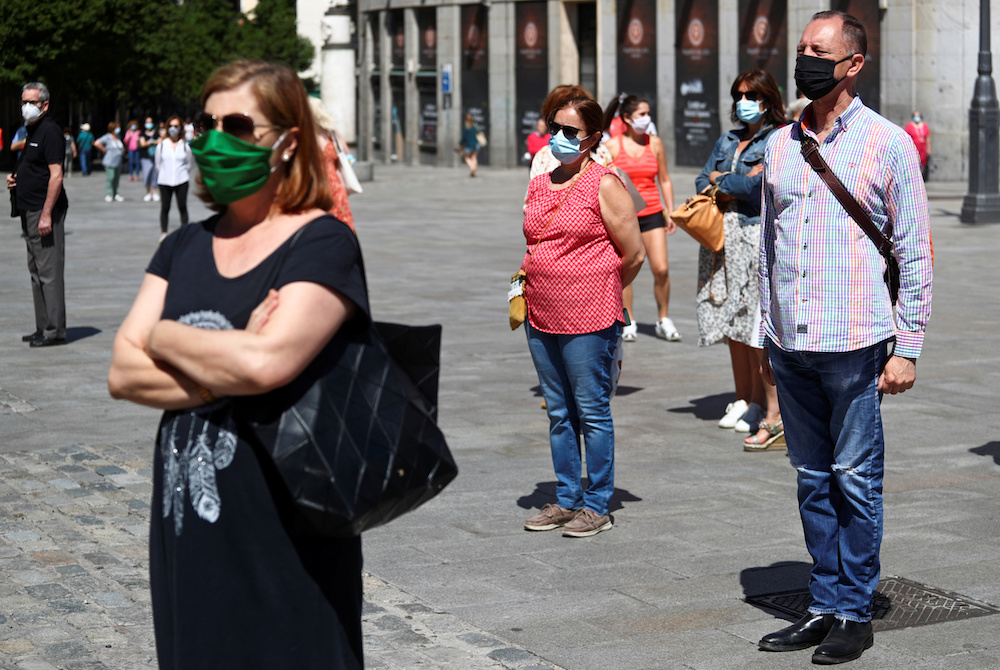
People wearing protective face masks hold a minute of silence during the last day of the official ten-day mourning of those who died of the coronavirus disease (COVID-19), at Puerta del Sol square in Madrid, Spain. (File/Reuters)
The financial factor due to the pandemic is also leaving a psychological impact on people. “Families who lost their jobs or had to close their business because of the health crisis are living in uncertain financial situation which is adding more stress to their lives,” said Hernandez.
It is important to get professional help to get back to normal and recover mental wellbeing when experiencing stress over a long period. “It is crucial to let all those feelings out, allow people to feel all these different emotions, to be heard, and share empathy. Ask for professional help when needed,” Hernandez added.
There are several programs to help people resolve stress. María del Mar Hidalgo and Natalia Jiménez are professional life coaches, with Jiménez a trained psychologist. They run a workshop together for parents, children, teachers and schools as well as for corporate clients, where they discuss different topics to help overcome problems due to coexistence during confinement, such as conflict, stress, trust, learning how to listen and how to let go.

Customers queue outside a sportswear and equipment store during the coronavirus outbreak in Barcelona, Spain. (File/AP)
“(Our program) ‘Parents 8.5’ is an online program that aims to strengthen family relationships, especially between parents and children during confinement with unresolved issues within the family and communication problems, which is a challenge for the whole family,” said Hidalgo.
“People are feeling stressed and depressed because of these situations; they don’t know how to keep going which make them feel frustrated. They need to be heard, have more constructive and fun conversations, enjoy more family time and learn to know each other better,” added Jiménez.
Even when the lockdown is over and we are back to normal life, some people will still have emotional scars, and post-traumatic stress disorder. In order to recover and cope with this, Hernandez says: “We need to work individually and collectively to avoid permanent traumas. We need to see this as an opportunity to learn and get conclusions that will help us in life. It is very important to cry, scream all we need, and ask for help and not to let any feelings (stay) inside. We all should help ourselves and others on the way and try to live in the present.”