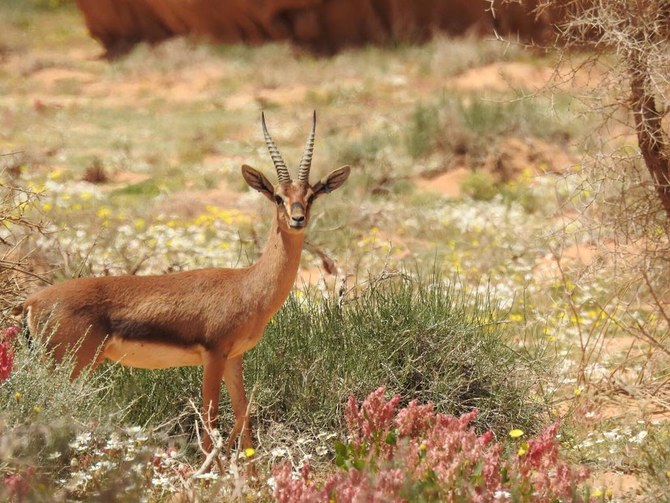
JEDDAH: The first generation of native-born gazelles have taken their first wobbly steps within the mountains of Saudi Arabia’s AlUla region.
The Royal Commission for AlUla (RCU) aims to restore the region’s ecosystem and conserve its natural heritage by reintroducing threatened species in the Sharaan Nature Reserve.
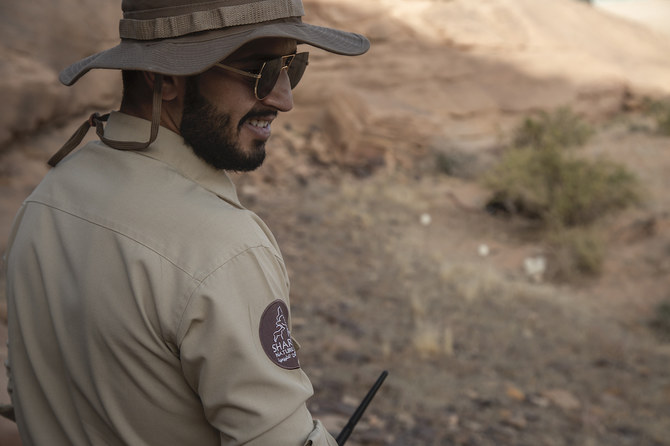
Frank Rietkerk, Captive Breeding Manager at the RCU, said the moment was the first successful steps of the re-wilding of the AlUla region after decades of over-grazing and other human activity that had destabilized the fragile environment.
“We’re delighted with this first generation of native-born gazelles here,” Rietkerk said, “signifying very early steps towards the potential re-birth of Sharaan as a complete, fully-functioning eco-system as it once was hundreds of years ago.
“We’re still in the first stages, but we’ve had some crucial early successes, this new generation of gazelles, of course, but also re-establishing the vegetation they need to survive.”
The Sharaan area has been designated by RCU as a nature reserve due to its extensive geological, topographical and environmental features. Its landscape is raw and untouched, with spectacular rock formations towering over flora, fauna, and visitors alike.
But the development of Sharaan as a nature reserve is about more than supporting the gazelles, it also means restoring the complete ecosystem with a view to eventually reintroducing the elusive and critically endangered Arabian leopard.
“We believe that the Arabian leopard was once well-established here as one of AlUla’s native species and its presence looms large in the area’s ancient history and even persists now in the popular imagination,” Rietkerk said.
“Sadly, both hunting and the damage to the wider environment have caused their numbers to fall precipitously. We are now working to a five to 10 year timescale to reintroduce these majestic big cats.”


![]()
![]()
![]()
![]()

Gazelles reintroduced at Saudi Arabia's AlUla, could pave way for Arabian leopard


Short Url
https://arab.news/7m7ke
Gazelles reintroduced at Saudi Arabia's AlUla, could pave way for Arabian leopard
- The RCU aims to restore the Sharaan Nature Reserves's ecosystem by reintroducing threatened species

Latest updates




© 2026 SAUDI RESEARCH & PUBLISHING COMPANY, All Rights Reserved And subject to Terms of Use Agreement.