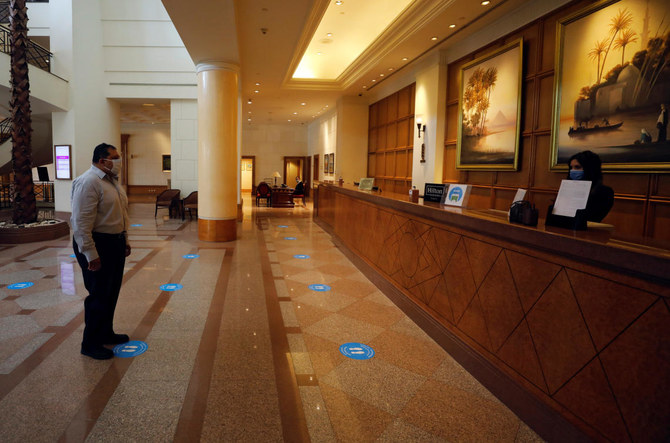
CAIRO: Hotels in Egypt have implemented government safety regulations which include having an on-site clinic with resident doctor, regular temperature checks of guests and a quarantine area, as they try to attract domestic tourists, hotel officials said.
Egypt suspended international flights in March and shut down restaurants, hotels and cafes in order to combat the pandemic, which has cost its tourist sector an estimated $1 billion per month.
Tourism accounts for about 12%-15% of gross domestic product.
Although airports remain closed to all but domestic and repatriation flights, 99 hotels have been allowed to reopen at a quarter of their usual capacity if they met strict health and safety protocols.
Guests must be registered online and workers have to undergo rapid coronavirus tests when entering resorts, while a hotel floor or small building must be assigned as a quarantine area for positive or suspected coronavirus cases.
As of June, hotels certified as meeting regulations have been allowed to run at maximum 50% capacity.
“They have sanitized my bag. I have also done the key-less check in, which is the first time this has happened and the first time I see this,” said Hossam Ragaie, a guest at the Conrad luxury hotel in Cairo.
Large events and buffets have been banned, said Karim Helmy, general manager of the Hilton King’s Ranch hotel in the Mediterranean city of Alexandria.
Nevine Hamdy, who used to be a regular guest at the hotel before the pandemic, returned with her family to spend a few nights.
“From the very start at the gate, the workers are wearing masks and gloves. There is no close interaction... They are taking the highest precautionary measures,” she said.
Egypt has reported 29,767 coronavirus cases as of Thursday including 1,126 deaths.


![]()

Egypt’s hotels win over domestic tourists with on-site clinics
Short Url
https://arab.news/gwxph
Egypt’s hotels win over domestic tourists with on-site clinics
- 99 hotels have been allowed to reopen at a quarter of their usual capacity if they met strict health and safety protocols
- Tourism accounts for about 12%-15% of GDP


Latest updates




© 2026 SAUDI RESEARCH & PUBLISHING COMPANY, All Rights Reserved And subject to Terms of Use Agreement.