

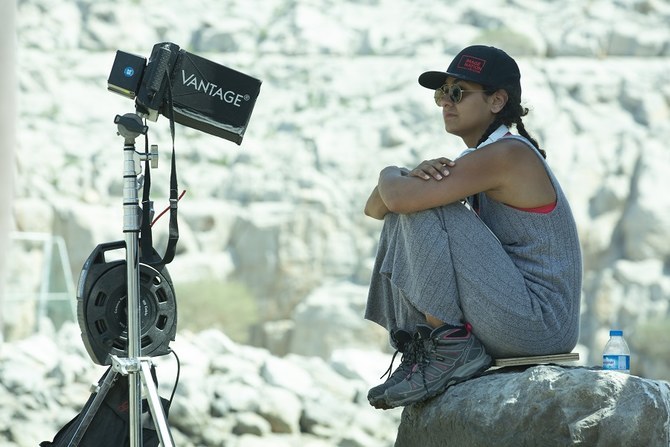
Saudi filmmaker Shahad Ameen offers insights into award-winning ‘Scales’ in virtual session

Her film won the Verona Award for “Most Innovative Film” at the 2019 Venice Film Festival. (Supplied)
Short Url
Updated 04 June 2020
Follow

Saudi filmmaker Shahad Ameen offers insights into award-winning ‘Scales’ in virtual session

ABU DHABI: The Abu Dhabi International Book Fair (ADIBF) has hosted Saudi filmmaker Shahad Ameen in its latest virtual session, during which the celebrated director talked about her cinematic works and her inspirations.

Read our full interview with Shahad Ameen here. 

The session was part of the ADIBF’s Virtual Session Series, launched by the Department of Culture and Tourism Abu Dhabi, where guests present their talks remotely, allowing viewers to watch from the safety of their own homes.
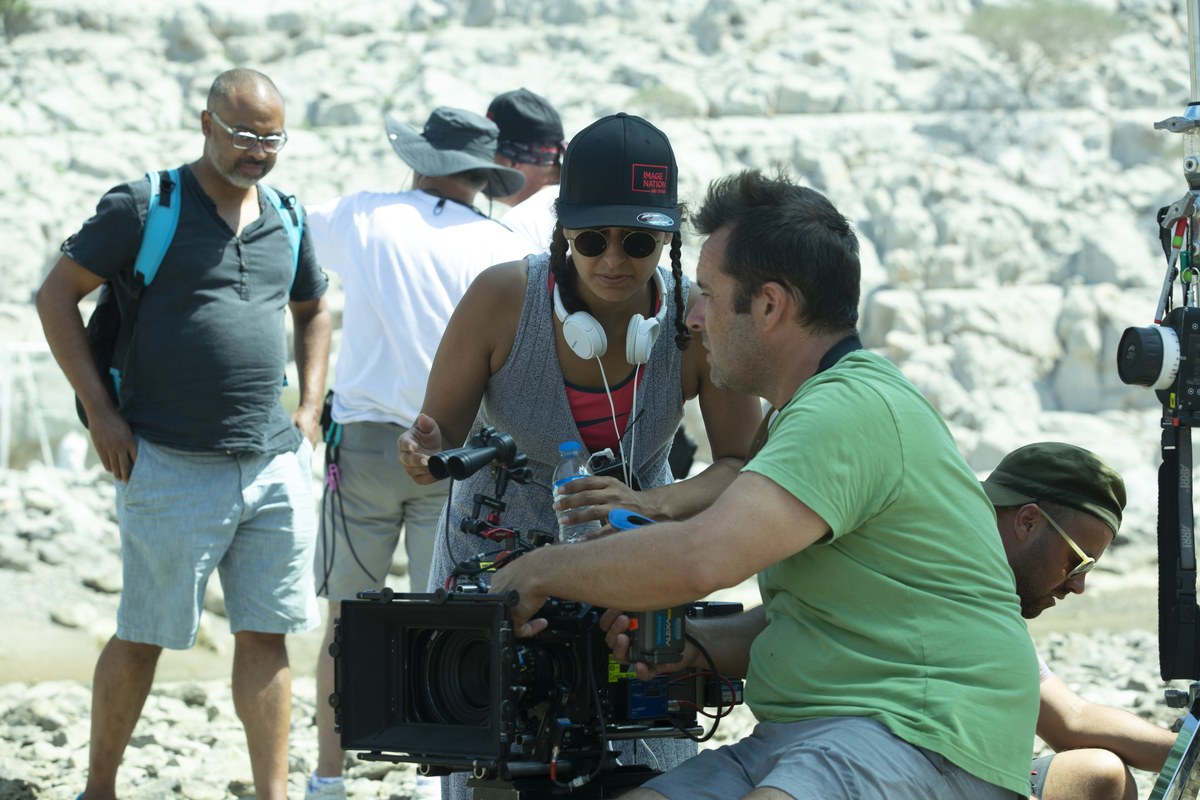


This is Ameen’s first full-length narrative film. (Supplied)

Ameen kicked off the session by analyzing her latest film “Scales” (Sayidat Al Bahr), which won the Verona Award for “Most Innovative Film” at the 2019 Venice Film Festival.

The fantasy film, made in the UAE, tells the story of Hayat, a young girl living in a fishing village with a tradition of sacrificing female children to mysterious sea-dwelling creatures in the surrounding ocean. When her time comes, she decides to break with tradition and forge her own path.
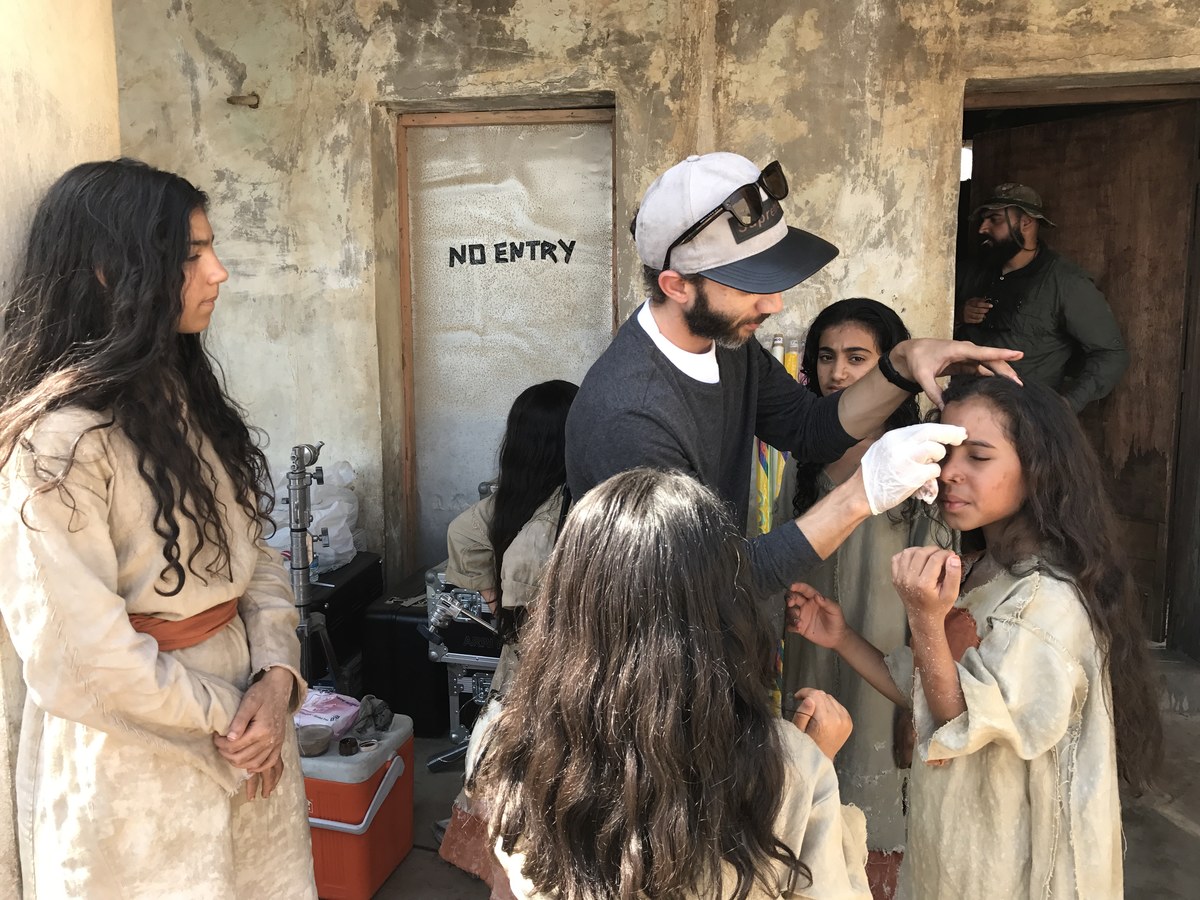


The film was shot in Oman. (Supplied)

The talk explored the mythological elements in the movie, which are largely inspired by the ancient Arab heritage.

During the discussion, she noted that her use of Arab mythology is meant to engage the audience and motivate them to reflect on these symbols.
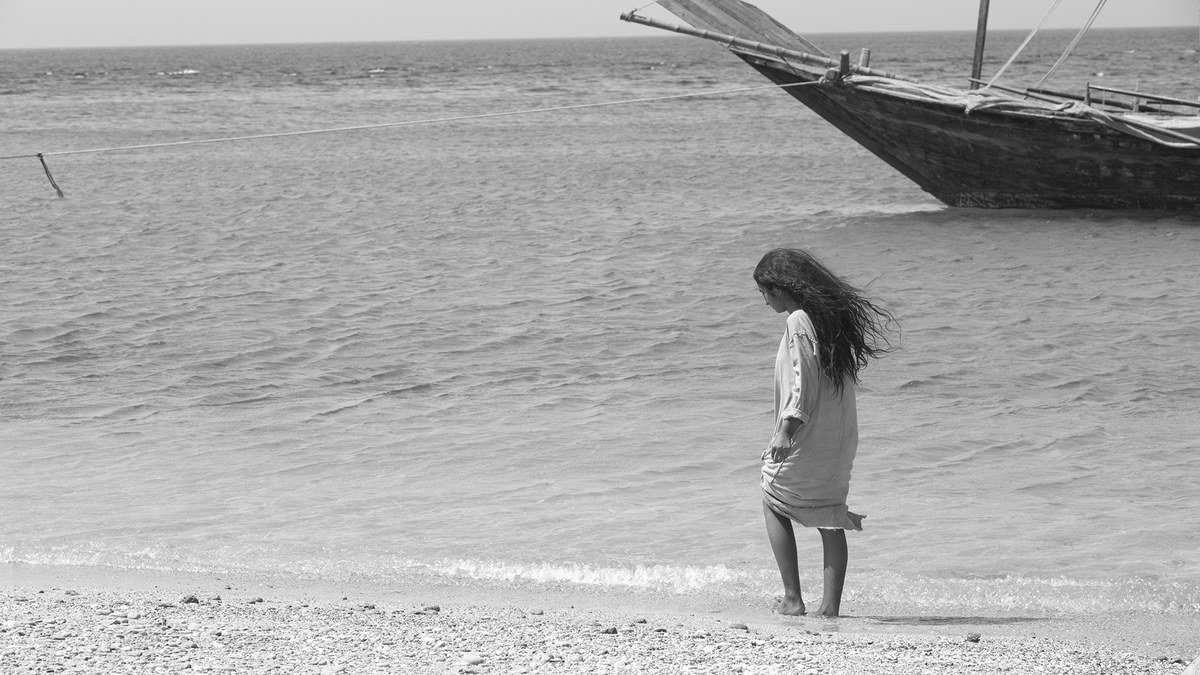


A still from the film. (Supplied) 

Ameen also expressed her great hopes for the future of Arab cinema, after having seen so many distinctive Arabic screenplays that depict the reality of the Arab world with its rich culture and diverse traditions.

She further explained that the most vital element in producing a well-woven screenplay is the author’s confidence in their idea and its originality rather than attempts to recapture or imitate other cinematic works.


Hamza Hawsawi on headlining The Fridge in Riyadh

Updated 14 February 2026
Follow

Hamza Hawsawi on headlining The Fridge in Riyadh

DUBAI: Saudi R&B artist Hamza Hawsawi headlined The Fridge’s “Concert Series KSA Season 1” over the weekend, performing a show in Riyadh’s JAX District as part of a two-day program spotlighting emerging talent.

Hawsawi’s performance followed “The Fridge Open Mic,” which took place at the same venue the night before. The open mic offered rising artists a professional stage to perform original material in front of a live audience, creating space for experimentation and discovery within the local music scene.

Speaking during the event, Hawsawi highlighted the importance of platforms such as open mics for artists. “I think it is important because an open mic is an opportunity to get to know new artists,” he said. “For industry professionals, like Fridge, it is an eye-opener to the scene, and it lets you understand how the scene is going, what kind of artists you’re gonna be dealing with in the future.”

From an artist’s standpoint, he added, the format remains essential for growth. “We do need open mics. We do need to be out there and to try different things, and to sing to different people, and to test our art and find out if people are gonna gravitate towards it or not.”

Hawsawi has spent more than 15 years developing a sound rooted in R&B, soul and pop, building an audience that now spans the region and beyond. He has accumulated more than 33 million global views and collaborated with a range of regional and international artists. 

His track “Million Miles” was selected as the official Rally Dakar anthem, while his live performances have included stages such as MDLBeast and the Abu Dhabi Grand Prix.

Asked whether he feels a responsibility to help shape the Saudi R&B scene, Hawsawi described a fluid relationship with that role. “Sometimes I feel that sense of responsibility,” he said. “Other times I feel like I’m just a human being trying to express my feelings … But we’re just artists at the end of the day.”

He added that while he sometimes embraces being a beacon for the genre, “other times I feel like I want to be low-key, and I don’t even want to be seen or heard.”

Hawsawi also reflected on one of his personal challenges as an artist in the Kingdom: writing and performing primarily in English. 

“That has been the biggest challenge to face,” he said. 

While Arabic remains the most widely spoken language in Saudi Arabia, Hawsawi explained that English allows him to express what he feels more clearly, particularly when it comes to emotion and meaning.

“The nuances of what I feel and all the metaphors for me trying to say something but not saying it, you know, not a lot of people get that,” he said, noting that his work often reaches a niche audience. “But I’m happy with that.”