

10 million SMS sent to educate people for prayers in Saudi mosques

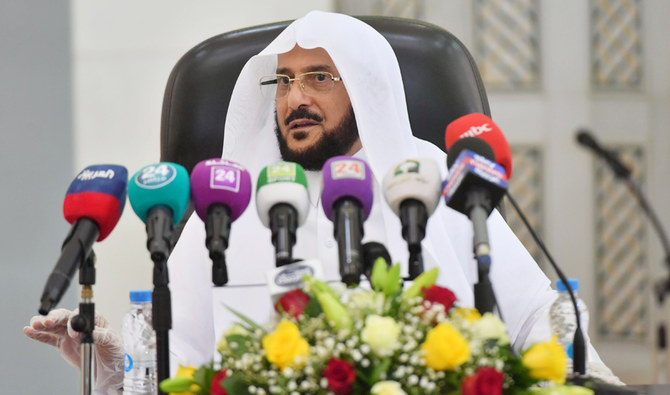
Sheikh Abdullatif Al-Asheikh. (SPA)
Short Url
Updated 31 May 2020
Follow

10 million SMS sent to educate people for prayers in Saudi mosques

  • The informative messages that were broadcasted by the ministry in several languages

RIYADH: Ten million text messages (SMS) containing information on the precautionary measures approved by the Saudi Ministry of Islamic Affairs were sent in the wake of the return of congregational prayer in mosques.
The return of Friday and group prayers in the Kingdom’s mosques — except in Makkah — comes as the second phase of easing restrictions begins on Sunday May 31 and will last until June 20.
The informative messages that were broadcasted by the ministry in several languages included advice, directives and instructions, in line with the authorities’ decisions to ensure the safety of mosque-goers and prevent the spread of the coronavirus.
The Ministry of Islamic Affairs also increased its media presence through its participation in various satellite channels and social networking sites and through its digital platforms to educate the Saudi community about the importance of following the directions.
The Saudi minister of Islamic affairs, Sheikh Abdullatif Al-Asheikh, announced on Friday the readiness of the Kingdom’s mosques to welcome worshippers after he completed field trips to check on necessary preparations.

“Throughout our inspection trips, we found our mosques to have completed preparations and are in the best condition,” said the minister.

“Whatever remains falls upon citizens. I hope that citizens and residents follow healthy precautionary measures as instructed by professionals. I hope that they’re careful with their own lives and the lives of others.”



Economic growth and resilience at heart of 2nd AlUla Emerging Market Economies Conference

Updated 03 February 2026
Follow

Economic growth and resilience at heart of 2nd AlUla Emerging Market Economies Conference

  • Event on Feb. 8 and 9 will bring together ministers, governors of central banks, policymakers, economic experts and international financial institutions
  • Emerging-market economies a ‘pivotal element’ in global economic system due to effect they have on growth and stability, says Saudi Finance Minister Mohammed Al-Jadaan

RIYADH: The second annual AlUla Conference for Emerging Market Economies, which Saudi Arabia will host next week, offers a platform to exchange views on global developments and discuss policies and reforms that support inclusive growth and strengthen economic resilience, the Kingdom’s finance minister said.

The event on Feb. 8 and 9 will bring together finance ministers, governors of central banks and policymakers, alongside economic experts and representatives of international financial institutions.

Organized by the Saudi Ministry of Finance in partnership with the International Monetary Fund, it takes place as emerging-market economies face mounting challenges amid rapid global economic change.

Finance Minister Mohammed Al-Jadaan said the decision to host the conference reflects Saudi Arabia’s ongoing commitment to efforts that support global financial and economic stability, and highlights the growing influence of emerging economies on worldwide growth.

Emerging-market economies represent a “pivotal element” in the global economic system due to the direct impact they have on economic growth and stability, he added.

“The AlUla Conference for Emerging Market Economies provides a unique platform for exchanging views on global economic developments, and discussing policies and reforms that will support inclusive growth and enhance economic resilience, in light of broader international cooperation that contributes to confronting common challenges,” Al-Jadaan said.

Kristalina Georgieva, managing director of the IMF, said the event would help emerging economies deal with growing uncertainty driven by technological change, demographic shifts and geopolitical tensions.

“The AlUla conference provides a vital platform for emerging economies to discuss how they can navigate the risks and embrace the opportunities ahead,” she said.

“In these times of sweeping transformations in the global economy, policymakers face a more challenging and uncertain environment. Countries should work together to strengthen resilience through sound macroeconomic and financial policies.”