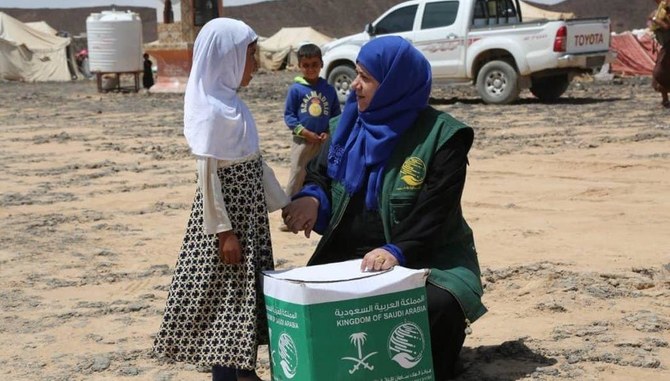
RIYADH: Saudi Arabia is the largest donor to humanitarian efforts in Yemen and its response to a donor conference held in 2015 is evidence of this, the head of the King Salman Humanitarian Aid and Relief Center (KSRelief) said on Saturday.
The supervisor general of KSRelief, Abdullah Al-Rabeeah, said that meeting the humanitarian needs of the Yemeni people is a priority for the Kingdom.
He added that he hoped the upcoming donors conference organized by the Kingdom in partnership with the United Nations would be supported and well received by the international community.
Meanwhile, the UN under-secretary-general for humanitarian affairs and emergency relief coordinator Mark Lowcock said the Kingdom donated more than $750 million last year and pledged $500 million in April.
Lowcock added that this makes Saudi Arabia the biggest donor to Yemen, which requires $2.4 billion to fund the aid operation for the rest of the year. Of that figure, $180 million is needed urgently to fight COVID-19.
Yemen’s Minister of Information Moammar Al-Eryani said that the Kingdom has always provided support to Yemen and continues to do so at a time when Iran is “providing nothing but killing, destruction, smuggled weapons, ballistic missiles … and explosive devices that kill Yemenis every day.”
The donors conference for Yemen is due to take place on Tuesday at 4 p.m. Saudi time.


KSRelief chief: Saudi Arabia is biggest donor to Yemen
https://arab.news/9qpvy
KSRelief chief: Saudi Arabia is biggest donor to Yemen

- Al-Rabeeah said he hoped the donors conference would be supported by the international community
- $180 million is needed urgently to fight COVID-19 in Yemen


Economic growth and resilience at heart of 2nd AlUla Emerging Market Economies Conference
- Event on Feb. 8 and 9 will bring together ministers, governors of central banks, policymakers, economic experts and international financial institutions
- Emerging-market economies a ‘pivotal element’ in global economic system due to effect they have on growth and stability, says Saudi Finance Minister Mohammed Al-Jadaan
RIYADH: The second annual AlUla Conference for Emerging Market Economies, which Saudi Arabia will host next week, offers a platform to exchange views on global developments and discuss policies and reforms that support inclusive growth and strengthen economic resilience, the Kingdom’s finance minister said.
The event on Feb. 8 and 9 will bring together finance ministers, governors of central banks and policymakers, alongside economic experts and representatives of international financial institutions.
Organized by the Saudi Ministry of Finance in partnership with the International Monetary Fund, it takes place as emerging-market economies face mounting challenges amid rapid global economic change.
Finance Minister Mohammed Al-Jadaan said the decision to host the conference reflects Saudi Arabia’s ongoing commitment to efforts that support global financial and economic stability, and highlights the growing influence of emerging economies on worldwide growth.
Emerging-market economies represent a “pivotal element” in the global economic system due to the direct impact they have on economic growth and stability, he added.
“The AlUla Conference for Emerging Market Economies provides a unique platform for exchanging views on global economic developments, and discussing policies and reforms that will support inclusive growth and enhance economic resilience, in light of broader international cooperation that contributes to confronting common challenges,” Al-Jadaan said.
Kristalina Georgieva, managing director of the IMF, said the event would help emerging economies deal with growing uncertainty driven by technological change, demographic shifts and geopolitical tensions.
“The AlUla conference provides a vital platform for emerging economies to discuss how they can navigate the risks and embrace the opportunities ahead,” she said.
“In these times of sweeping transformations in the global economy, policymakers face a more challenging and uncertain environment. Countries should work together to strengthen resilience through sound macroeconomic and financial policies.”


