

Al Jazeera publishes article glorifying Egyptian terrorist, then takes it down

1 / 2
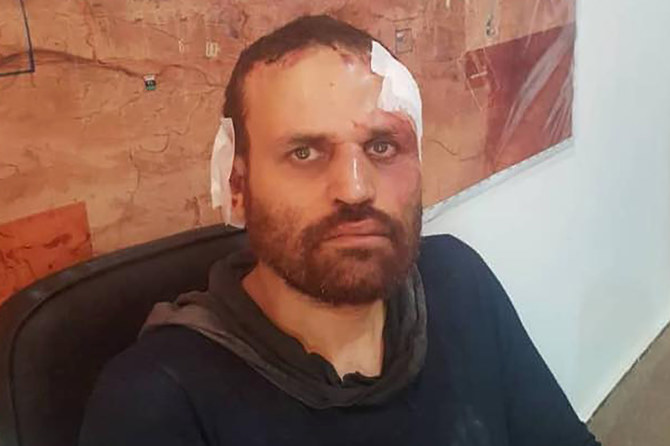
Egyptian militant leader Hisham Al-Ashmawy was arrested on Oct. 8, 2018, in eastern Libya during a military operation in the city of Derna. (File/Libyan Armed Forces / AFP)
2 / 2
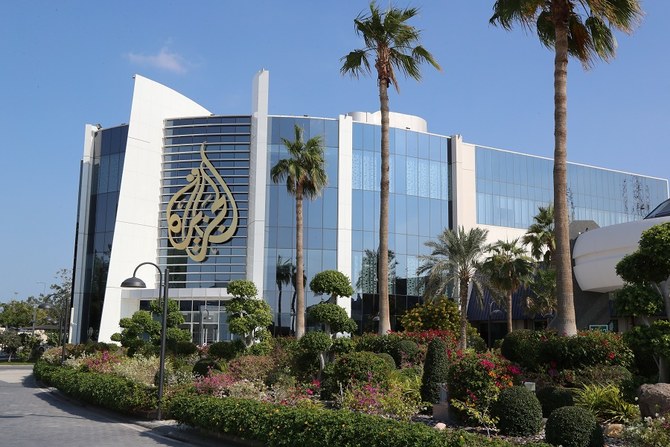
Al Jazeera removed the content. (File/AFP)
Short Url
Updated 21 May 2020
Follow

Al Jazeera publishes article glorifying Egyptian terrorist, then takes it down

  • It comes the same month the Qatari-owned network published a podcast glorifying killed Iranian General Qasim Soleimani
  • Al Jazeera say the article was later removed

LONDON: Al Jazeera published an article last week titled “Hisham Ashmawy...the other side of Al-Ikhtiyar (The Choice)” where the author praised the Egyptian terrorist and sought to clear his name, but later took down the piece due to “contradictions with Al Jazeera publishing policies,” according to the news site.

This comes within the same month that the Qatari-owned network published a podcast glorifying killed Iranian General Qasim Soleimani, as well as a full interview with terrorist-designated Hamas’s leader Ismael Haniya.

“Not only did Al-Jazeera glorify Hisham Ashmawy, but it also always glorified different terrorist leaders and organizations as long as they fought the people and systems (or governments) that disagree with the Qatari regime’s policy,” Terrorism and extremism expert Hani Nesira told Arab News.

“Qatari Al-Jazeera network and its websites on the Internet have consistently glorified the symbols of extremism and terrorism and portrayed them as symbols of resistance and national liberation.”

The full article, which cannot be accessed anymore, began by suggesting that political systems resort to television programs and drama series in order to influence peoples’ minds, notably highlighting current Egyptian Ramadan show Al-Ikhtiyar (The Choice).

“It deliberately used lies and slander in their portrayal of a number of prominent Islamic figures, such as Sheikh Rifai Sorour, as well as other personalities who chose the path of armed resistance against the Egyptian coup regime, such as officer Emad Abdel Hamid and his colleague Hesham Ashmawy,” the author, Islamic scholar and Member of the Political Bureau of the Salafi Front, Mustafa Al-Badry wrote.

“The character inspired by Hesham Ashmawy was one of the elements on which the drama series greatly relied. The series portrayed him in a way that is different from how he is known by the people who were close to him. I, therefore, hope to shed light on the real story of Maj. Hesham Ashmawy,” Badry continued.Ashmawy was an Egyptian security officer who was suspected of having been involved in and having orchestrated several terrorist attacks on security officials and state institutions, including the 2014 Farafra ambush that left at least 22 killed, and the 2015 assassination of Prosecutor general Hisham Barakat.

The news site has since removed the article, which was shown in its opinions section, replacing the text with an explainer noting its deletion.

“This article has been deleted, as it contradicts Al Jazeera’s publishing policies and the requirements of professional behavior. Al Jazeera’s blogs confirm that what happened was an individual professional mistake and that appropriate measures will be taken to hold the person responsible accountable and ensure that it is not repeated again in the future,” it read.


To infinity and beyond: Grendizer’s 50 years of inspiring Arabs

Updated 5 min 5 sec ago
Follow

To infinity and beyond: Grendizer’s 50 years of inspiring Arabs

  • ⁠ ⁠50 years after its creation, the Grendizer anime series continues to capture Arab imagination
  • ⁠ ⁠⁠Arab News Japan speaks to creator Go Nagai, Middle Eastern fans and retells the story behind the UFO Robot tasked with protecting our planet

LONDON: Few cultural imports have crossed borders as unexpectedly, or as powerfully, as Grendizer, the Japanese giant robot that half a century ago became a childhood hero across the Arab world, nowhere more so than in Saudi Arabia.

Created in Japan in the mid-1970s by manga artist Go Nagai, Grendizer was part of the “mecha” tradition of giant robots. The genre was shaped by Japan’s experience during the Second World War, and explored themes of invasion, resistance and loss through the medium of science fiction.

But while the series enjoyed moderate success in Japan, its true legacy was established thousands of kilometers away in the Middle East.

By the early 1980s, “Grendizer” had spread across the Middle East, inspiring fandoms in Saudi Arabia, Kuwait, Iraq and beyond. (Supplied)

The anime “UFO Robot Grendizer” arrived on television in the region in 1979, dubbed into Arabic and initially broadcast in Lebanon during the Lebanese civil war. The story it told of the heroic Duke Fleed, a displaced prince whose planet had been destroyed by alien invaders, struck a chord with children growing up amid regional conflict and occupation by Israel.

Its themes of defending one’s homeland, standing up to aggression and protecting the innocent were painfully relevant in the region, transforming the series from mere entertainment into a kind of emotional refuge.

Much of the show’s impact came from its successful Arabization. The powerful Arabic dubbing and emotionally charged voice-acting, especially by Lebanese actor Jihad El-Atrash as Duke Fleed, lent the show a moral gravity unmatched by other cartoons of the era.

While the series enjoyed moderate success in Japan, its true legacy was established thousands of kilometers away in the Middle East. (Supplied)

The theme song for the series, performed by Sami Clark, became an anthem that the Lebanese singer continued to perform at concerts and festivals right up until his death in 2022.

By the early 1980s, “Grendizer” had spread across the Middle East, inspiring fandoms in Saudi Arabia, Kuwait, Iraq and beyond. For many, it was not only their first exposure to anime, it also delivered lessons on values such as justice and honor.

Grendizer was so influential in the region that it became the subject of scholarly research, which in addition to recognizing the ways in which the plight of the show’s characters resonated with the audience in the Middle East, also linked the show’s popularity to generational memories of displacement, particularly the Palestinian Nakba.

By the early 1980s, “Grendizer” had spread across the Middle East, inspiring fandoms in Saudi Arabia, Kuwait, Iraq and beyond. (Supplied)

Half a century later, “Grendizer” remains culturally alive and relevant in the region. In Saudi Arabia, which embraced the original version of the show wholeheartedly, Manga Productions is now introducing a new generation of fans to a modernized version of the character, through a video game, The Feast of The Wolves, which is available in Arabic and eight other languages on platforms including PlayStation, Xbox and Nintendo Switch, and a new Arabic-language anime series, “Grendizer U,” which was broadcast last year.

Fifty years after the debut of the show, “Grendizer” is back — although to a generation of fans of the original series, their shelves still full of merchandise and memorabilia, it never really went away.


Grendizer at 50
The anime that conquered Arab hearts and minds
Enter
keywords