

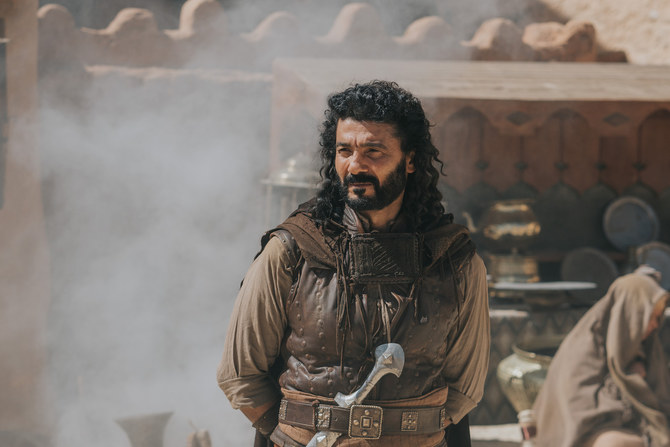
Egyptian actor Khaled El-Nabawy: ‘I have been dreaming of this role for more than 20 years’

Khaled El-Nabawy’s career has spanned more than two decades and includes several Hollywood movies. (Supplied)
Short Url
Updated 14 May 2020
Follow

Egyptian actor Khaled El-Nabawy: ‘I have been dreaming of this role for more than 20 years’

DUBAI: Documenting a largely unfamiliar past is never easy, but the historical drama “Kingdom of Fire” rises to the challenge superbly.

The series, now streaming on Starzplay, is set in the early 16th century when the Ottoman Empire set out to conquer Arab territories. The show follows two heroes — Selim, an Ottoman prince, and Tuman Bey, a child taken as a slave from Circassia (now southern Russia) to Egypt who grows up to lead a popular uprising against the Ottomans.

Egyptian actor Khaled El-Nabawy, who plays Tuman Bey, told Arab News about his “dream role.”


El-Nabawy plays Tuman Bey. (Supplied)

El-Nabawy’s career has spanned more than two decades and includes several Hollywood movies, but he said: “I was dreaming of Tuman more than 20 years ago. His story is one of the most beautiful stories I’ve ever heard.”

The actor grew up learning about this historical period. “My father told me that when the Turkish came to Egypt there was an invasion. So I wondered, after I became an actor, if I would get the chance to play this role,” he said.

El-Nabawy said that the series documented the lives of characters who lived 500 years ago, so he felt “great responsibility.”
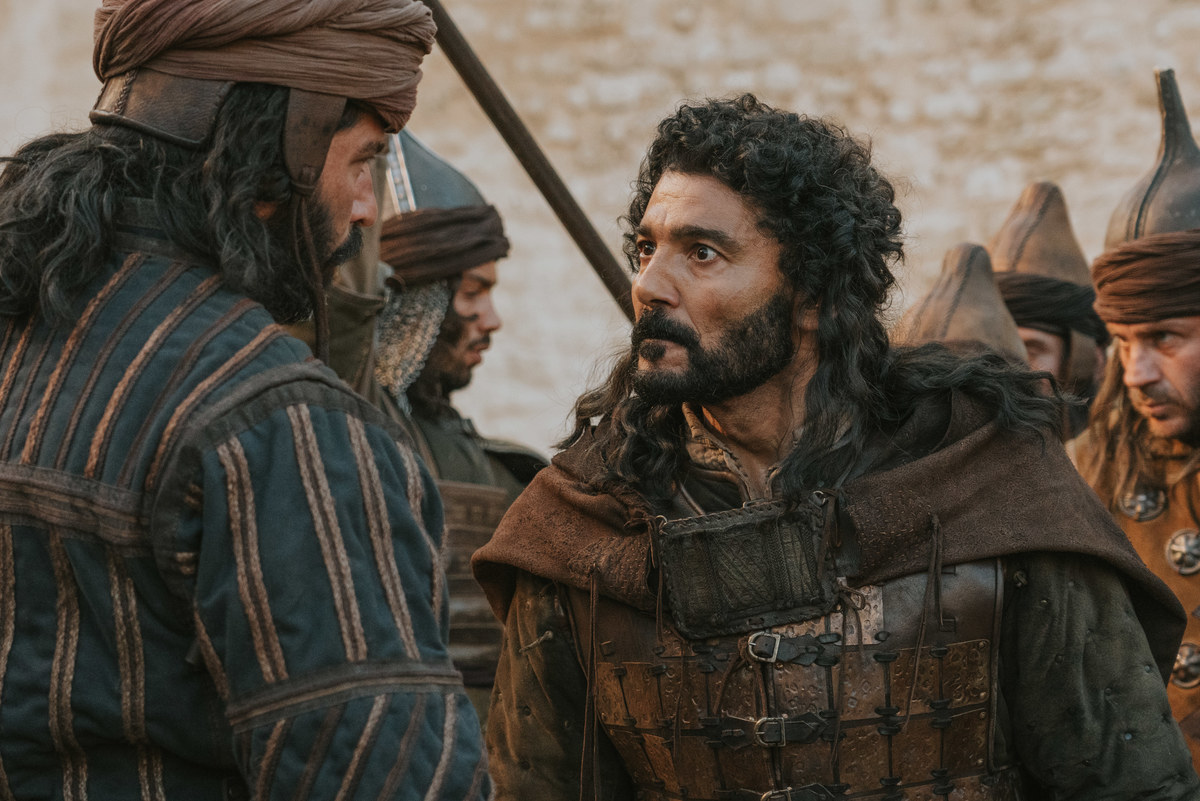


The film was shot in Tunisia. (Supplied)

He read widely on the era before the shooting started.

“It is the least anyone could do to play such a part and I was honored to play Tuman,” he added.

Besides the mental preparation, there was also a lot of physical effort. El-Nabawy trained with horses and learned how to use swords. His fitness routine included swimming, running and yoga.
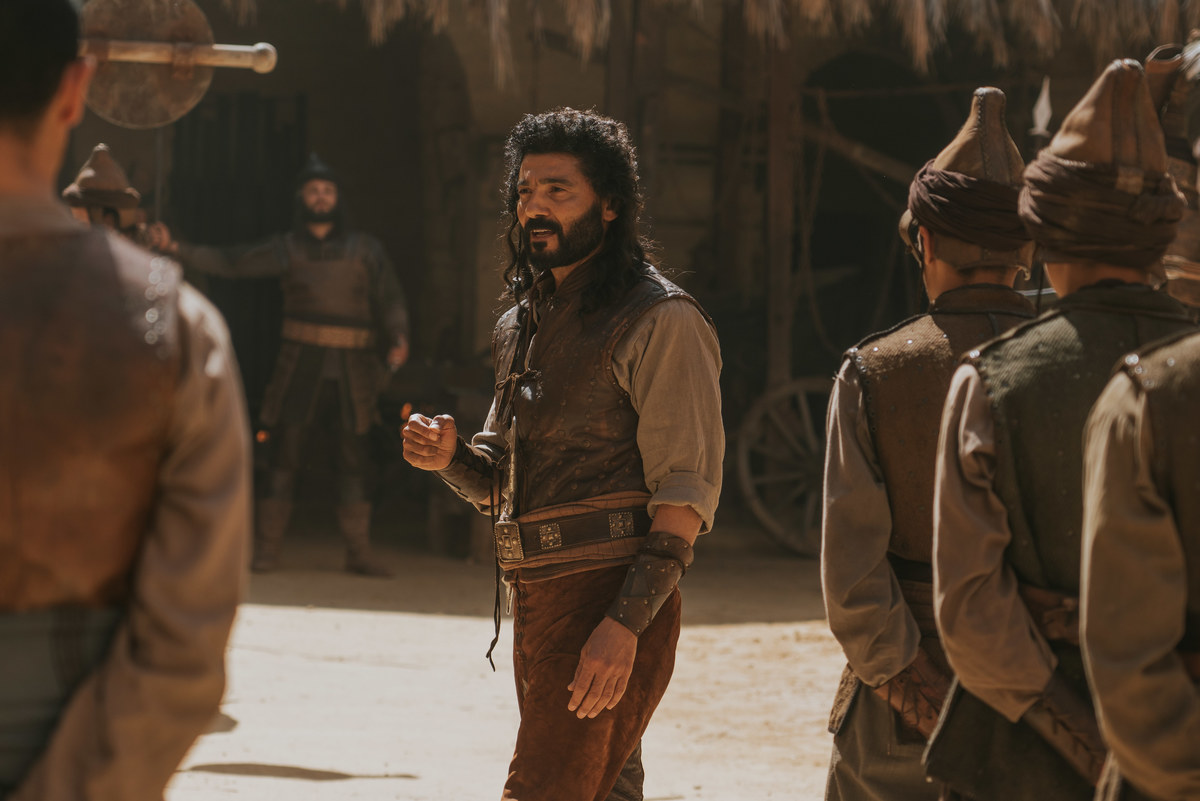


The film was directed by American Peter Webber. (Suuplied)

“You are on a horse fighting, with lots of dust and sand, wearing heavy costumes, so it’s not easy,” said the actor.

The film, shot in Tunisia, was directed by American Peter Webber, best known for “Girl with a Pearl Earring” and “Emperor.”

El-Nabawy said that he is happy with his roles in Hollywood films, including “The Citizen,” “Fair Game” and “Kingdom of Heaven.”

“These are films I chose. I get offered a lot, but I choose what suits me, what I like as an actor, what I believe I will enjoy, what I believe as a person, and also what suits me as a human being coming from the Arab world,” he said.

However, El-Nabawy said that he has rejected offers because of stereotypes associated with Arab characters.

“I need to fix the stereotypes they have about us,” he said.


‘The Wild Within’ sees artists breathe new life into Mideast buildings

Updated 16 December 2025
Follow

‘The Wild Within’ sees artists breathe new life into Mideast buildings

DUBAI: Lens-based artist Ryan Koopmans and digital artist Alice Wexell are staging a showcase at Dubai’s Leila Heller Gallery that breathes new life into regional buildings.

The series of digital artworks is part of the exhibition “The Wild Within,” featuring images of old structures in Beirut, Istanbul, and Abu Dhabi filled with wild flowers.

Two of the largest works, “Heartbeats” and “The Wish,” are displayed using Ventana, a microLED architectural display surface created by visual technology company Megapixel.

'Around Us' by Ryan Koopmans and Alice Wexell. (Supplied) 

The former artwork depicts the entrance hall of Qasr Al-Watan, the UAE’s presidential palace in Abu Dhabi, while the latter reimagines the upper floors of the Emirates Palace Mandarin Oriental in Abu Dhabi.

“Each building we work with comes to us through a combination of research, travel, and intuition,” the artists told Arab News in a joint statement.

'Constellations' by Ryan Koopmans and Alice Wexell. (Supplied) 

“We are drawn to structures that carry both emotional and historical resonance, often buildings that once embodied human ambition and now exist in a state of quiet transformation.”

Koopans and Wexell made sure to research the context of each building they choose to recreate, saying “an old villa in Jeddah or a former school in Sharjah each hold their own cultural memory, influencing everything from the lighting and atmosphere to the plants and flowers that we digitally sculpt and implement into the photographs.”

'Heart of Sharjah' by Ryan Koopmans and Alice Wexell. (Supplied) 

The hypnotic works depict the interior of buildings in the region, with digitally rendered flowers carpeting the floor in a bid to “(reimage) these spaces (and) explore the relationship between nature, place, and time, while celebrating each site as a unique work of architecture with its own spirit and story,” the artists said.

Koopmans is of dual Canadian and Dutch heritage, while Wexell is Swedish and based in Stockholm, so it is noteworthy that both artists chose to explore the Middle East for their latest project.

'Blossom of the Ancestors' by Ryan Koopmans and Alice Wexell. (Supplied) 

“In the Middle East especially, the architecture reflects a layered past that merges different styles and eras, while also expressing a sense of renewal and forward-looking energy, particularly in the region’s fantastic contemporary buildings. We are drawn to the symmetry, geometry and patterns that are found not only in nature itself, but in the architectural language of the region both past and present,” they said.

The series — featuring works such as “Adore You,” “Between Worlds,” and “Blossom of the Ancestors” — explores contrasts between the natural world and human-made forms, as well as the traditional and contemporary worlds.

“We are interested in how these elements coexist and merge into one another, creating a sense of hyperrealism that feels both familiar and imaginary. By merging photography with digital sculpture, the artworks question where the boundary lies between documentation and invention, and how technology can extend rather than replace our sense of the natural world.”

'Under the Rain of Light' by Ryan Koopmans and Alice Wexell. (Supplied) 

Although the scale of the artworks ensures they leave the viewer entranced, it did pose challenges, according to the artists.

“Presented at a large scale, every texture in these artworks becomes visible, which can be demanding but is also incredibly rewarding. The magnified detail allows the visceral and atmospheric layers of the pieces to come through with greater impact,” they said, adding that each piece took “many months” to create.

“Ultimately, we want our collectors to experience a sense of wonder and contemplation, as if they are standing inside a dream that feels both entirely real yet unreal.”

The exhibition runs until Jan. 15, 2026.