

Call to prayer ruling in Canada causes controversy

1 / 5
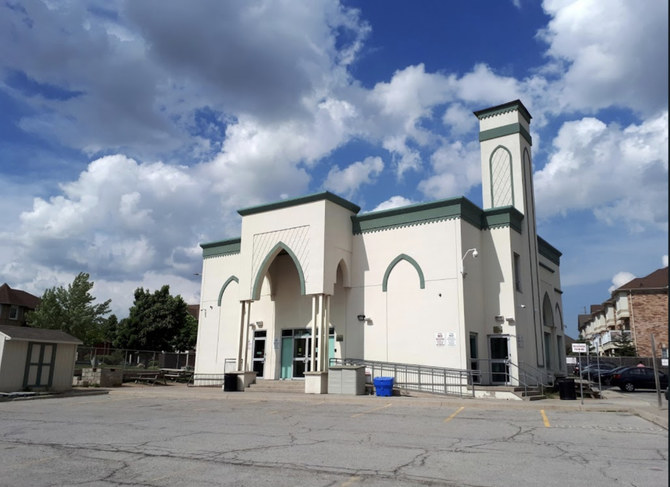
Masjd Al-Farooq in Mississauga. (Supplied photo)
2 / 5
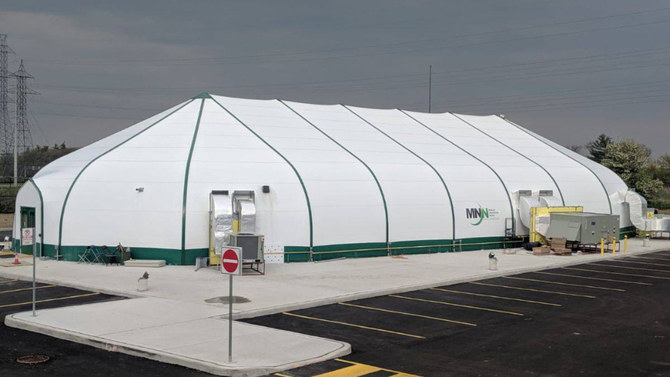
The Islamic Society of North America in Mississauga. (Supplied photo)
3 / 5
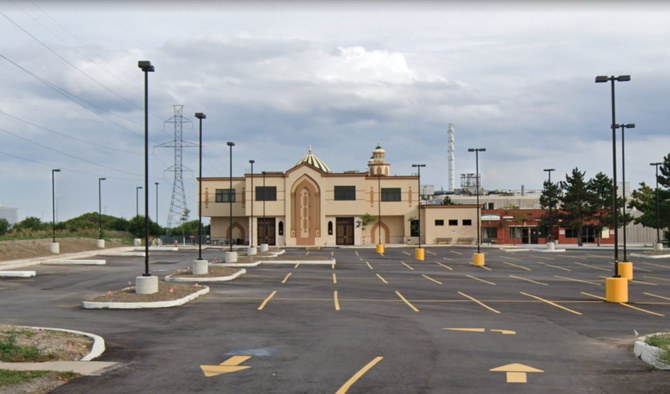
Muslim Neighbor Nexus: Building the community together. (Supplied)
4 / 5
Malton Islamic Center in Mississauga. (Supplied photo)
5 / 5
Jame Masjid Mosque in Mississauga. (Supplied photo)
Short Url
Updated 08 May 2020
Follow

Call to prayer ruling in Canada causes controversy

  • Some municipalities are allowing mosques to broadcast the sunset adhan during Ramadan, prompting some to complain
  • ‘Hate groups will always be around to incite this type of prejudice,’ says one Muslim resident who used to live in Riyadh

DUBAI: Social-distancing measures during the global pandemic have caused mosques to close and public gatherings to be banned around the world. As a result, Muslims have had to adjust and adapt to a new reality — one without congregational prayers.

However, some municipalities in the Ontario province of Canada have started allowing mosques to broadcast the call to prayer, or adhan, at sunset, which during Ramadan marks the end of the day’s fast.

In a ground-breaking acknowledgment of multiculturalism and religious tolerance, Ontario’s Mississauga City Council passed a resolution on April 29 suspending its noise control by-law, thereby allowing mosques to sound the Maghrib (sunset) adhan. The resolution stated that the temporary suspension will remain in effect throughout Ramadan, that the prayer call can be broadcast once a day in the evening for a maximum of five minutes, and that it must not call people to gather together to pray.

In the past week, cities such as Toronto, Hamilton, Windsor, Brampton, Ottawa and Edmonton have followed suit with similar rulings, and Dar Al-Hijrah mosque in the US city of Minneapolis has also obtained a permit to broadcast the call to prayer.
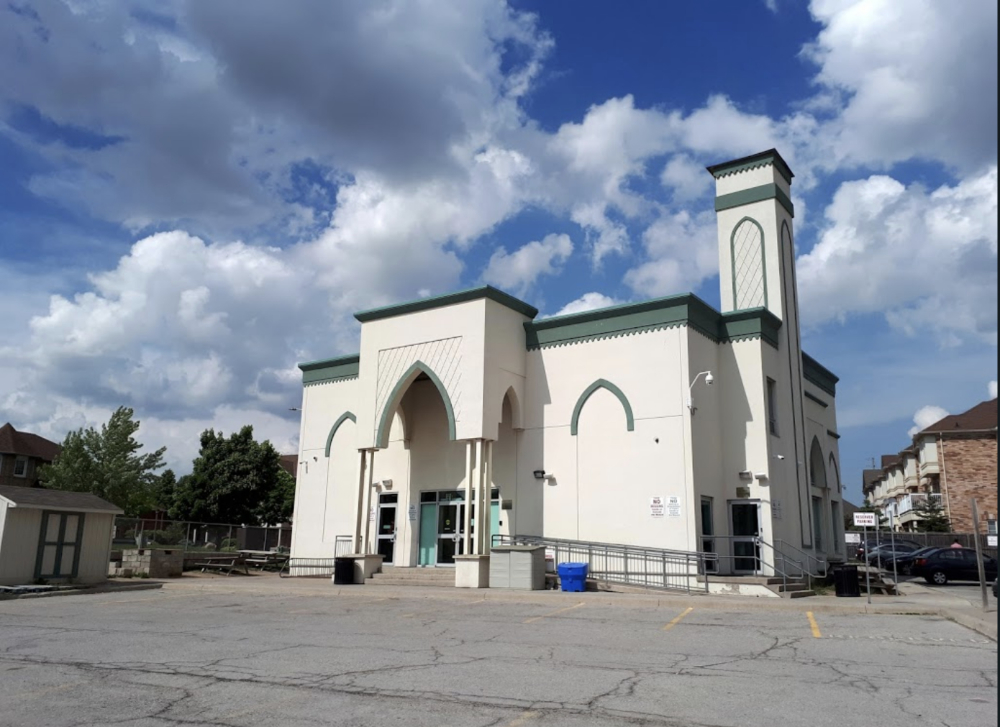


Masjid Al-Farooq in Mississauga City. (Supplied photo)

The melodious Arabic adhan usually takes only two to three minutes to recite, but the decision by Mississauga city council has incited a fervent backlash from some Canadians who claim that its broadcast is an infringement of their rights and brings religion into the public sphere.

Some suggest the sound of the adhan could trigger post-traumatic stress disorder in Canadian soldiers who served in the Middle East. Others label the decision unconstitutional and an appeasement of radicalism, even going so far as to call for a legal challenge. There has been no official statement on the issue by Prime Minister Justin Trudeau.

Hassan Ahmed, a former resident of Riyadh who now lives in Mississauga, and usually attends the Al-Falah and Muslim Neighbour Nexis mosques, believes the sounding of the call to prayer should not bother his fellow Canadians too much.

“The church bells that are heard on Sundays don’t infringe on my rights as a Muslim, and the call to prayer, which is temporary, just for one month because of these extreme circumstances, doesn’t infringe on anyone’s rights — it won’t really impact anyone’s day to day,” he said.

“There’s a sense of belonging and community that the mosque gives. With physical and social distancing measures in place Muslims can’t get that, so this is just a small step toward filling that void.”
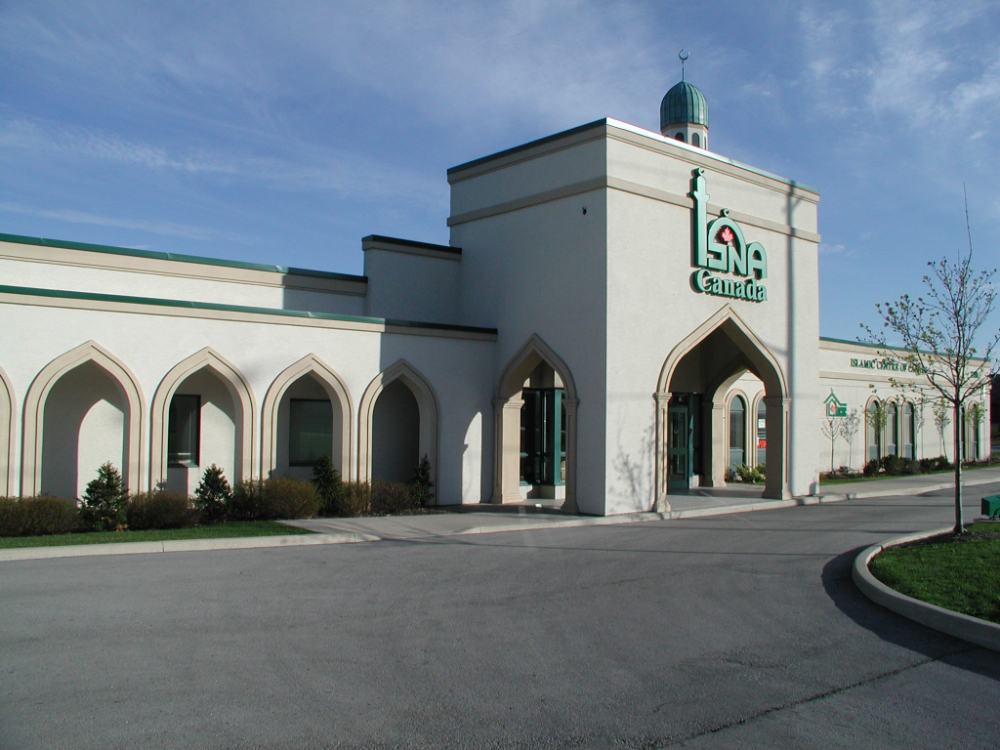


The Islamic Society of North America in Mississauga. (Supplied photo)

Kanwal Saya, who has lived in Riyadh and Dubai and now resides in the city of Oakville, Ontario usually worships at the Islamic Society of North America in Mississauga. She explained that during Ramadan, Muslims gather at the mosque not only for prayers, but for classes, discussions, iftars and activities for children.

“It’s the overall feeling of belonging and rising spiritually, and it’s especially important for children to develop and learn about our religion,” she said. “In the current circumstances, as we are not able to visit mosques, a call to prayer can certainly help revive the spirit of the holy month.”

Canada enjoys an international reputation as a welcoming and accepting place for refugees and minorities, and the province of Ontario is especially diverse; according to the 2016 census, more than a quarter of its residents are from minorities.

Some fear the backlash to the call to prayer ruling is a sign that Islamophobic sentiment might be ignited at a time where the pandemic has already caused great instability and unrest. But Saya and Ahmed are confident that those protesting the decision represent only a tiny segment of Canadian society.

“Hate groups will always be around to incite this type of prejudice,” said Saya. “Yes, it will bring about heated discussions and online forum wars but will eventually die down. Canadians generally are not too concerned about this.”

Ahmed agreed, adding: “We live in a safe country, our communities are very intertwined and intermingled, and people are very culturally sensitive. So I think that while you might have the odd experience or spike in some of Islamophobic prejudice, as a whole it won’t affect us — at least that’s my hope.”

Clashes intensify in remote east Congo, challenging US mediation

Updated 4 sec ago
Follow

Clashes intensify in remote east Congo, challenging US mediation

Nurses at the general hospital in Fizi, a town ringed by steep highlands in eastern Congo’s South Kivu province, hurried the wounded ​soldier into surgery after he was brought in slumped on the back of a motorbike.
He was shot in both legs on the front line in the mountains north of town, where clashes between the army and rebel groups have surged in recent weeks. The fighting, unfolding away from urban areas and largely overlooked by international mediators, is drawing in more forces from all sides in the war in eastern Congo, with the potential to further complicate efforts by the Trump administration to bring peace and Western minerals investments to the region.

REBELS PUSH SOUTH AFTER CAPTURING KEY CITIES Earlier this week, the AFC/M23 rebel ‌group invoked the fighting ‌as justification for a drone attack on Kisangani airport, hundreds of ‌kilometers ⁠from ​the front ‌lines, calling it retaliation for government aerial attacks on South Kivu villages. Congo’s army has not commented on the drone strike or on the rebels’ claims that it attacked villages.
Meanwhile, the casualties continue to mount.
The hospital in Fizi, supported by the International Committee of the Red Cross, was caring for 115 wounded patients when a Reuters journalist visited at the end of January, more than four times its 25-bed capacity.
“Most of our patients have injuries in their upper or lower limbs, they often arrive with wounds that are already infected because ⁠of limited facilities on the frontline,” Richard Lwandja, a surgeon, said.
AFC/M23 staged a lightning advance early last year and in February 2025 seized ‌Bukavu, the capital of South Kivu, before advancing southward again in ‍December to briefly take Uvira on the border with ‍Burundi. The rebels withdrew a few days later under pressure from the United States, which brokered a ‍peace accord between Congo and Rwanda in June. The United Nations and Western powers say Rwanda backs AFC/M23, even exercising command and control over the group, though Rwanda denies this.
The recent fighting has centered on the highlands around Minembwe in Fizi territory, where the army has launched an operation against AFC/M23 and its local ally, the Twirwaneho, a group ​formed by Congolese Tutsi known as Banyamulenge.
“The highlands around Uvira are highly strategic: whoever controls them has access to major towns in the lowlands,” said Regan Miviri, an ⁠analyst at the Ebuteli research institute in Kinshasa. “And because the area is so remote, the fighting there draws less attention and less diplomatic pressure.”
The government’s priority, he said, was to secure Uvira and stop the conflict from extending toward Tanganyika and Katanga, areas that include some of Congo’s most important mining centers.

DIPLOMACY STRUGGLES TO KEEP PACE WITH FIGHTING
AFC/M23 has framed its presence in South Kivu’s highlands as an effort to protect the Banyamulenge, while Kinshasa has accused the coalition of exploiting long-running tensions between communities over land, cattle and local representation. The escalation in fighting comes as Congo and AFC/M23 agreed in Doha this week to activate a Qatari-mediated ceasefire monitoring mechanism. A UN team is expected to deploy to Uvira in the coming days.
At Fizi’s hospital, staff say the flow of wounded shows no sign of easing, and they worry they will not be able ‌to cope much longer.
“Roads are often impassable and supplies run out,” said Robert Zoubda, a Red Cross nurse. “If this continues, we’ll have to install more tents.”