

Drastic change expected in Saudi Arabia’s fiscal program due to COVID-19, oil prices

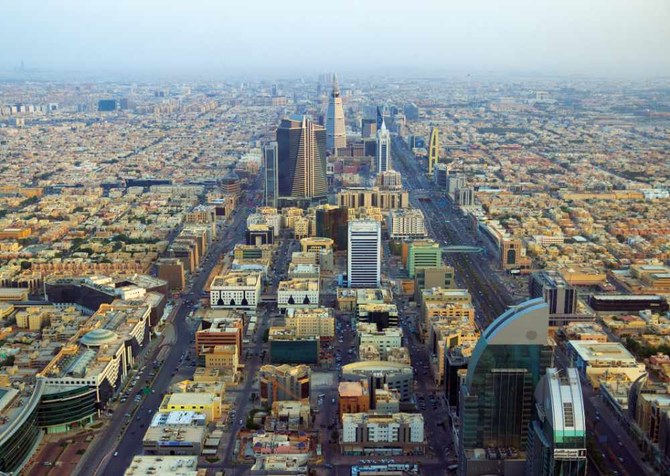
One of the challenges facing Saudi state budget now is managing the fiscal deficits and how to cover them until reaching a break-even point, says expert. (Shutterstock)
Short Url
Updated 04 May 2020
Follow

Drastic change expected in Saudi Arabia’s fiscal program due to COVID-19, oil prices

  • Experts suggest budget cuts, privatizations potentially on the cards to help weather storm

RIYADH: A number of economic and finance experts have predicted that the Kingdom’s fiscal balance program will undergo drastic changes and will be more conservative over the medium term to manage the fiscal deficit.

A former International Monetary Fund (IMF) expert, who requested anonymity, told Arab News that international organizations would offer their services to the Kingdom to help it overcome the rare financial crisis resulting from the coronavirus disease (COVID-19) pandemic, coupled with the slump in global oil prices.

The Saudi stock index dropped to 5.7 percent, recording the largest daily loss since March 9, amid government plans to adopt drastic measures to handle the crisis.

The Saudi finance minister, Mohammed Al-Jadaan, said on Saturday that the Kingdom would take draconian measures that might be painful in order to deal with the crisis and pointed out that all options remained open to it.

According to the IMF expert, Al-Jadaan implied moving towards three options for handling the COVID-19 pandemic: Fiscal consolidation, subsidies removal, and increased fees and taxes.

He pointed out that the Kingdom’s public finances were facing multiple challenges amid the fight against COVID-19, including revenue challenges, manifest in the decline in oil revenue by approximately 50 percent due to the collapse in prices.

“The expenditure challenge can be summed up in the increased cost of the health bill. The current expenditure is more than 80 percent and is difficult to lower. So the challenge is fiscal sustainability in the short and medium term, and the final outcome depends on the duration of the COVID-19 crisis” the expert explained.

Mohammed Fahad Alomran, president of the Gulf Center for Financial Consultancy, said Al-Jadaan highlighted the need to rationalize government spending to cope with the anticipated decline in revenue by almost 50 percent. The government will adopt severe austerity measures on less important spending items in the budget with an objective to minimize the anticipated deficit, he said. This will have a negative effect on liquidity in general and, hence, on the valuation of all assets such as public equity, private equity and real estate.

“One of the challenges facing the state budget now is managing the fiscal deficits and how to cover them until reaching a break-even point. This will lead to a fundamental change of the fiscal balance program to be more conservative over the medium term. The options available right now can be deficit financing, government spending cuts and privatization programs,” Alomran said.

Hassan Alwatban, an economic consultant, said one of the challenges facing Saudi Arabia was how to handle the economic crisis and make use of the economic rationalization policies in order to cut down on spending and diversify sources of income.

“The COVID-19 impact will definitely reach the oil prices which will continue to drop as a result on the decrease in crude demand. OPEC+ plays a pivotal role in reducing the losses from oil prices through holding negotiations with OPEC members. This is the only way to reduce the output in the markets and support the crude prices and improve the monetary resources. It is important that the OPEC policies should be followed and adhered to. The advanced countries are the most affected by COVID-19 as their factories have stopped,” he said.

Ahmed A. Al-Jubair, a financial consultant and a member of the Saudi Economic Society, said he believed that the Kingdom’s huge reserves, government assets, the Saudi Sovereign Wealth Fund’s investments and Saudi Aramco would help the Kingdom overcome the challenges of COVID-19 and curb its impact on the local economy, and ensure financial and economic sustainability.

“We have trust in the Kingdom’s financial and economic policies which take into consideration the appropriate solutions for any problems facing the national economy. Saudi Arabia always hedges for such situations by taking preventive measures,” he said.


Arab food and beverage sector draws $22bn in foreign investment over 2 decades: Dhaman 

Updated 28 December 2025
Follow

Arab food and beverage sector draws $22bn in foreign investment over 2 decades: Dhaman 

JEDDAH: Foreign investors committed about $22 billion to the Arab region’s food and beverage sector over the past two decades, backing 516 projects that generated roughly 93,000 jobs, according to a new sectoral report. 

In its third food and beverage industry study for 2025, the Arab Investment and Export Credit Guarantee Corp., known as Dhaman, said the bulk of investment flowed to a handful of markets. Egypt, Saudi Arabia, the UAE, Morocco and Qatar attracted 421 projects — about 82 percent of the total — with capital expenditure exceeding $17 billion, or nearly four-fifths of overall investment. 

Projects in those five countries accounted for around 71,000 jobs, representing 76 percent of total employment created by foreign direct investment in the sector over the 2003–2024 period, the report said, according to figures carried by the Kuwait News Agency. 

“The US has been the region's top food and beverage investor over the past 22 years with 74 projects or 14 projects of the total, and Capex of approximately $4 billion or 18 percent of the total, creating more than 14,000 jobs,” KUNA reported. 

Investment was also concentrated among a small group of multinational players. The sector’s top 10 foreign investors accounted for roughly 15 percent of projects, 32 percent of capital expenditure and 29 percent of newly created jobs.  

Swiss food group Nestlé led in project count with 14 initiatives, while Ukrainian agribusiness firm NIBULON topped capital spending and job creation, investing $2 billion and generating around 6,000 jobs. 

At the inter-Arab investment level, the report noted that 12 Arab countries invested in 108 projects, accounting for about 21 percent of total FDI projects in the sector over the past 22 years. These initiatives, carried out by 65 companies, involved $6.5 billion in capital expenditure, representing 30 percent of total FDI, and generated nearly 28,000 jobs. 

The UAE led inter-Arab investments, accounting for 45 percent of total projects and 58 percent of total capital expenditure, the report added, according to KUNA. 

The report also noted that the UAE, Saudi Arabia, Egypt, and Qatar topped the Arab ranking as the most attractive countries for investment in the sector in 2024, followed by Oman, Bahrain, Algeria, Morocco, and Kuwait. 

Looking ahead, Dhaman expects consumer demand to continue rising. Food and non-alcoholic beverage sales across 16 Arab countries are projected to increase 8.6 percent to more than $430 billion by the end of 2025, equivalent to 4.2 percent of global sales, before exceeding $560 billion by 2029. 

Sales are expected to remain highly concentrated geographically, with Egypt, Saudi Arabia, Algeria, the UAE and Iraq accounting for about 77 percent of the regional total. By product category, meat and poultry are forecast to lead with sales of about $106 billion, followed by cereals, pasta and baked goods at roughly $63 billion. 

Average annual per capita spending on food and non-alcoholic beverages in the region is projected to rise 7.2 percent to more than $1,845 by the end of 2025, approaching the global average, and to reach about $2,255 by 2029. Household spending on these products is expected to represent 25.8 percent of total expenditure in 13 Arab countries, above the global average of 24.2 percent. 

Arab external trade in food and beverages grew more than 15 percent in 2024 to $195 billion, with exports rising 18 percent to $56 billion and imports increasing 14 percent to $139 billion. Brazil was the largest foreign supplier to the region, exporting $16.5 billion worth of products, while Saudi Arabia ranked as the top Arab exporter at $6.6 billion.