

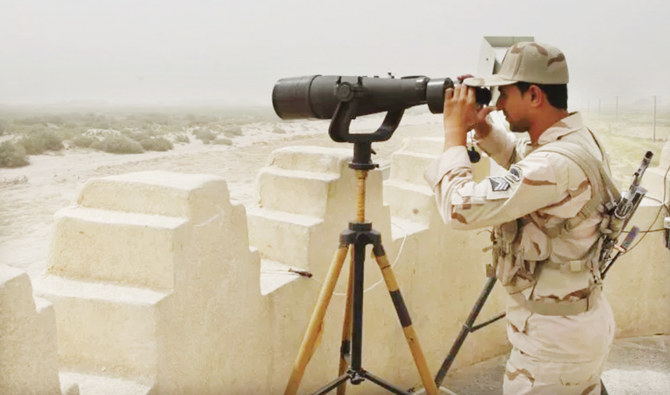

KABUL: Afghanistan on Sunday said it was investigating allegations that some of its nationals had died after being thrown into a river by Iranian border guards.
The incident is reported to have happened near western Herat, along the border with Iran, on Wednesday.
Media reports said that 57 Afghans had allegedly entered Iran illegally for work. They were arrested by Iranian border security forces, tortured and then hurled into the Harirud river. Afghanistan, Iran and Turkmenistan share the Harirud river basin.
“The caretaker of the Foreign Ministry, upon receiving media reports about the killing of Afghan passengers along the border with Iran … has demanded an all-sided investigation … so that the necessary decisions can be adopted based in light of the facts,” Gran Hewad, a Foreign Ministry spokesman in Kabul,
told Arab News.
Jailani Farhad, a spokesman for Herat’s governor, told Arab News that local authorities were checking the reports but that nobody had yet filed a complaint.
Iran’s embassy in Kabul could not be reached for comment when contacted by Arab News on Sunday. However, according to a Reuters report, the Iranian Consulate in Herat denied the allegations.
“Iranian border guards have not arrested any Afghan citizens,” the consulate said in a statement as reported by Reuters, adding that doctors at Herat District Hospital said they had received the bodies of Afghan migrants and that some of them had drowned.
HIGHLIGHT
TV footage on local media channels showed two bodies covered in long scarves in the back of a car in a Herat hospital compound, and three more wrapped in shrouds in the hospital’s yard.
“So far five bodies have been transferred to the hospital. Of these bodies, it’s clear that four died due to drowning,” Aref Jalali, head of Herat District Hospital, told the news agency.
TV footage on local media channels showed two bodies covered in long scarves in the back of a car in a Herat hospital compound, and three more wrapped in shrouds in the
hospital’s yard.
Shir Agha, who said he survived the violence, told Reuters that at least 23 of the 57 people thrown into the river by Iranian soldiers were dead.
“Iranian soldiers warned us that if we do not throw ourselves into the water, we will be shot,” Agha said.
The incident, if confirmed, could ignite a diplomatic crisis between the two countries.
Iran has drawn millions of Afghan migrants since the war began in the country four decades ago. Some migrated with legal documents, while thousands crossed the border illegally in search of a better livelihood.
However, there has been a drop in numbers mainly due to US sanctions and an uptick in the number of COVID-19 deaths in Iran.
As of Sunday, at least 541 infected people were from Herat province, which recorded 13 deaths, with the majority of positive cases found among Afghan returnees from Iran, Rafiq Shirzad, a health ministry spokesman in Herat, said, according to the Reuters report.
The Afghan Taliban urged Iran not to mistreat Afghans.
“While our country lives under the occupation of Americans, many of our people are grappling with poverty and difficulties,” Qari Mohammad Yousuf, a spokesman for the armed group, said. “Some of our countrymen, due to some constraints for work and daily wages, try to go to neighbouring countries. Therefore, we hope that authorities of the Islamic Republic of Iran deal with Afghans based on Islamic brotherhood and neighborhood.”


