

Bangladesh goes beyond duty to treat coronavirus-infected police officials

1 / 5
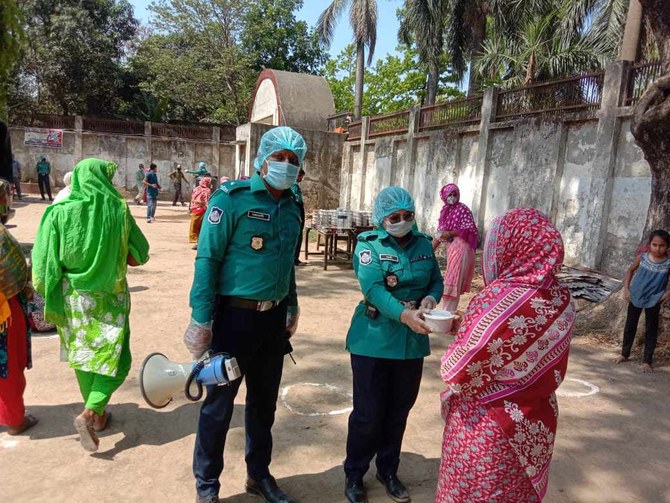
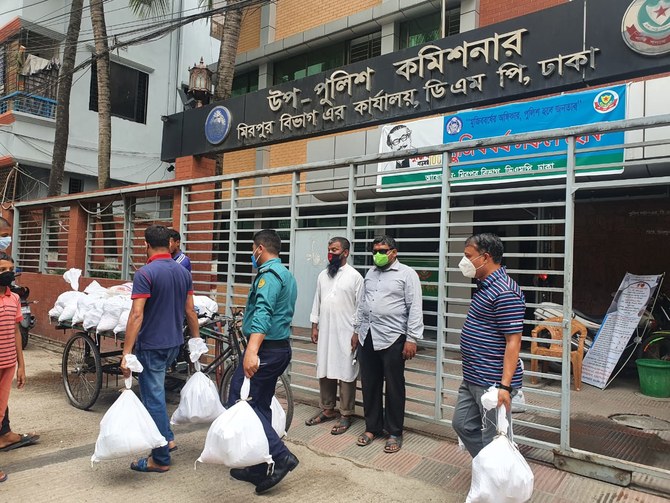
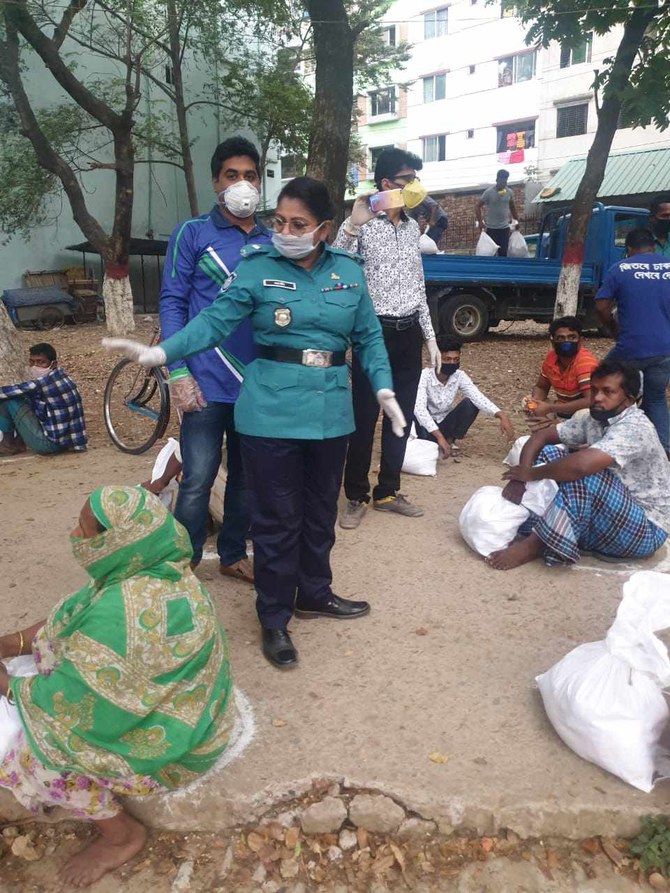
Dhaka Metropolitan Police officials distribute relief packages among the needy in the Mirpur area of Dhaka on April 23. (AN photo by Shehab Sumon)
2 / 5
Dhaka Metropolitan Police officials distribute relief packages among the needy in the Mirpur area of Dhaka on April 23. (AN photo by Shehab Sumon)
3 / 5
Dhaka Metropolitan Police officials distribute relief packages among the needy in the Mirpur area of Dhaka on April 23. (AN photo by Shehab Sumon)
4 / 5
Dhaka Metropolitan Police officials distribute relief packages among the needy in the Mirpur area of Dhaka on April 23. (AN photo by Shehab Sumon)
5 / 5
Dhaka Metropolitan Police officials distribute relief packages among the needy in the Mirpur area of Dhaka on April 23. (AN photo by Shehab Sumon)
Short Url
Updated 02 May 2020
Follow

Bangladesh goes beyond duty to treat coronavirus-infected police officials

  • Follows reports of five deaths and 741 infections among personnel on duty
  • Dhaka police hospital struggling to deal with rise in infections

DHAKA: Health authorities in Bangladesh were rushing to make arrangements for the treatment of Covid-19 positive police officials on Saturday following reports of five deaths in the past four days and 741 confirmed cases of infections.

The Central Police Hospital (CPH) in the capital, Dhaka, said that it was operating beyond capacity, with “560 Covid-19 infected officers under treatment at the facility which has only 250 beds.”

“To deal with the burden of extra patients we had to expand the hospital services to two other buildings,” said Dr. Hasan Ul Haider, the director of CPH and deputy inspector general of police, on Saturday. 

CPH officials said they were struggling to deal with the rise in infections with a limited number of health professionals.

“We have around 65 doctors and 70 nurses to deliver the services on the front line. But only one-third of the health professionals can provide services at a time due while maintaining the health protocols. The CPH is also considering outsourcing health professionals to meet the demands,” Haider said.

He added that out of 15 ICU beds, 10 were occupied on Saturday, despite the hospital making arrangements for additional ventilators.

With the nationwide lockdown imposed in March, police officials were deployed to ensure residents adhered to the strict quarantine and anti-virus measures across the country.

Nearly half of the infections were traced to the Dhaka Metropolitan Police area, prompting authorities to strengthen precautionary measures there. 

“At the beginning of the outbreak some police members were not very serious about wearing masks and other protective gear which might have exposed them to the contagious virus while delivering duties in the highly populated urban areas including city slums,” said Mahmuda Afroz Lucky, assistant deputy commissioner of Dhaka’s Mirpur Zone.

Although all police members were provided with personal protective equipment, many of them might have worn it improperly, she said, adding that all personnel had been trained in social distancing measures.

“We had made separate teams for three shifts who are on duty for seven days at a stretch. Moreover, to avoid congested living conditions in the police barracks, we have organized accommodation at different hotels and educational institutions for them,” Lucky said.

“On entering the barracks, police members should change their clothes ... and disinfect the barracks after each shift or at intervals of every six hours,” said Prof. Mozaherul Huq, former regional advisor of WHO’s Southeast Asia region. 

However, infected police officials expressed optimism that they would overcome the crisis through their collective effort. 

“I was admitted here with high fever and coughing one week ago and am feeling better in the last two days. Every day, my boss used to call me in the morning to know how I was doing. I am not feeling alone at all,” said a police constable requesting anonymity, as he is not authorized to speak to the media.

K. M. Kamrul Ahsan, the spokesperson for the police headquarters, added that all unit heads of police had been asked to ensure the “best treatment” for the infected personnel.

“In addition to 22 police hospitals across the country, we have made arrangements at five more private hospitals to treat the Covid-19 patients,” Ahsan said.

As of Saturday, there were 8,790 Covid-19 patients across the country, with 175 deaths reported.


Venezuela to debate historic amnesty bill for political prisoners

Updated 3 sec ago
Follow

Venezuela to debate historic amnesty bill for political prisoners

  • Venezuela could pass a landmark bill on Thursday granting amnesty to political prisoners, marking an early milestone in the transition from the rule of toppled leader Nicolas Maduro
CARACAS:Venezuela could pass a landmark bill on Thursday granting amnesty to political prisoners, marking an early milestone in the transition from the rule of toppled leader Nicolas Maduro.
The legislation, which covers charges used to lock up dissidents under Maduro and his predecessor Hugo Chavez, aims to turn the page on nearly three decades of state repression.
It was spearheaded by interim president Delcy Rodriguez, who replaced Maduro after he was captured by US forces in Caracas last month and flown to New York to face trial.
Rodriguez took Maduro’s place with the consent of US President Donald Trump, provided she does Washington’s bidding on access to Venezuelan oil and expanding democratic freedoms.
She has already started releasing political prisoners ahead of the pending amnesty. More than 400 people have been released so far, according to rights group Foro Penal, but many more are still behind bars.
Rodriguez also ordered the closure of the notorious Helicoide prison in Caracas, which has been denounced as a torture center by the opposition and activists.
Lawmakers voted last week in favor of the amnesty bill in the first of two debates.
The second debate on Thursday coincides with Youth Day in Venezuela, which is traditionally marked by protests.
Students from the Central University of Venezuela, one of the country’s largest schools and home to criticism of Chavismo, called for a rally on campus.
Venezuela’s ruling party also announced a march in the capital Caracas.
’We deserve peace’
Venezuela’s attorney general said Wednesday that the amnesty — which is meant to clear the rap sheets of hundreds of people jailed for challenging the Maduro regime — must apply to both opposition and government figures.
He urged the United States to release Maduro and his wife, both in detention in New York.
“We deserve peace, and everything should be debated through dialogue,” Attorney General Tarek William Saab told AFP in an interview.
Delcy Rodriguez’s brother Jorge Rodriguez, who presides over the National Assembly, said last week that the law’s approval would trigger the release of all political prisoners.
“Once this law is approved, they will all be released the very same day,” he told prisoners’ families outside the notorious Zona 7 detention center in Caracas.
’We are all afraid’
Venezuelan opposition leader Juan Pablo Guanipa was one of the detainees granted early release.
But he was re-arrested less than 12 hours later and put under house arrest.
Authorities accused him of violating his parole after calling for elections during a visit to Helicoide prison, where he joined a demonstration with the families of political prisoners.
Guanipa is a close ally of Nobel Peace Prize laureate and opposition leader Maria Corina Machado, who was in hiding for over a year before she fled the country to travel to Oslo to receive the award.
“We are all afraid, but we have to keep fighting so we can speak and live in peace,” Guanipa’s son told reporters outside his home in Maracaibo.