Quiet on Rawalpindi’s famous food street tells of virus impact on Ramadan

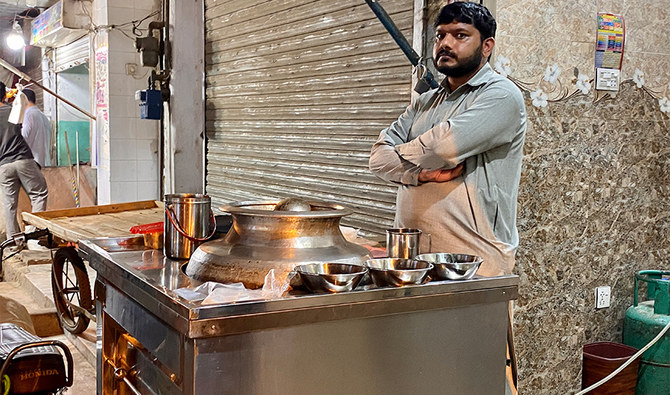
A street food seller in Kartarpura street in Rawalpindi is waiting for customers who before the pandemic would stand in long lines to get served. (AN Photo)
Short Url
Updated 03 May 2020
Follow

Quiet on Rawalpindi’s famous food street tells of virus impact on Ramadan

  • Kartarpura street would normally be teeming with people waiting in long queues at restaurants and food stalls
  • Amid the coronavirus pandemic, restaurants had to shut down or retool to enforce social distancing

ISLAMABAD: Kartarpura street has since time immemorial been the most favorite area for denizens of Rawalpindi and Islamabad to go for their predawn meal during Ramadan. But not this year.

The famous street would normally be bustling with food stalls serving up all kinds of Pakistani dishes and teeming with people waiting in long queues for their turn.

“Last year, no one would imagine this street could have such a deserted look. There would be so much rush during Ramadan that after 1:00 a.m. you would have to wait for at least an hour to get a place to sit for sehri,” said Muhammad Yousaf who sells siri paya in Kartarpura street.
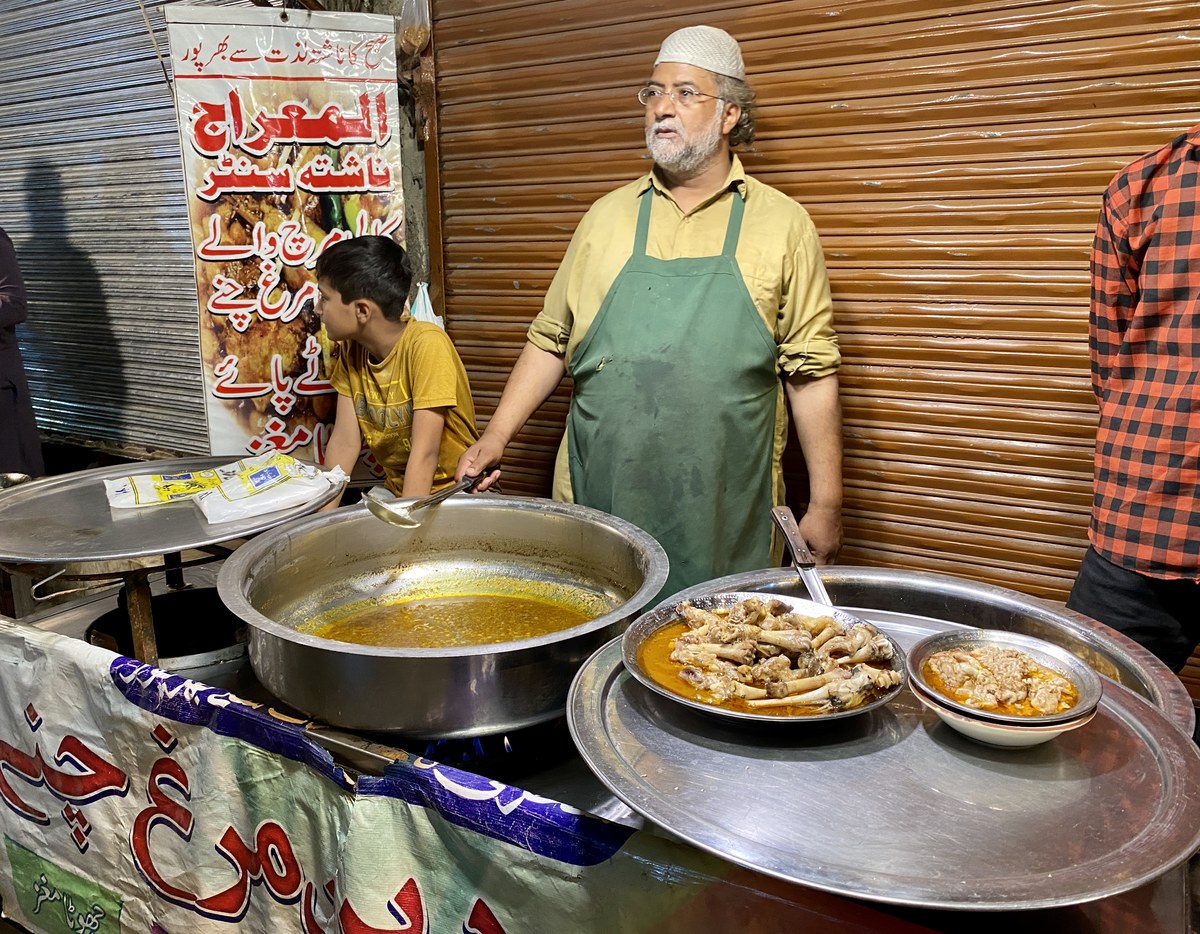


 A vendor is waiting for customers in Kartarpura street, Rawalpindi on May 1, 2020. (AN Photo)

Yousaf told Arab News that during the fasting month he would have customers arriving from as far as Hassan Abdal or Murree — each over 60 kilometers away — to have for sehri, or sahur, his traditional breakfast dish of cow or goat head and trotters cooked overnight. 

In the 19th century, the two-kilometer street was part of Rawalpindi’s Sikh neighborhood and the city’s main commercial area, but for the past few decades it has been known as “sehri food street,” famous for treats such as nihari — tender slow-cooked beef or mutton meat with bone marrow.
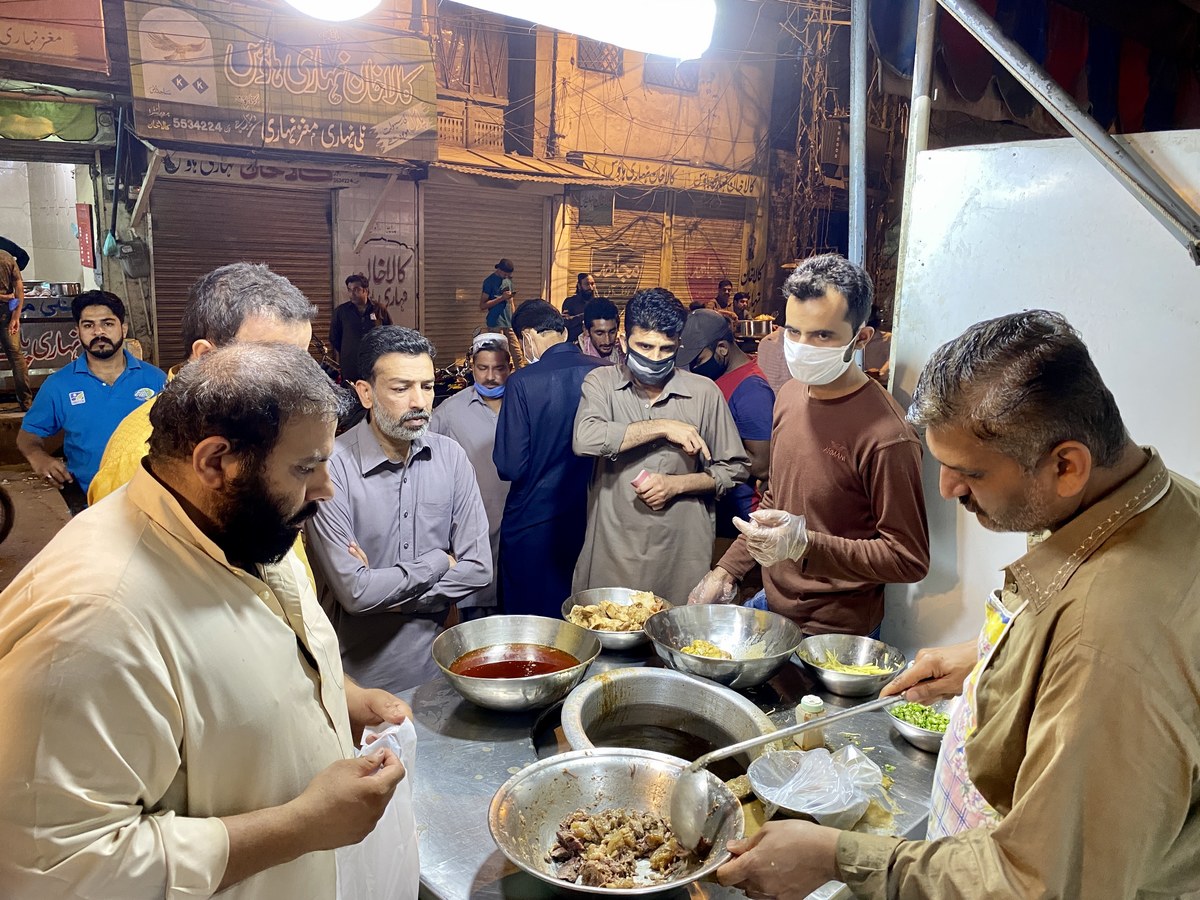


Not all of those who came to have their predawn Ramadan meal in the famous food street of Rawalpindi are observing social distancing. (AN Photo)

Other delicacies that draw crowds to the Kartarpura area are murgh chana — chicken meat cooked with chickpeas and spices — spiced bakharkhani flatbreads, or keema naan, which is a lamb meat mixture rolled into a leavened, oven-baked bread.

But the coronavirus pandemic has forced many restaurants and food stalls to shut down or retool to observe social distancing, casting shadow on the fasting month which is rooted in festivity, gatherings and togetherness. 
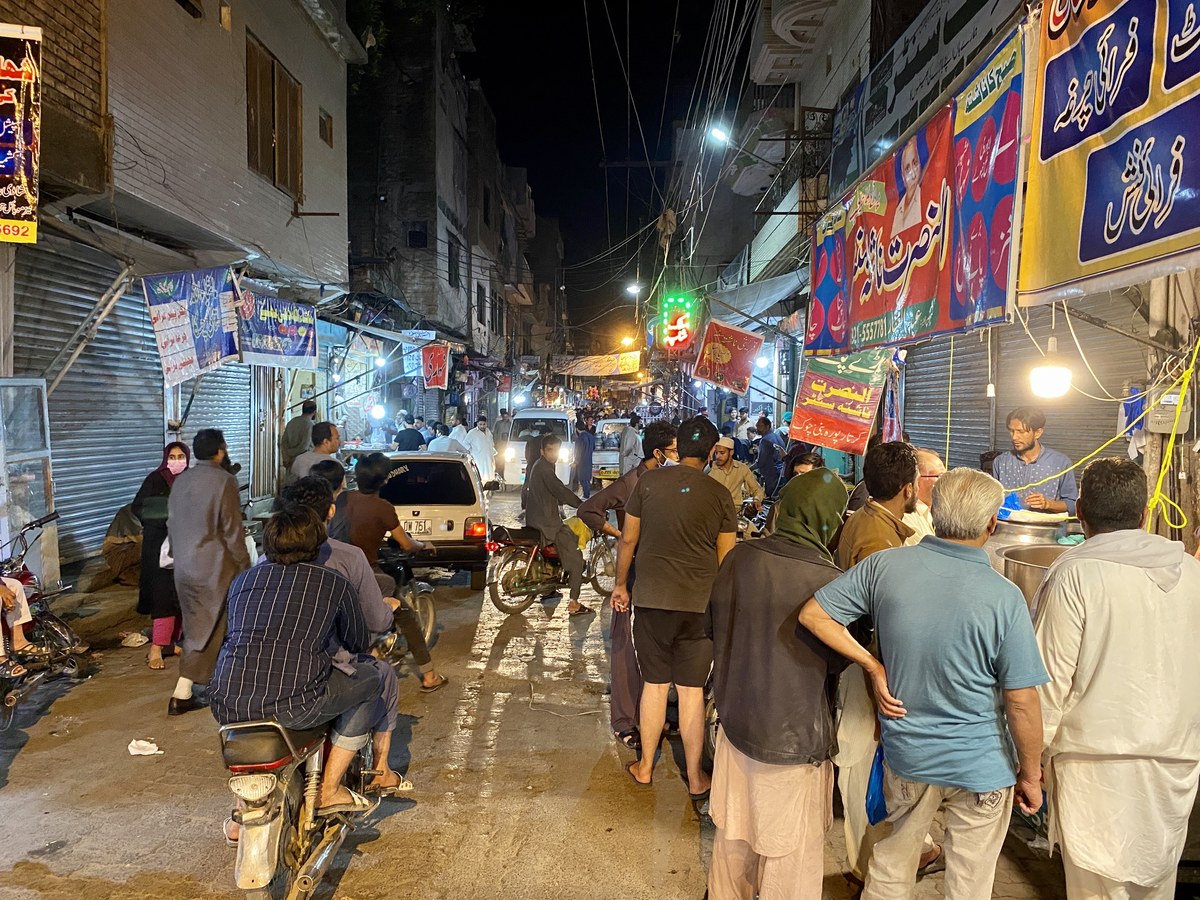


Kartarpura street in Rawalpindi has a deserted look on May 1, 2020. During Ramadan it would normally be teeming with people waiting in long queues at restaurants and food stalls to have their predawn meal with family and friends. (AN Photo)

The quiet on Kartarpura street reflects this enforced separation, which is particularly disturbing during the holiest month in the Islamic calendar.

“I established my nihari shop 25 years ago. We would earn about Rs25,000 ($155) a day during Ramadan, but this time we are only making about Rs8,000 by selling food for delivery,” said Sikandar Kala Khan, owner of “Kala Nihari,” the most popular nihari stall in the neighborhood.
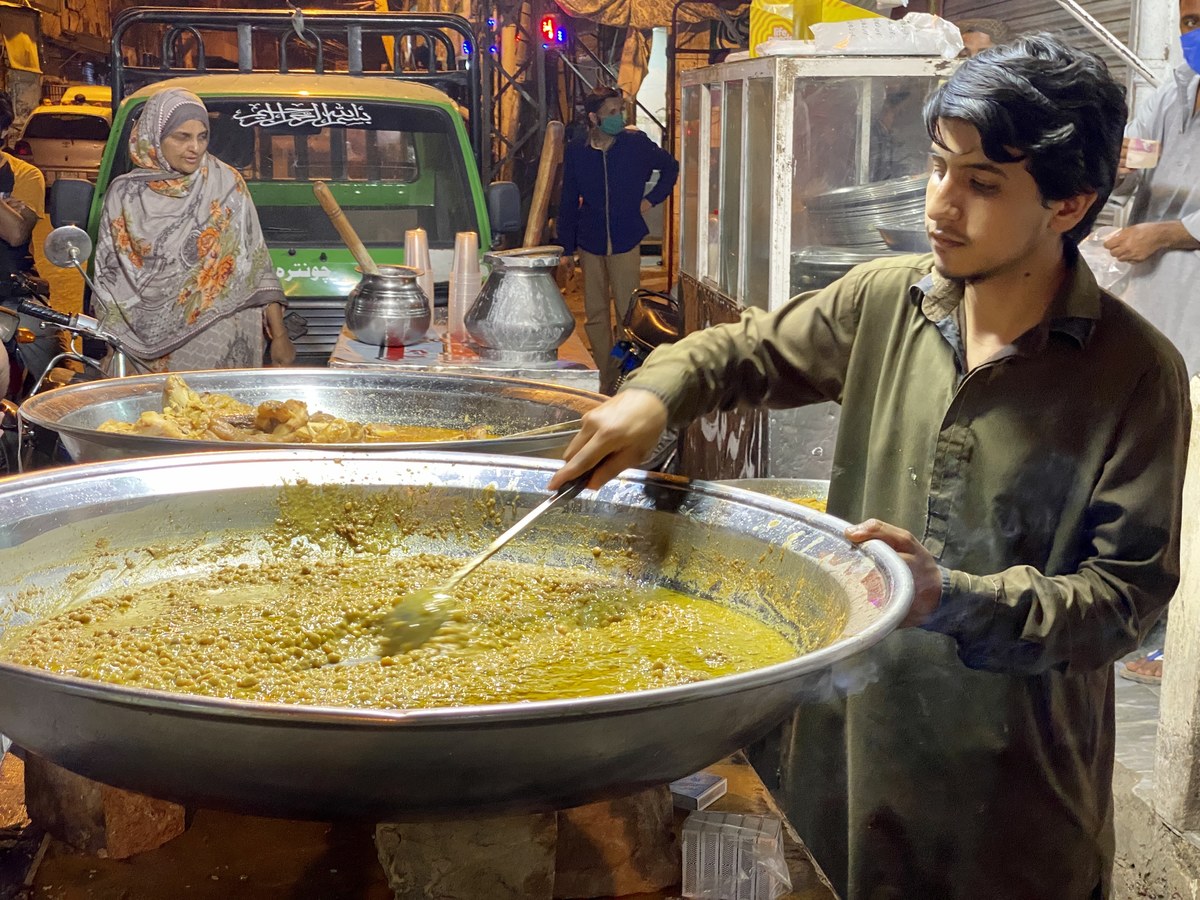


Chickpea masala sellers are waiting for customers in Kartarpura street, Rawalpindi on May 1, 2020. (AN Photo)

In previous years, demand for his nihari was so great that he would rent two floors for his business during the fasting month. And even that was not enough as people would flock to the place and wait in long lines to have their serving of the deep red stew.

“I come here for the special beef nihari. We regularly come during Ramadan to enjoy sitting on the street and eating with friends,” said Aimal Khan, a university student, “All of it is missing this time due to the coronavirus.”


Islamabad says Pakistan Saudi Arabia Economic Cooperation Framework initiatives ‘being materialized’

Updated 4 sec ago
Follow

Islamabad says Pakistan Saudi Arabia Economic Cooperation Framework initiatives ‘being materialized’

  • Pakistan, Saudi Arabia agreed to launch framework in October to expand trade, investment ties in priority sectors
  • Pakistan views Saudi Arabia as a vital regional ally that has helped it avert macroeconomic crises over the years

ISLAMABAD: Pakistan’s foreign office spokesperson said on Thursday that certain initiatives related to the Pakistan Saudi Arabia Economic Cooperation Framework “are being materialized,” describing the economic partnership between the two countries as “solid, firmly rooted.”

Islamabad and Riyadh agreed to launch an Economic Cooperation Framework in October, as per the Prime Minister’s Office (PMO), to expand bilateral trade and investment ties. This decision was taken during a meeting between Prime Minister Shehbaz Sharif and Saudi Crown Prince Mohammed bin Salman in Riyadh. 

Sharif’s office had said the framework will see the two countries focus on priority sectors including energy, industry, mining, information technology, tourism, agriculture and food security. 

“Pakistan-Saudi economic partnership is solid, firmly rooted,” Tahir Andrabi, the foreign office spokesperson, said during a weekly news briefing. “There were certain initiatives taken during the visit of our prime minister to the Kingdom of Saudi Arabia and are being materialized.”

Andrabi said Pakistan’s Special Investment Facilitation Council (SIFC) and the Board of Investment are working on “individual investments” between the two countries but did not provide any further details. 

Pakistan’s Finance Minister Muhammad Aurangzeb departed for Riyadh on Wednesday to attend the three-day Global Development Finance Conference, where he is expected to present Islamabad’s perspective on climate adaptation and financing.

“During the conference, Finance Minister Senator Muhammad Aurangzeb will participate in a high-level session on climate adaptation and resilience, where he will join global leaders in discussing how developing countries can secure the capital needed to address climate vulnerabilities,” the Finance Division said in a statement on Wednesday. 

Aurangzeb is also scheduled to hold bilateral meetings with senior Saudi officials, including leadership of the National Development Fund and the Ministry of Finance, to discuss development financing, investment opportunities and broader economic cooperation.

The finance chief will additionally meet Pakistan’s diplomatic mission in Riyadh to review ongoing economic diplomacy initiatives.

Pakistan and Saudi Arabia have long enjoyed close ties but have sought to broaden cooperation in recent months. 

In September, the two countries signed a security agreement pledging that aggression against one would be treated as an attack on both. The move was widely viewed as formalizing longstanding military cooperation into a binding commitment aimed at bolstering joint deterrence.

The Kingdom also hosts more than 2.5 million Pakistani expatriates and serves as the largest source of remittances for Pakistan’s $407 billion economy.