ISLAMABAD: The government is weighing options to review a constitutional amendment, which a decade ago granted greater autonomy to provinces.
The 18th Amendment to the Constitution of Pakistan was passed by the National Assembly in 2010, supported by the Pakistan Muslim League-Nawaz (PML-N) and Pakistan People’s Party (PPP).
While it primarily turned Pakistan into a parliamentary republic and removed the power of the president to dissolve the parliament, the amendment also devolved 18 federal ministries to the provinces. It also removed a ban on prime minister serving more than two terms, clearing the way for PML-N chief Nawaz Sharif to take office for a third time in 2013.
Amendment to the amendment has been discussed several times since Prime Minister Imran Khan's party, Pakistan Tehreek-e-Insaf (PTI) came into power in 2018, attracting criticism from the opposition, especially PML-N and PPP.
In its resolve to review the amendment, the ruling party cites the need to fix several flaws and restore federal authority over legislation and financial matters.
"The amendment was a major step towards provincial autonomy in Pakistan, but some flaws have also surfaced in it with the passage of time, which need to be fixed," Minister of State for Parliamentary Affairs Ali Muhammad Khan told Arab News in an interview on Wednesday.
He said that while the government strongly believes in provincial autonomy and would not infringe upon provincial rights, it wants "to improve the 18th amendment in consultation with all parliamentary parties."
He said the federation’s authority over legislation and financial matters has been significantly reduced, as provinces are now autonomous to legislate over subjects such as education and health. "This is problematic in many ways … coordination issues (with provinces) have also come up during coronavirus pandemic," he said.
Meanwhile, opposition parties demand that the amendment be first fully implemented before the government starts negotiations to fix it.
"These are the tactics to distract media and public from real issues," Taj Haider, a senior PPP leader, told Arab News.
He said the federation under the amendment was bound to accept provincial ownership over natural resources and hand over 50 percent of its revenue to the relevant province, but the clause has not been implemented.
"The center is denying us (Sindh province) over Rs200 billion annually in our due share of earnings through natural gas and petroleum products," Haider said.
According to PML-N chairman Raja Zafarul Haq the debate is "untimely and useless." He said, "We should move forward instead of looking back into the history."
"The government should first tell us the flaws in the amendment, and then we will decide what to do," Haq said, adding that his party would look into the issue if the government brings in on in parliament.
Independent experts, however, argue that federal concerns over revenue distribution could be genuine as the center is left with little resources to meet its expenses. Provinces get their share from taxes collected by the government by the Federal Board of Revenue (FBR). In the fiscal year 2011-12, it was increased from 46.5 percent to 57.5 percent, affecting federal development and defense expenditure.
"There is no harm in reviewing the amendment through a democratic process," Ahmed Bilal Mehboob, president of Pakistan Institute of Legislative Development and Transparency (PILDAT), told Arab News. "Constitution is a living document and can be amended anytime, but this should be after thorough debate in the parliament."
The ruling party lacks the necessary two-third majority in both the National Assembly and Senate to amend the 18th amendment on its own.


![]()

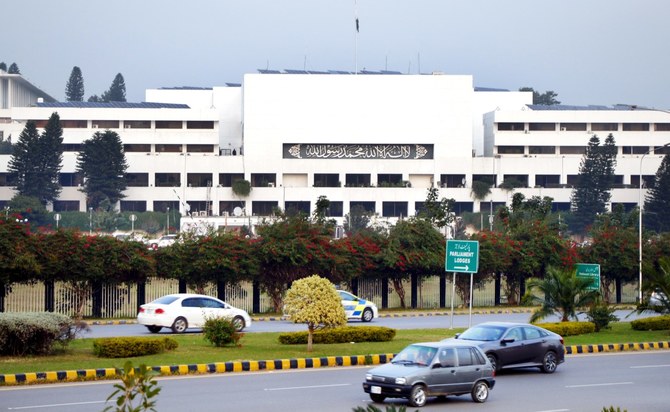
Calls for constitutional amendment stir debate over provincial autonomy
Short Url
https://arab.news/n9teg
Calls for constitutional amendment stir debate over provincial autonomy
- 18th amendment passed in 2010 granted financial and legislative autonomy to provinces
- Under the amendment, federation is bound to accept provincial ownership of natural resources
Latest updates





© 2026 SAUDI RESEARCH & PUBLISHING COMPANY, All Rights Reserved And subject to Terms of Use Agreement.