Muslim World League launches emergency virus aid to 16 countries

1 / 4
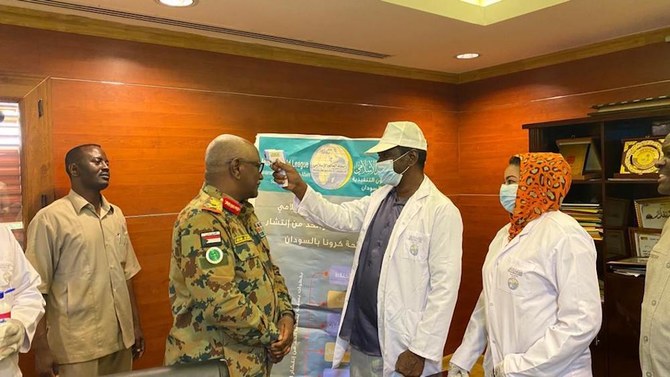
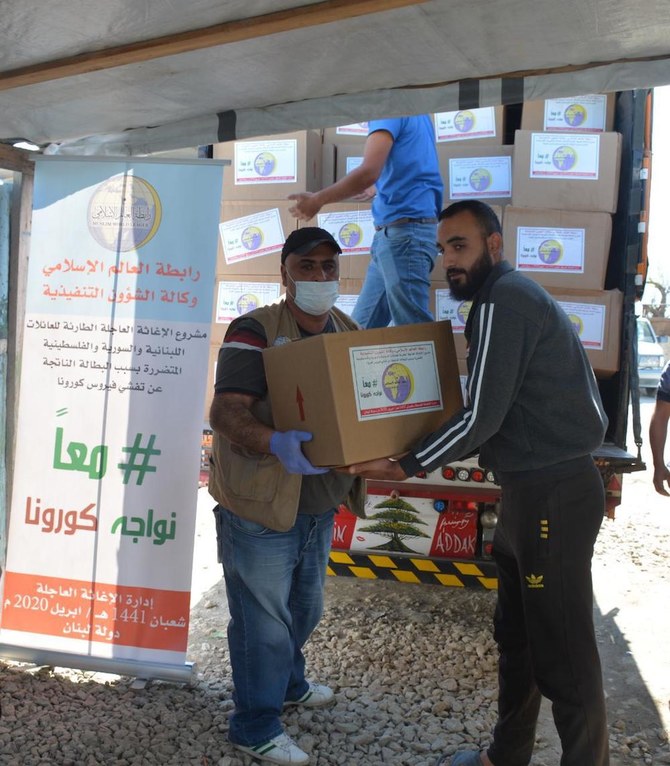
The MWL is implementing a comprehensive plan to minimize the impact of the pandemic on countries in Asia, Africa and Europe. (AN Photo)
2 / 4
The MWL is implementing a comprehensive plan to minimize the impact of the pandemic on countries in Asia, Africa and Europe. (AN Photo)
3 / 4
The MWL is implementing a comprehensive plan to minimize the impact of the pandemic on countries in Asia, Africa and Europe. (AN Photo)
4 / 4
The MWL is implementing a comprehensive plan to minimize the impact of the pandemic on countries in Asia, Africa and Europe. (AN Photo)
Short Url
Updated 23 April 2020
Follow

Muslim World League launches emergency virus aid to 16 countries

  • Public hospitals treating coronavirus cases will be equipped with intensive care beds, monitors, ventilators and oxygen cylinders along with medical accessories
  • Awareness brochures and integrated medical bags containing face masks and sterilizers will be distributed, and government buildings and institutions disinfected

MAKKAH: The Muslim World League (MWL) has launched emergency initiatives to help 16 countries along with international organizations deal with the coronavirus pandemic.

The emergency plan is in line with measures taken by the UN, the World Health Organization (WHO) and governments of the benefiting countries.

Spokesperson Abdulwahab Al-Shehri said that the MWL is implementing the comprehensive plan to minimize the impact of the pandemic on countries in Asia, Africa and Europe.

“The initiative’s first phase will cover 16 Muslim and non-Muslim countries, going from the league’s approach based on the noble Islamic values of righteousness and benevolence,” he said.

Sheikh Mohammed bin Abdulkarim Al-Issa, MWL secretary-general, has asked the heads of the league’s offices around the world to directly cooperate with international organizations and governments to implement the initiative, he added.

Al-Shehri said that the plan is being implemented through direct financial support, deliveries of medical equipment, and the supply of health, preventive and educational needs for health centers and hospitals, as well as food aid for vulnerable people.

Direct financial support will include the WHO along with the governments and health ministries of affected countries. Aid will be carried out through the league’s strategic partnerships with governments and international organizations, which will then buy medical equipment and supplies to combat the virus.

Public hospitals treating coronavirus cases will be equipped with intensive care beds, monitors, ventilators and oxygen cylinders along with medical accessories.

Awareness brochures and integrated medical bags containing face masks and sterilizers will be distributed, and government buildings and institutions disinfected as part of the initiative.

The MWL will support governments following WHO recommendations to limit the spread of the virus, such as locking down cities and home quarantine, by providing food to poor and disadvantaged communities, remote villages, orphans, elders and sick people unable to leave their houses.

Convoys of trucks loaded with food baskets are being sent out daily to support needy families, Al-Shehri said.

That MWL is also producing educational and awareness films, and using its communication platforms to highlight preventive measures, and the importance of home quarantine, social distancing and personal hygiene.

Countries included in the plan’s first phase were Pakistan, Kashmir, South Africa, Malawi, Senegal, Chad, Djibouti, Sudan, Somalia, Nigeria, Afghanistan, Bosnia and Herzegovina, Croatia, Spain, Italy and Serbia.


Northern Borders rock art reveals ancient life

Updated 6 sec ago
Follow

Northern Borders rock art reveals ancient life

  • Among the most notable remains are stone structures scattered northwest of Arar
  • Evidence ranges from the Neolithic era to Islamic times, forming a chronological record

JEDDAH: Saudi Arabia’s Northern Borders region contains numerous archaeological sites, reflecting a long history of human settlement dating back to early periods, the Saudi Press Agency reported.
Among the most notable remains are stone structures scattered northwest of Arar.
Varying in shape, size and design, specialists believe these structures date to the end of the Neolithic period and the beginning of subsequent eras. They are thought to have been used as stone tombs to preserve the remains of the dead.
Evidence ranges from the Neolithic era to Islamic times, forming a chronological record that highlights the diversity of communities that once lived in the region and how they interacted with their natural environment over centuries.
Ajab Al-Otaibi, director general of antiquities at the Heritage Commission, said the stone structures and rock art sites in the Northern Borders region represent an integral part of Saudi Arabia’s national cultural heritage and serve as an important resource for archaeological studies and scientific research.
He highlighted the importance of surveys, documentation and protection efforts to preserve these cultural landmarks as a historical legacy for future generations.
The region is also home to several important rock art sites, such as Shu’ayb Hamer, which features a wide and diverse collection of drawings carved on natural rock surfaces, marking it as a key site that documented early human activity in the area.
The artworks depict scenes of hunting, horsemanship, dancing, daily life and social rituals. They were created using a variety of artistic styles, most notably framed and abstract forms, and produced through different techniques including incizing and pecking, both direct and indirect.
The carvings portray human figures and a range of animals, including camels, horses and gazelles, as well as some wild and predatory species that have long since disappeared.
These images provide insight into the richness of the natural environment in earlier periods and help researchers understand the evolving relationship between humans and their surroundings.