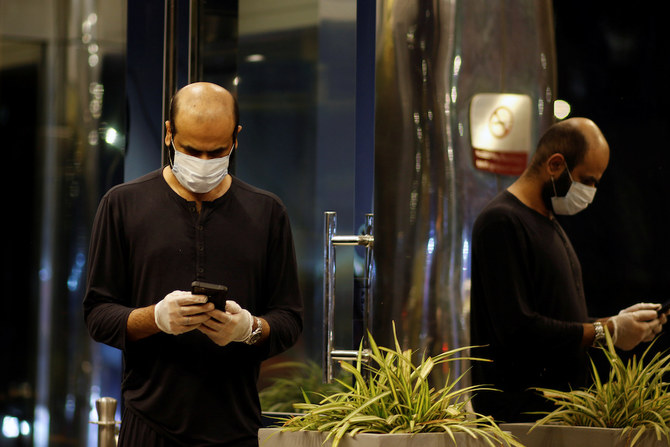
CAIRO: Bahrain extended the closure measures it took to limit the spread of coronavirus for two additional weeks which set to start from April 23 until May 7, state news agency reported on Wednesday.
Those measures include closing all cinemas, sports centres, gyms, salons, and restricting restaurants operations to food delivery and takeaway only, among other measures.
Bahrain registered 2009 cases till now with a death tally that stands at 7.


![]()


Bahrain extends closure measures for two weeks starting April 23
Short Url
https://arab.news/rpcds
Bahrain extends closure measures for two weeks starting April 23
- Those measures include closing all cinemas, sports centres, gyms and salons
- It also restricts restaurants operations to delivery and takeaway only

Lebanese government imposes immediate ban on Hezbollah’s military activities
BERUIT: Lebanon's government said Hezbollah’s overnight attack against Israel were “illegal” and imposed an immediate ban on the group’s military activities, while also demanding its hand over its weapons.
Lebanese Prime Minister Nawaf Salam said only the state could decide whether to go to war and called on the Lebanese military to prevent the firing of projectiles and detain anyone involved.
The move comes after Iran-backed Hezbollah launched rockets at Israel, provoking retaliatory Israeli strikes. The government convened for five hours and 15 minutes in an early morning meeting on Monday before reaching its decision.
The Lebanese cabinet meeting, chaired by President Joseph Aoun, started at 8am with ministers discussing the repercussions Hezbollah's launching of missiles from southern Lebanon into Israel and the Israeli attacks on Lebanon.
Sources initially told Arab News that ministers were “pushing for a decisive response to Hezbollah’s recklessness, regardless of the consequences.”
Lebanese MP Melhem Khalaf said the priority was to “shelter people that are evacuating their homes in relatively safe places. What happened at dawn on Monday has taken us from one stage to another, and we don't know where they've taken us.”
As US-Israeli attacks on Iran continued, Hezbollah said it fired missiles from Lebanon into Israel early Monday in response to the killing of Iranian Supreme Leader Ali Khamenei and “repeated Israeli aggressions.”
There were no reports of injuries or damage, and Israel said it had intercepted one projectile, while several fell in open areas.
Israel retaliated with strikes on Lebanon, killing at least 31 people and wounding 149 others, according to Lebanon's Health Ministry. Around two thirds of the dead were in the south of the country.
Lebanon’s government said it was holding an emergency meeting after Hezbollah’s attack triggered the Israeli airstrikes.
Iran has been firing missiles at Israel and Arab states in a counter-offensive since the joint America-Israeli attack Saturday that killed Khamenei and other top Iranian officials. The war has quickly expanded to proxy forces, including Hezbollah firing out of Lebanon.
MP Bilal Abdullah told Arab News: “All the appeals issued by officials in Lebanon not to embroil us in this destructive war seem to have been in vain. We were supposed to protect Lebanon.
“Whoever launched the missiles and drones from Lebanon has slaughtered Lebanon. Displacing people is a major tragedy. We are in the winter season, and the cold is severe.”


Latest updates



© 2026 SAUDI RESEARCH & PUBLISHING COMPANY, All Rights Reserved And subject to Terms of Use Agreement.