DUBAI: When Saudi Arabia’s ancient heritage site of AlUla announced it would open to the world in late 2020, it was on the bucket list of every fervent traveller. Who wouldn’t want to visit Hegra, the impressive Maraya Concert Hall or watch the sunset at Elephant Rock? As we approach the International Day for Monuments and Sites on April 18, it is worth commemorating these ancient lands with their 200,000 years of history — an area once pivotal for trade and the transmission of cultures, which connected Asia, Africa and Europe.
In December 2018, a new Art Jameel project was launched, training a group of 15 men and women from AlUla to learn photogrammetry, a digital mapping technique, in order to digitally record and document the heritage of the rock carvings in the area. Hosted by the Royal Commission for AlUla (RCU), the initiative took place over two weeks of intensive training led by Art Jameel, with the Factum Foundation for Digital Technology in Conservation, and supported by the Rothschild Foundation.
Yet no one could have foreseen the effects of the current coronavirus. The work done by these AlUla residents now seems to have been undertaken at just the right time. Individuals from their varying degrees of quarantine around the world will soon be able to admire and learn of the wonders of these most mystical ancient lands in Saudi Arabia.
The vast digital library comprising 3D experiences of AlUla sites and ancient rock art, due to be ready for public viewing in the next several months, will allow viewers momentary escape amidst the beauty of AlUla from the confines of varying degrees of lockdown.
“Photogrammetry allows the team to reconstruct accurate digital copies and 3D models of small immoveable heritage items like inscriptions as well as large monuments and buildings, from this we can build models of the historical sites that are not open to the public,” explained Annette Gibbons-Warren, cultural planning director at the RCU.
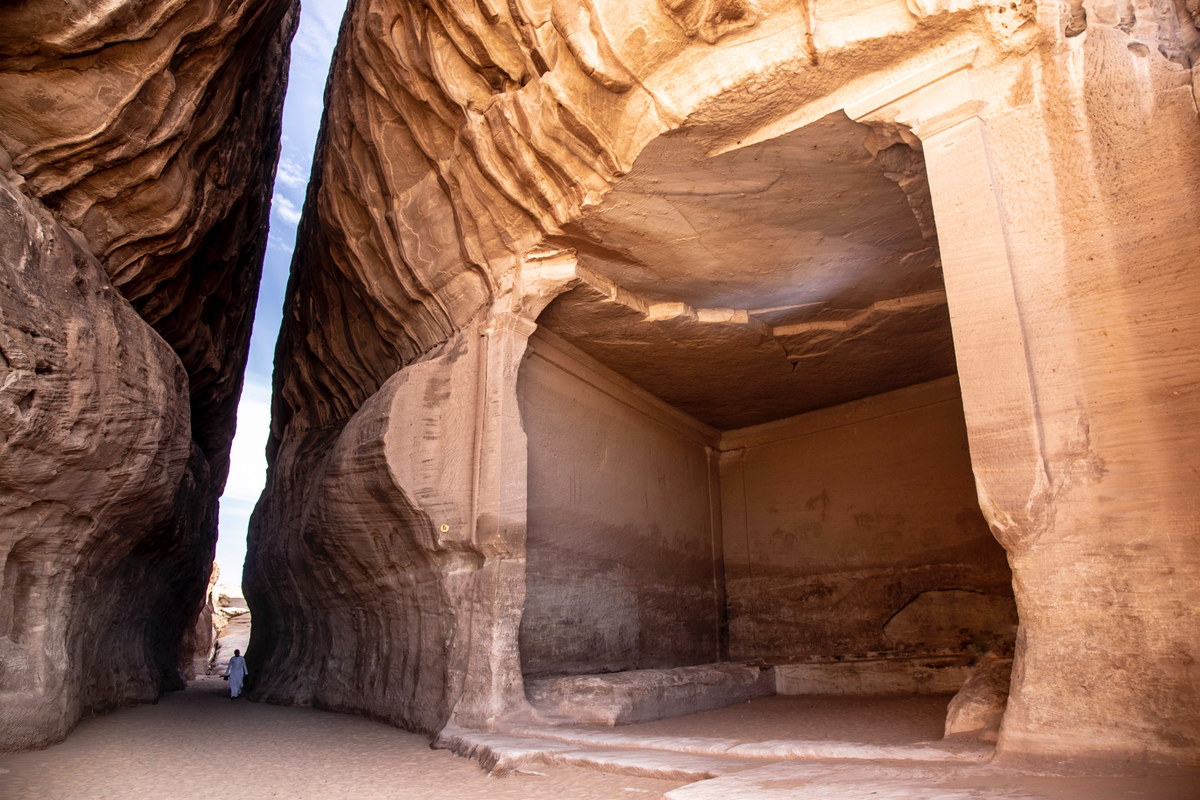
Over 9,000 sites of rock art and inscriptions have been located in AlUla. (Supplied)
The technology then enables viewers the ability to experience such heritage sites digitally. “We are moving towards this virtual experience with our Living Museum website and use of digital lenses and 360 videos,” she added.
The benefits of using this technology are twofold: It helps to preserve and protect the heritage of AlUla by aiding its conservation and research through high resolution digital document and it provides training to the local populace, fostering the growth of a heritage economy in AlUla.
“I am looking forward to continuing to develop within the field, and expanding the practice of photogrammetry in AlUla for the benefit of everyone interested in contributing to the preservation of heritage in Saudi Arabia,” said Jawharah Albalawi, one of the first phase students.
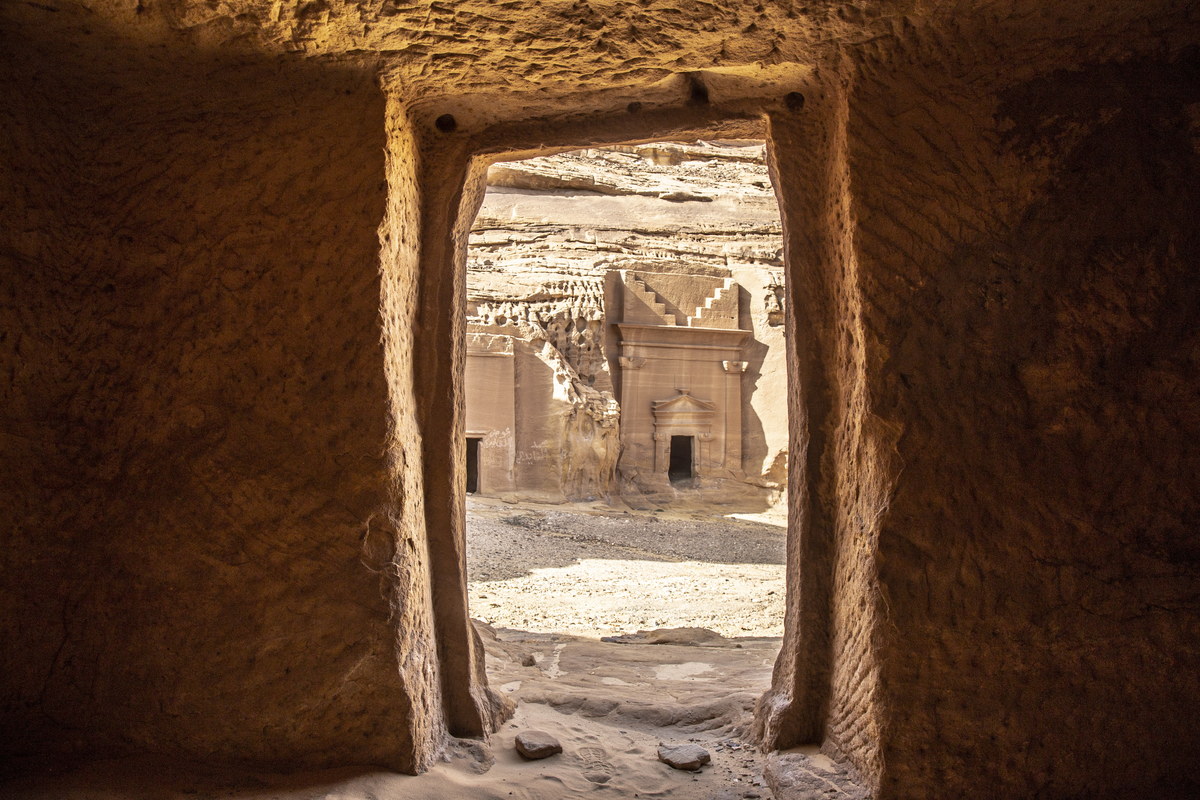
Thus far the initiatives have reached 3,500 people in the AlUla community and created more than 900 jobs. (Supplied)
The project demonstrates the RCU’s commitment to serving the local communities of AlUla through a series of community-based programs that prioritize human development. Thus far the initiatives have reached 3,500 people in the AlUla community and created more than 900 jobs.
Over 9,000 sites of rock art and inscriptions have been located in AlUla. Building the capacity to digitally document these sites is thus key to the long-term project of documenting them.
“RCU is revealing, protecting, sharing and celebrating AlUla’s extraordinary cultural heritage with the world,” said Rebecca Foote, director of archaeology and cultural heritage preservation. “Through the archeological programs we are undertaking, we are making this heritage globally accessible, shining a spotlight on AlUla’s ancient cultures and kingdoms, and demonstrating their relevance through the far-reaching cultural exchange that has taken place over millennia.”