
ISLAMABAD: The United Nations refugee agency, UNHCR, has lauded the services of a female Afghan refugee doctor, Saleema Rehman, for treating the poor amid the coronavirus pandemic.
“She is the first-ever doctor in the Afghan-Turkmen community in Pakistan, thanks to her father who played a key role in her education,” Qaiser Khan Afridi, a spokesperson for the UNHCR, told Arab News on Tuesday
The refugee agency has paid tribute to Rehman for making substantial difference to the “lives of the poorest” in Pakistan at a challenging time when the virus outbreak has confined people to their homes
“Such educated young refugees will determine the future of their countries and the future of our world,” Afridi emphasized.
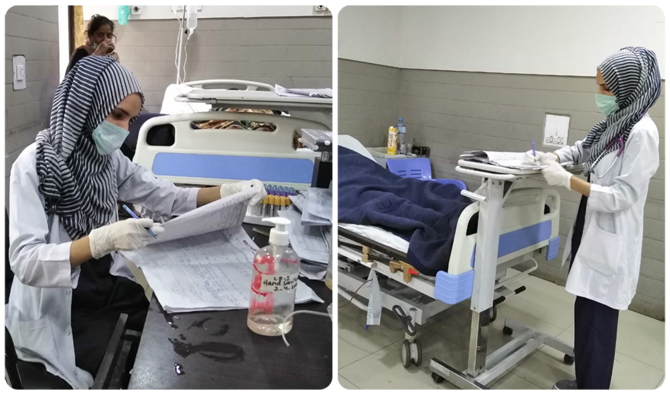
In this undated picture, Dr. Saleema Rehman, an Afghan refugee, can be seen at work at Rawalpindi's 800-bed Holy Family Hospital. (Photo courtesy: UNHCR)
The doctor is now viewed as a role model for thousands of Afghan refugee girls living across Pakistan due to her struggle, though she faces an uncertain future in the country where she was born and educated.
Rehman studied medicine at a government medical college on a reserved seat for refugee students and will be graduating after doing her specialization in January next year from the Holy Family Hospital, an 800-bed medical facility in Rawalpindi city, as a gynecologist.
“Being a refugee this is the most worrying thing for me that I won’t get an opportunity to serve the people here in Pakistan after my graduation,” she told Arab News in an interview on Sunday. “I can’t take up a government job or run a private practice in Pakistan under the rules.”
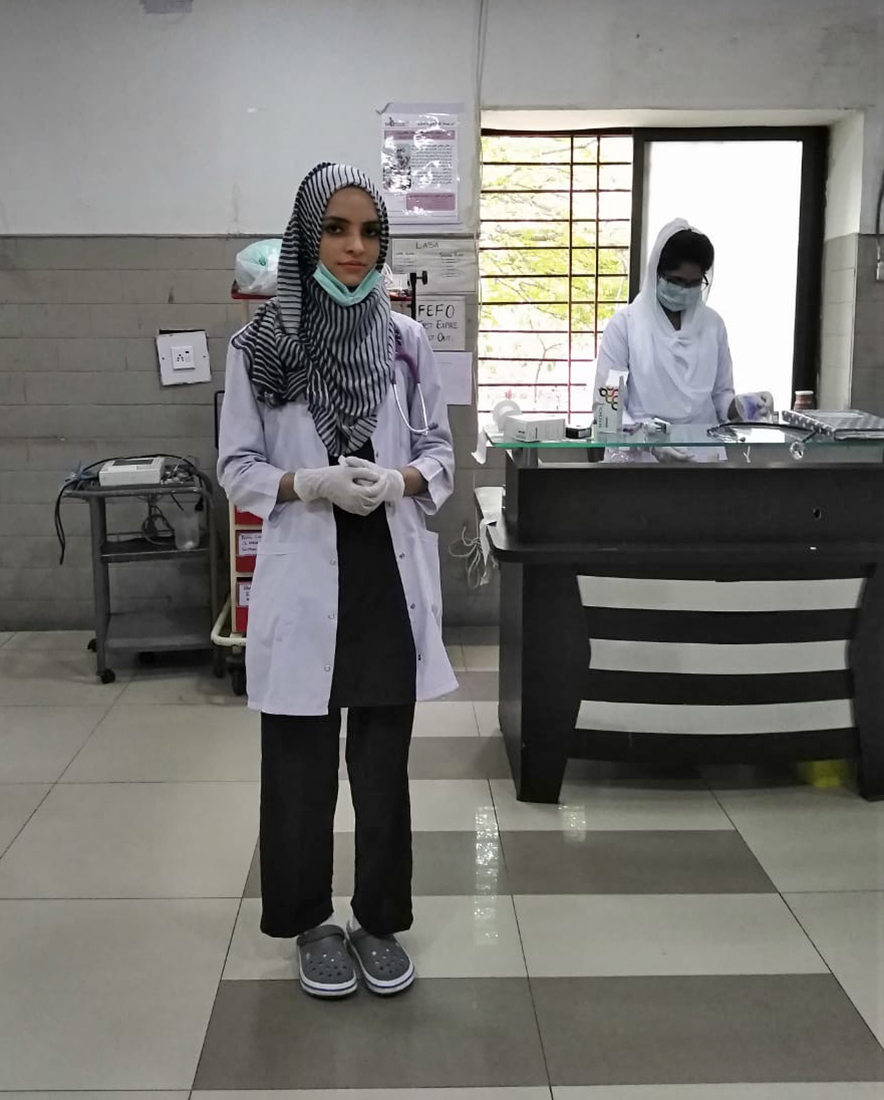
In this undated picture, Dr. Saleema Rehman, an Afghan refugee, can be seen at work at Rawalpindi's 800-bed Holy Family Hospital. Rehman is the first-ever doctor in the Afghan-Turkmen community in Pakistan and has been lauded by the United Nations refugee agency, UNHCR, for treating the poor amid the coronavirus pandemic. (Photo courtesy: Dr. Saleema Rehman]
According to the Pakistan Medical and Dental Council, the apex regulatory body governing medical and dental education in the country, no “foreign national” is allowed to work in Pakistan.
“As per our rules, no Afghan refugee is allowed to practice anywhere in Pakistan until and unless the government grants her citizenship,” Brig. (r) Dr. Hafizuddin Ahmed Siddiqui, PMDC registrar, told Arab News.
Recounting her struggle, Rehman urged the government to allow her to work in the country. “I want to serve Pakistan and all the refugees here … This is my country. I was born and educated here,” she said. “Pakistan has done a lot for us, and now I want to pay back.”
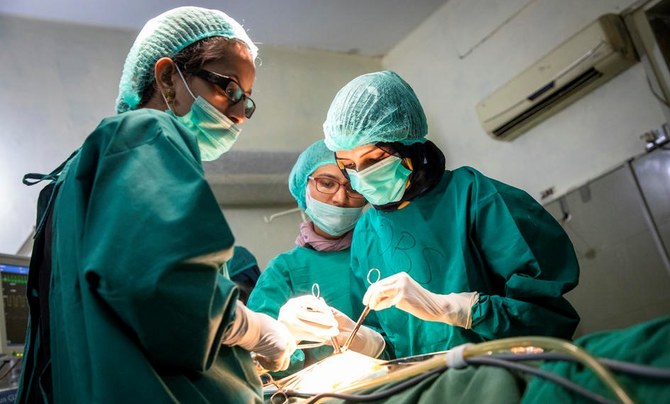
While sharing her job experience at the Holy Family Hospital, she said that all the trainees are required to work for six hours a day, besides doing a 30-hour duty after every third day. “We are exposed to high level of mental stress these days as health care practitioners are getting infected by the novel coronavirus,” she said.
Hospital administration has set up a coronavirus filter clinic for all pregnant women where they are screened before entering the labor room.
“We have proper protective kits to treat the patients, but even then it isn’t an easy job to do,” she said while expressing her resolve to remain on the forefront and treat patients.
“If we sit in our homes fearing the virus, then how will our hospitals operate,” she questioned, expressing her resolve to meet the challenge.
Rehman was born in a refugee camp in Swabi city in Khyber Pakhtunkhwa province in 1981, a year after her parents moved there from Afghanistan during the Soviet-Afghan war along with thousands of other refugees.
In 1994, they moved to Attock city in the province of Punjab where she got her primary and intermediate education from a government school. “I was lucky to get enrolled in a government medical college on a reserved seat for refugees,” she said.
She is now in the final year of her specialization as a gynecologist and will be a consultant next year after passing her exams in January 2021. “I always wanted to be a gynecologist to support my community and other underprivileged people in Pakistan,” she said.
Pakistan hosts more than 1.4 million registered Afghans who were uprooted by decades of conflict in their country, and 74 percent of them were born in Pakistan. Some 64 percent of the total registered Afghan refugees are below the age of 24, according to the UNHCR.