KHARTOUM: Sudan urgently needs $120 million to fight the new coronavirus, the country’s health minister told Reuters on Saturday, amid a shortage of the equipment to fight the epidemic which has ravaged richer countries.
Although Sudan has so far reported relatively few cases, the global outbreak has arrived at a time when it faces an economic crisis.
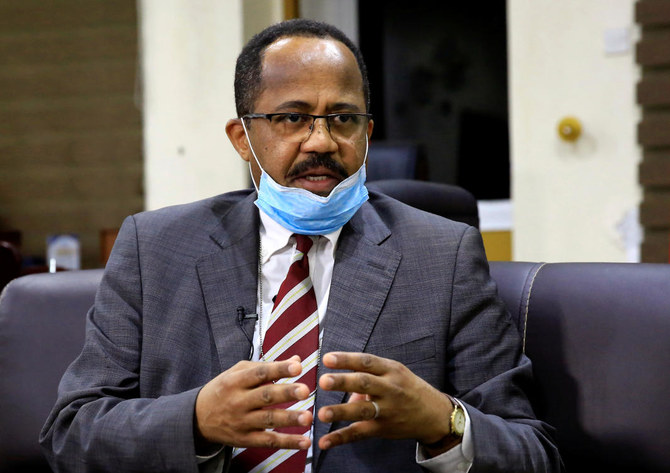
“We are preparing a strategy to face coronavirus that extends until the end of June, but to execute it we urgently need $120 million to provide protective equipment for health care workers and to prepare health care facilities and advanced lab testing equipment,” said health minister Akram Ali Altom.
Altom serves in the civilian-led government which has run Sudan following a power-sharing agreement with the military signed in August. Exactly one year ago, months of protests brought down three-decade ruler Omar Al-Bashir.
Until now, Sudan has reported 19 confirmed coronavirus cases, including two deaths, but Altom said that “if it spreads, Sudan’s situation health-wise and economically means it cannot handle a large outbreak.”
Current capacity for beds with ventilators was just in the “hundreds,” he said. The coronavirus outbreak is the latest epidemic to face Sudan, which has had to deal with outbreaks of cholera with a depleted infrastructure.
Sudan began testing for those who arrived at its international airport in February. In March it closed all airports and border crossings to non-commercial traffic.
The government also imposed a twelve-hour curfew, shut down schools and universities, and banned events and gatherings. Some of its measures have been met with a lack of cooperation.
The minister said that his ministry has recommended a complete lockdown of the capital Khartoum for three weeks, as well as an increase in the number of quarantine centers and testing capacity.
A major barrier to any lockdown is likely to be the large number of Sudanese people who work in the informal economy.
The minister said that he expected that a new health emergency law would be introduced on Sunday.


![]()


Sudan’s health minister says country needs $120m to fight coronavirus
Short Url
https://arab.news/vb8j3
Sudan’s health minister says country needs $120m to fight coronavirus
- Although Sudan has so far reported relatively few cases, the global outbreak has arrived at a time when it faces an economic crisis
- The coronavirus outbreak is the latest epidemic to face Sudan, which has had to deal with outbreaks of cholera with a depleted infrastructure


Lebanon says 7 killed in Israeli strike on central Beirut
Beirut, Lebanon: Lebanon said an Israeli strike on central Beirut’s seafront killed at least seven people early on Thursday, another attack in the heart of the capital as Iran-backed Hezbollah launched more missiles at Israel.
The Israeli military said separately it had carried out strikes on Beirut’s southern suburbs overnight against Hezbollah, which had announced a major new operation against Israel.
Local media aired footage showing smoke rising along the seaside road area after the strike in central Beirut, which state-run National News Agency (NNA) said targeted a car.
“The Israeli enemy strike on Ramlet Al-Bayda in Beirut led to an initial toll of seven dead and 21 wounded,” the health ministry said in a statement.
It was the third attack in the heart of the capital since the Middle East war began. Israel has also repeatedly hit the southern suburbs of Beirut where Israeli military said on Thursday it had hit 10 Hezbollah targets.
The NNA reported on Thursday that Israeli strikes had also hit several towns in southern Lebanon, including Taybeh and Al-Sultaniyya as well as Qana, near the city of Tyre.
Hezbollah said early Thursday that it had fired off missiles at an Israeli military intelligence base in the suburbs of Tel Aviv.
Lebanon was drawn into the Middle East war last week when Hezbollah attacked Israel in response to the killing of Iranian supreme leader Ayatollah Ali Khamenei in US-Israeli strikes.
Israel, which kept up its strikes in Lebanon even before the war despite a 2024 ceasefire with Hezbollah, has since launched air raids across Lebanon and sent ground troops into border areas.
Its offensive has killed more than 630 people, according to Lebanese authorities, while more than 800,000 people have registered as displaced, with around 126,000 of them staying in collective shelters.
Some displaced people have been sleeping out in the open or in tents on the streets of Beirut, including in the seaside area of Ramlet Al-Bayda.
- Hezbollah operation -
Late Wednesday, French President Emmanuel Macron called for Israel to halt its ground offensive in Lebanon and on Iran-backed group Hezbollah to “immediately” stop attacks, after speaking with the country’s president Joseph Aoun.
Iran’s Revolutionary Guards said earlier that they had carried out a joint missile operation with ally Hezbollah against targets in Israel.
In turn, the Israeli military said early Thursday that “over the past hours, the IDF has begun a wide-scale wave of strikes targeting terror infrastructure belonging to the Hezbollah terrorist organization across Lebanon.”
It also said it hit “dozens of launchers” as well as Hezbollah intelligence and command sites in south Beirut.
It followed a string of Hezbollah statements saying its fighters fired barrages of rockets, advanced missiles and drones at towns, military bases and other locations, mainly in the Israel’s north.
On Wednesday, Israel pounded south Beirut and the country’s south and east, with the health ministry reporting several strikes that each killed at least eight people.
Authorities said a strike on an apartment in the densely populated Aisha Bakkar area in central Beirut wounded four people.
On Sunday, Israel hit a seafront hotel not far from Ramlet Al-Bayda, saying it was targeting Iranian foreign operations officers. Iran later said the raid killed four of its diplomats.
The Israeli military said separately it had carried out strikes on Beirut’s southern suburbs overnight against Hezbollah, which had announced a major new operation against Israel.
Local media aired footage showing smoke rising along the seaside road area after the strike in central Beirut, which state-run National News Agency (NNA) said targeted a car.
“The Israeli enemy strike on Ramlet Al-Bayda in Beirut led to an initial toll of seven dead and 21 wounded,” the health ministry said in a statement.
It was the third attack in the heart of the capital since the Middle East war began. Israel has also repeatedly hit the southern suburbs of Beirut where Israeli military said on Thursday it had hit 10 Hezbollah targets.
The NNA reported on Thursday that Israeli strikes had also hit several towns in southern Lebanon, including Taybeh and Al-Sultaniyya as well as Qana, near the city of Tyre.
Hezbollah said early Thursday that it had fired off missiles at an Israeli military intelligence base in the suburbs of Tel Aviv.
Lebanon was drawn into the Middle East war last week when Hezbollah attacked Israel in response to the killing of Iranian supreme leader Ayatollah Ali Khamenei in US-Israeli strikes.
Israel, which kept up its strikes in Lebanon even before the war despite a 2024 ceasefire with Hezbollah, has since launched air raids across Lebanon and sent ground troops into border areas.
Its offensive has killed more than 630 people, according to Lebanese authorities, while more than 800,000 people have registered as displaced, with around 126,000 of them staying in collective shelters.
Some displaced people have been sleeping out in the open or in tents on the streets of Beirut, including in the seaside area of Ramlet Al-Bayda.
- Hezbollah operation -
Late Wednesday, French President Emmanuel Macron called for Israel to halt its ground offensive in Lebanon and on Iran-backed group Hezbollah to “immediately” stop attacks, after speaking with the country’s president Joseph Aoun.
Iran’s Revolutionary Guards said earlier that they had carried out a joint missile operation with ally Hezbollah against targets in Israel.
In turn, the Israeli military said early Thursday that “over the past hours, the IDF has begun a wide-scale wave of strikes targeting terror infrastructure belonging to the Hezbollah terrorist organization across Lebanon.”
It also said it hit “dozens of launchers” as well as Hezbollah intelligence and command sites in south Beirut.
It followed a string of Hezbollah statements saying its fighters fired barrages of rockets, advanced missiles and drones at towns, military bases and other locations, mainly in the Israel’s north.
On Wednesday, Israel pounded south Beirut and the country’s south and east, with the health ministry reporting several strikes that each killed at least eight people.
Authorities said a strike on an apartment in the densely populated Aisha Bakkar area in central Beirut wounded four people.
On Sunday, Israel hit a seafront hotel not far from Ramlet Al-Bayda, saying it was targeting Iranian foreign operations officers. Iran later said the raid killed four of its diplomats.
Latest updates


© 2026 SAUDI RESEARCH & PUBLISHING COMPANY, All Rights Reserved And subject to Terms of Use Agreement.