

So sad, it’s funny: Egyptian beans can cure Coronavirus and other myths being circulated

One news caster suggested that drinking tea would protect you from coronavirus - as of yet there's been no evidence to back this woman's claim. (File/Shutterstock)
Short Url
Updated 09 April 2020
Follow

So sad, it’s funny: Egyptian beans can cure Coronavirus and other myths being circulated

CAIRO: With news changing every minute, social media users in Egypt are latching on to coronavirus developments with their special sense of humor.

As Egyptians spend their time quarantining at home, they are managing to escape boredom by scrutinizing some of the weirdest news stories across their media.

1 – One of the most trending topics this week was the visit by Egyptian Health Minister Hala Zayed to Italy, one of the nations worst hit by the global pandemic. Just like her trip to China, Zayed traveled to Italy to deliver medical aid to the Italians as requested by President Abdel Fattah El-Sisi. A move the Egyptian leader said would contribute “in lifting their burden during the current crisis.”

Images on April 5 showed Egyptian military planes carrying aid, including medicines and face masks. But Zayed herself stood out in those pictures as the only official not wearing a face mask, becoming a hot topic for Egyptians to pick on.
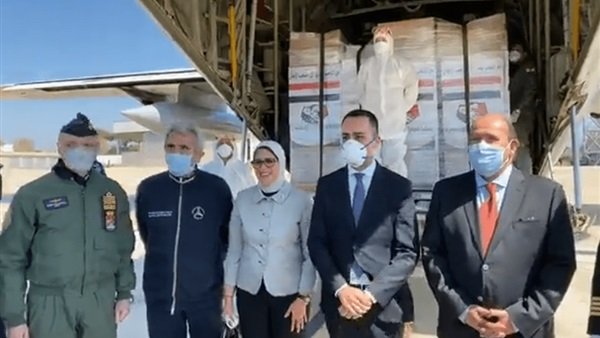
Later, Italian Foreign Minister Luigi Di Maio posted a video on Facebook of him welcoming Zayed, during which he removed his mask resembling the Egyptian minister.

On a more serious note, Zayed was criticized by some for delivering aid to Italy when several hospitals at home have reported a shortage of medical supplies.

2 – Myths about how some foods are good for fighting COVID-19 have been going viral across the Middle East.

In Egypt, a doctor claimed that beans are effective in preventing the COVID-19 infection. Magdi Badran claimed in a televised interview that “homemade” beans would help.


In a similar incident, another doctor said that a 5,000-year-old Egyptian dish called “shalawlaw” is effective against the virus.

Magdi Nazih, Head of the Nutrition Education Division of Egypt’s National Institute of Nutrition, said the “shalawlaw” dish consists of dry molokhia, lots of garlic and lemon. And because it contains a large amount of garlic, it would strengthen the body's immunity, he claimed.


3 – Another food recommendation was made by Egyptian presenter Amani Al-Khayat to fight the virus.

Although not proven by anyone, Al-Khayat suggested Egyptians should drink a cup of tea during their daily diet, which would keep them protected from COVID-19.


The statement she made during her segment on news channel CBC Extra soon fell prey to mockery from Egyptian viewers.

4 – The internet has gone wild about the lack of social distancing when a TV reporter on private channel Sada Al-Balad was surrounded by over 10 people during his reporting.

In the report, talk show host Ahmad Mousa was being sarcastic as he spoke to the field reporter about how the individuals appearing with him surrounded him too closely.


“From what I see, I’m confident our people are abiding by social distancing,” Mousa said jokingly.

The reporter then decided to put on a face mask to protect himself from the complete lack of social-distancing.

5 – One of the most significant nights in Egypt since the COVID-19 outbreak was on March 24, when a group decided to march in Alexandria at midnight in what was later known as the “Corona Protests.”

A group of at least 200-300 people decided to take to the streets to rant against the pandemic thinking it was a good idea amidst all the calls to stay at home.

Video footage of their reckless behavior landed them in hot water as social media users seized upon every opportunity to make fun of them.


Cambodia takes back looted historic artifacts handled by British art dealer

Updated 28 February 2026
Follow

Cambodia takes back looted historic artifacts handled by British art dealer

  • The objects were returned under a 2020 agreement between the Ministry of Culture and Fine Arts and the family of the late Douglas Latchford, a British art collector and dealer who allegedly had the items smuggled out of Cambodia

PHNOM PENH, Cambodia: Cambodian officials on Friday received more than six dozen historic artifacts described as part of the country’s cultural heritage that had been looted during decades of war and instability.
At a ceremony attended by Deputy Prime Minister Hun Many, the 74 items were unveiled at the National Museum in Phnom Penh after their repatriation from the United Kingdom.
The objects were returned under a 2020 agreement between the Ministry of Culture and Fine Arts and the family of the late Douglas Latchford, a British art collector and dealer who allegedly had the items smuggled out of Cambodia.
“This substantial restitution represents one of the most important returns of Khmer cultural heritage in recent years, following major repatriations in 2021 and 2023 from the same collection,” the Culture Ministry said in a statement. “It marks a significant step forward in Cambodia’s continued efforts to recover, preserve, and restore its ancestral legacy for future generations.”
The artifacts were described as dating from the pre-Angkorian period through the height of the Angkor Empire, including “monumental sandstone sculptures, refined bronze works, and significant ritual objects.” The Angkor Empire, which extended from the ninth to the 15th century, is best known for the Angkor Wat archaeological site, the nation’s biggest tourist attraction.
Latchford was a prominent antiquities dealer who allegedly orchestrated an operation to sell looted Cambodian sculptures on the international market.
From 1970 to the 1980s, during Cambodia’s civil wars and the communist Khmer Rouge ‘s brutal reign, organized looting networks sent artifacts to Latchford, who then sold them to Western collectors, dealers, and institutions. These pieces were often physically damaged, having been pried off temple walls or other structures by the looters.
Latchford was indicted in a New York federal court in 2019 on charges including wire fraud and conspiracy. He died in 2020, aged 88, before he could be extradited to face charges.
Cambodia, like neighboring Thailand, has benefited from a trend in recent decades involving the repatriation of art and archaeological treasures. These include ancient Asian artworks as well as pieces lost or stolen during turmoil in places such as Syria, Iraq and Nazi-occupied Europe. New York’s Metropolitan Museum of Art is one of the prominent institutions that has been returning illegally smuggled art, including to Cambodia.
“The ancient artifacts created and preserved by our ancestors are now being returned to Cambodia, bringing warmth and joy, following the country’s return to peace,” said Hun Many, who is the younger brother of Prime Minister Hun Manet.