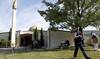
JEDDAH: Saudi Arabia placed its capital Riyadh and other major cities under a 24-hour curfew on Monday.
The new curfew applies to the cities of Riyadh, Tabuk, Dammam, Dharan, Hofuf, and the provinces of Jeddah, Taif, Qatif and Alkhobar, a statement from the Interior Ministry said.
Entry to or exit from those areas will not be allowed, except for vital workers. Residents are allowed to leave their homes for medical or food needs inside their residential area and between 6 a.m. and 3 p.m. only.
Fifteen government agencies are coordinating to facilitate the repatriation of Saudi citizens from abroad amid the global outbreak of the coronavirus.
During the daily press briefing, Health Ministry spokesman, Dr. Mohammed Al-Abd Al-Aly, said that his ministry was cooperating with the Ministry of Foreign Affairs in its repatriation operations.
“We have followed up with the Ministry of Foreign Affairs and they have provided an electronic platform that enables them (Saudis abroad) to register their requests,” he said.
Al-Aly said that cases of coronavirus were still increasing with about 1,000,300 cases worldwide. “Recovery cases are over 265,000 and the number of fatalities is around 70,000 cases,” he said.
In the Kingdom, the total number of confirmed cases is 2,605 with 203 new cases recorded on Sunday. He said that 551 patients have recovered and 2,016 are still being treated. The number of deaths in the Kingdom stands at 38.
Al-Aly said that updates about COVID-19 in the Kingdom with details of its geographical spread can be found at covid19.moh.gov.sa.
Tourism Ministry spokesman, Anas Al-Sulai, explained that the ministry coordinates with different bodies such as the Ministry of Foreign Affairs, the Ministry of Health, the Ministry of Education and the General Authority of Civil Aviation to provide the facilities required to secure the safety of citizens on their return to the Kingdom.
“The Ministry of Tourism has provided over 11,000 hotel rooms to accommodate Saudis returning from abroad, as they will be isolated to ensure their safety,” Al-Sulai said.
The operation includes eight electronic services and the involvement of 15 government bodies that are working 24 hours to ensure the completion of the operation safely.
A spokesman for the Ministry of Municipal and Rural Affairs, Naif Al-Otaibi, said that 22,000 environmental sanitation devices and 15,000 cadres are being used to sanitize and control areas. In addition, 15,000 cleaning devices and 86,467 cadres of cleaning workers are in action to prevent the spread of the virus.
“More than 66,000 locations have been sanitized with a focus on areas that people might go to before curfew starts such as supermarkets, and equipment that has been touched by many people such as shopping carts,” he said.
According to the Saudi Press Agency, the General Directorate of Passports called on all citizens and residents to activate the feature to receive notifications for its services available through the “Absher” application for electronic services in smartphones.
By doing so, users will be able to receive information about the status of their official documents and the dates of their expiry.