

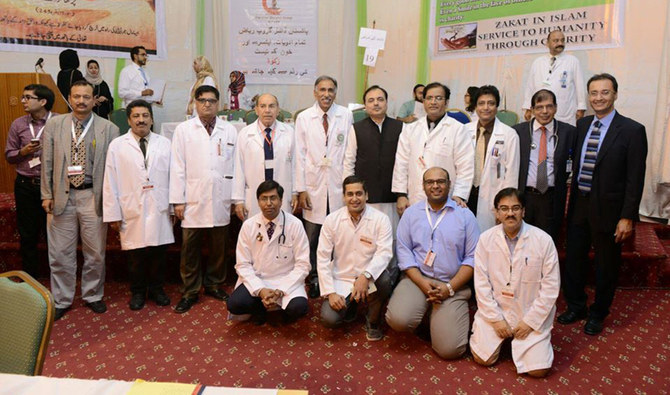

ISLAMABAD: A group of Riyadh-based Pakistani doctors have started free virtual clinic in Saudi Arabia to help people with medical problems as coronavirus lockdown continues in the Kingdom.
“We are running a virtual clinic and helping the community with online and telephonic consultations without asking anyone to pay for our services,” President of the Pakistan Doctors Group Riyadh (PGDR) Dr. Asadullah Rumi, who works as a consultant cardiologist at the Prince Sultan Military Medical City, told Arab News via phone on Wednesday. “We took the decision after our free consultation at the Pakistani embassy in Riyadh for the underprivileged community was closed due to the spread of COVID-19.”
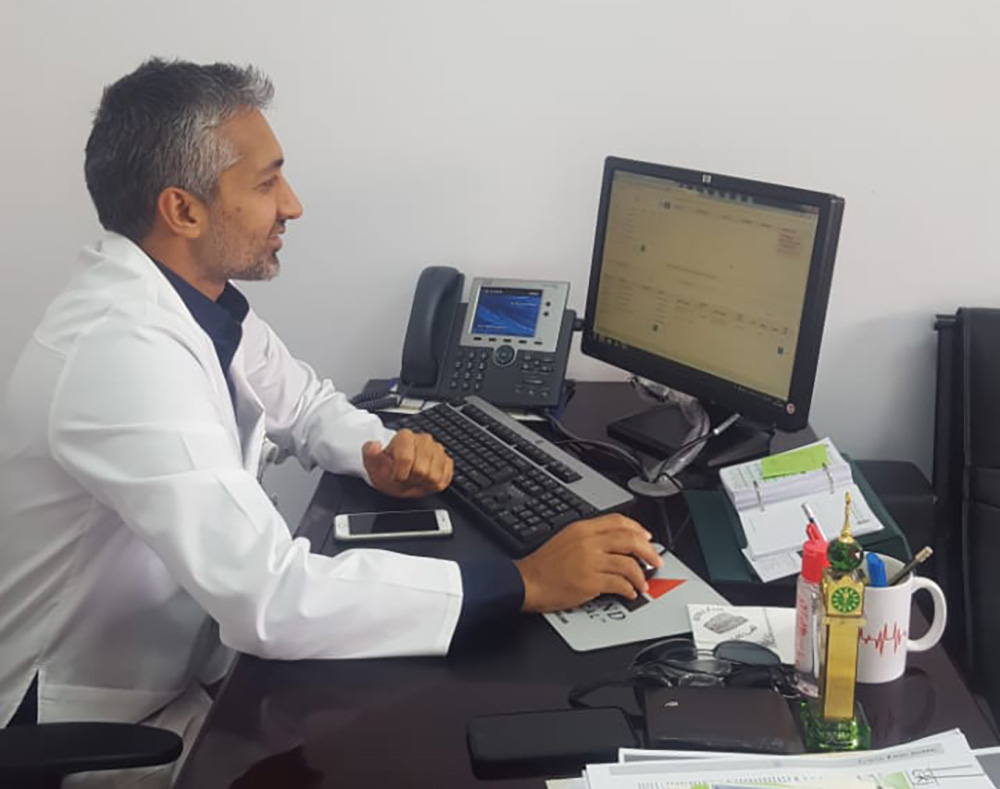
Dr. Naveed Aslam, Consultant Nephrologist at the Prince Sultan Military Medical City and a member of the PDGR welfare committee, is providing visual consultation to the Pakistani community in Saudi Arabia on March 30, 2020. (Photo courtesy: The Pakistan Doctors Group Riyadh)
“In this time of need, our group is providing online consultation to more than 20 people on a daily basis. We have also collaborated with a pharmacy in Riyadh which is providing free medicines and billing the amount to the PDGR. Anyone from the patient’s family can visit the pharmacy and contact our group representative to get free medicines,” he said, adding that the group was also supporting those Pakistanis who were unwell but did not have medical insurance.
“We are constantly providing emergency medical care to the underprivileged,” Rumi continued. “We arranged dialysis for a Pakistani lady in Riyadh and also paid a person’s bill who had a fracture.”
Other than all these activities, the group of Pakistani doctors also organized two online seminars to create awareness among the community on COVID-19.
“We arranged an online community awareness program on COVID-19 on March 31 and a virtual seminar on the pandemic with leading experts on March 24,” he continued.
Rumi praised the Saudi government for providing free treatment to all coronavirus patients, irrespective of their nationality and legal status.
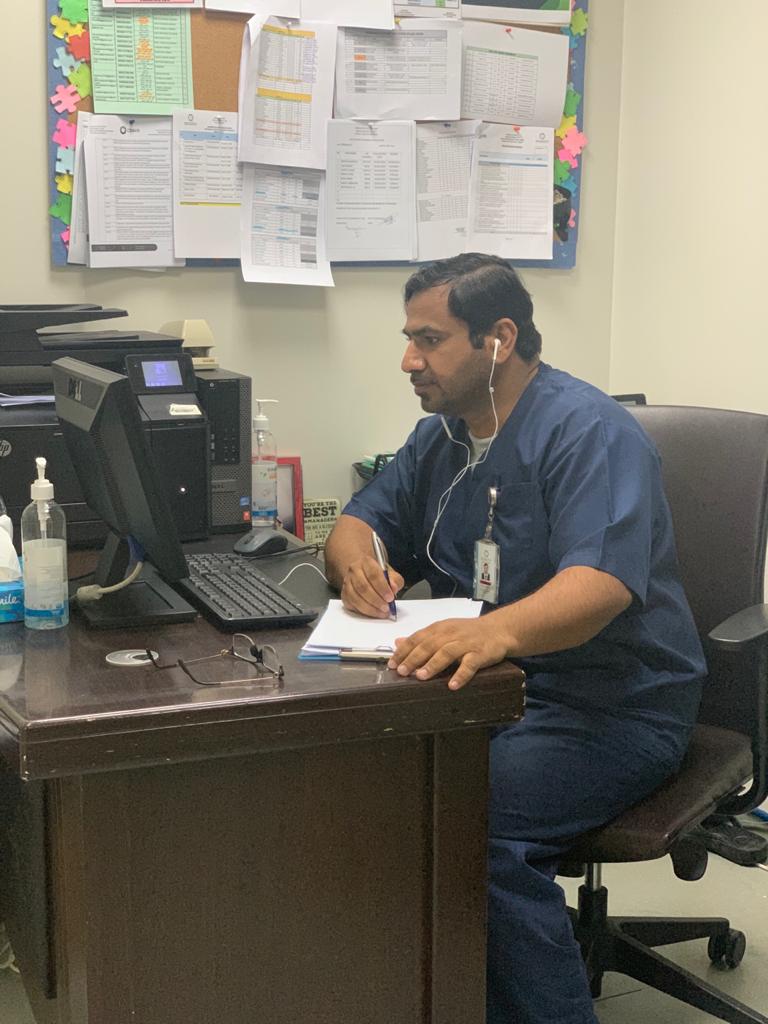
Dr. Shahzad Mumtaz, member of the Pakistan Doctors Group Riyadh, is providing virtual advice to a member of the Pakistani community in Saudi Arabia on April 1, 2020. (Photo courtesy: The Pakistan Doctors Group Riyadh)
Ahmed Hassan a Pakistani worker employed by a workshop in Riyadh hailed the timely help from Pakistani doctors who arranged free dialysis for his mother.
“My mother is a chronic kidney patient and needs dialysis three times a week which can cost more than SAR700 that I cannot afford. I contacted the group of Pakistani doctors and they arranged the dialysis and paid the expenses. They also got us all the medicines,” he told Arab News from Riyadh.
Ahsan Khalid, a factory worker from Tabuk who availed telephonic consultation, termed the initiative as “a lifesaving step” amid the coronavirus pandemic.
“I had some complications since I am a patient of diabetes and was struck inside my flat due to the lockdown. My friend from Riyadh gave me the number of a Pakistani doctor belonging to the group. After detailed consultations on the phone, the doctor asked me to take certain precautions and asked me to take a few medicines. I am feeling much better now,” Khalid told Arab News.


