ISLAMABAD: Pakistan’s Consul General in Jeddah, Khalid Majid said on Thursday he urged the Pakistani community to “strictly comply” with precautionary measures put in place by Saudi authorities to curb the spread of coronavirus.
In a statement, the Consul General extended his best wishes to the Pakistani community residing in the western region of the Kingdom in the wake of the outbreak of the global pandemic which has so far claimed four lives in Saudi Arabia with 1,203 confirmed cases.
“I also request the community to remain calm and continue praying to Almighty Allah for His mercy,” Consul General Majid said.
“I would like to extend my deep appreciation and complete support to the Saudi government’s proactive and effective measures to ensure safety and protection of its citizens and residents against COVID-19 threat,” the statement read, and added the consulate would remain accessible round the clock to the Pakistani community for information and guidance.
The Kingdom has called on citizens to adhere to social distancing measures by staying at home during the curfew applied throughout the country.
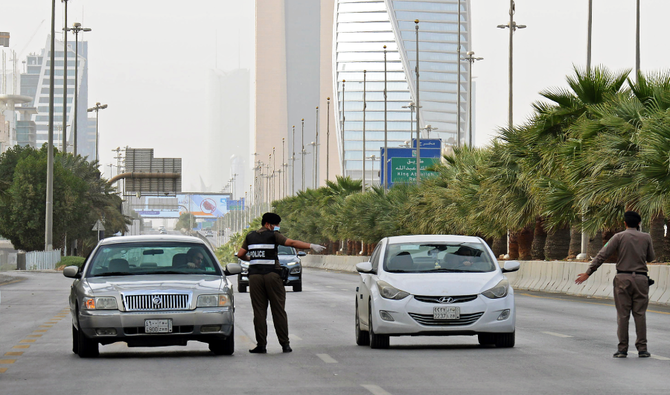
Saudi police arrested four citizens in Riyadh who violated the curfew set in place to curb the spread of the virus, state news agency SPA reported on Sunday.

Jeddah consul general urges Pakistani community to comply with kingdom’s virus restrictions
https://arab.news/jp37q
Jeddah consul general urges Pakistani community to comply with kingdom’s virus restrictions
- Says appreciates Saudi government’s rules for safety against COVID-19 threat
- Over 1,200 people have been infected in Saudi Arabia with four fatalities
Pakistan announces national Islamic scholarship competition focused on youth
- Contest invites books, essays, poetry in multiple languages, with awards for men and women
- Best entries to be published digitally and in print, submissions due by March 31
ISLAMABAD: Pakistan’s Ministry of Religious Affairs on Wednesday announced a nationwide competition for books, poetry and academic papers focused on Islamic scholarship, as part of efforts to promote religious discourse addressing modern social challenges, particularly among younger generations.
The annual competition will cover works on Seerat — the biography and teachings of the Prophet Muhammad (pbuh) — as well as Na’at, a traditional form of devotional poetry praising the Prophet, alongside broader Islamic research and literary contributions published in Pakistan and abroad.
“Ministry of Religious Affairs ... remains committed to addressing contemporary challenges through the guidance of the Seerat-e-Tayyaba (the life of the Prophet Muhammad), describing the national competition as an important step toward promoting Islamic teachings in society,” the ministry said in a statement.
“The initiative serves as an effective platform to encourage writers and researchers working on Seerat and Islamic subjects.”
For 2026, the ministry has set the central theme for Seerat research papers as “Protection, development and character-building of the younger generation in the light of the life of the Prophet Muhammad (peace be upon him).”
Officials said the focus aims to encourage scholarly engagement with issues such as ethics, social responsibility and education in a rapidly changing society.
The competition will award separate cash prizes and certificates to male and female writers at national and provincial levels, while selected research papers will be published in both digital and printed formats, the statement said.
According to the ministry, works published in national, regional and foreign languages will be eligible, with eight dedicated categories covering Seerat authors and Na’at poets. Separate categories have also been introduced for women writers, journals and magazines, expanding participation beyond individual book authors.
The ministry said the competition is intended to strengthen Islamic literary traditions while encouraging new voices to engage with religious subjects in a contemporary context.
The deadline for submission of books and research papers is March 31, 2026, it added.