

S&P cuts Oman rating deeper into junk, trims Bahrain’s outlook

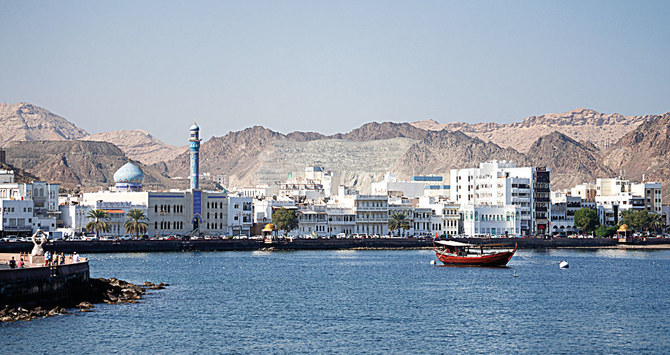
Oman’s long-term foreign and local currency sovereign rating has been hit. (Shutterstock)
Short Url
Updated 29 March 2020
Follow

S&P cuts Oman rating deeper into junk, trims Bahrain’s outlook

  • External challenges, indebtedness and dependence on declining oil revenue cited as reasons for concern

DUBAI: Rating agency S&P has lowered crude producer Oman’s sovereign ratings deeper into junk territory, citing external challenges, and changed the outlook for Bahrain’s ratings to stable from positive due to the country’s dependence on
oil revenue.

The changes came after S&P recently cut its forecast the Brent crude oil benchmark to an average of $30 a barrel in 2020, $50 per barrel in 2021, and $55 a barrel from 2022.

S&P cut Oman’s long-term foreign and local currency sovereign ratings to “BB-” from “BB,” citing higher external risks and indebtedness.

“The sharp drop in oil prices in 2020 will intensify Oman’s fiscal and external pressures, leading to a faster deterioration in the government’s balance sheet, which has considerably weaker buffers than during the 2014-2015 oil price shock,” it said.

The outlook for Oman’s ratings is negative, the rating agency said, reflecting the risk that the government’s medium-term fiscal consolidation plans could be insufficient to stem the rising state debt. It expects the fiscal deficit will average almost 8 percent of GDP in 2021-2023.

FASTFACT

$30

S&P has cut its forecast for the Brent crude oil benchmark to an average of $30 a barrel in 2020.

The large funding needs will be predominantly met through the issuance of foreign-currency debt, with the remainder financed by asset draw downs and domestic debt, it said.

S&P expects Oman’s external debt — adjusted for liquid external assets — will rise to 67 percent of current account receipts in 2023, from about 20 percent in 2018.

The rating agency said that the share of foreign-currency-denominated debt, largely held by non-residents, was high — at above 80 percent of total debt.

“We expect funding costs will rise despite monetary easing in the US, since portfolio flows to emerging markets could dry up and Oman’s macro-fundamentals are under pressure from external developments,” it said.

On Bahrain, the rating agency said its revenue remained dependent on oil, and hence sensitive to energy price shocks, despite efforts to increase non-energy receipts. “Recent revisions to our 2020 price projections for oil imply more elevated current account deficits for Bahrain, raising external vulnerabilities,” it said.

However, the provision of zero-interest loans from neighboring sovereigns — Saudi Arabia, Kuwait and UAE — and the expectation of further support, if needed, provide the government with an important financing buffer. 


Acwa appoints Samir Serhan as CEO in planned succession 

Updated 22 sec ago
Follow

Acwa appoints Samir Serhan as CEO in planned succession 

RIYADH: Saudi utility developer Acwa appointed Samir J. Serhan as CEO effective March 1, replacing Marco Arcelli in a planned leadership transition as the company accelerates global expansion in renewable energy, desalination and green hydrogen. 

The Tadawul-listed company said the appointment forms part of a structured succession plan approved by its board, taking into account the scheduled expiration of Arcelli’s contract in April 2027. Arcelli, who has led Acwa since March 2023, will remain adviser to the chairman to support an orderly transition, according to a regulatory disclosure to Tadawul. 

The leadership change comes as Acwa — one of the world’s largest private desalination companies and a major investor in energy transition projects — continues to scale its international portfolio amid rising demand for clean power and water infrastructure. 

Mohammad Abunayyan, founder and chairman of the board of directors of Acwa, said: “Acwa stands today as a Saudi national champion and a global leader in renewable energy, water desalination, and green hydrogen, and our position continues to strengthen.” 

He added: “This structured leadership transition reflects the strength of our governance and the maturity of our business platform. Our strategic direction remains clear and unchanged. We are pleased to welcome Dr. Samir Serhan to his new role as CEO of Acwa.” 

Serhan joined Acwa last year as president of Saudi Arabia and Middle East, where he was responsible for seven key markets, including Saudi Arabia, the UAE, Kuwait, Bahrain, Oman, Jordan and Iraq. 

“I’m honored to lead Acwa at a pivotal moment as the company accelerates profitable global growth in renewable energy, water desalination, and green hydrogen solutions — including advancing green hydrogen to decarbonize heavy industries — to deliver scalable, sustainable impact worldwide,” said Serhan. 

Previously, Serhan served as chief operating officer of the US-based company Air Products, where he had global responsibility for operational business and project execution with profit and loss accountability across the Americas, Asia, Europe, Africa, the Middle East and India. He also led technology, global engineering, manufacturing and equipment functions at Air Products.  

Earlier in his career, he was president, Hydrogen for Praxair. For 14 years prior, he worked at the Linde Group in leadership positions in the US and Germany, culminating in his role as managing director of Linde Engineering. 

Acwa, recently rebranded from ACWA Power, is a key developer of power and water infrastructure projects under public-private partnership models and plays a central role in Saudi Arabia’s energy transition strategy.