

Battle with COVID-19 is ‘humanity against a virus’

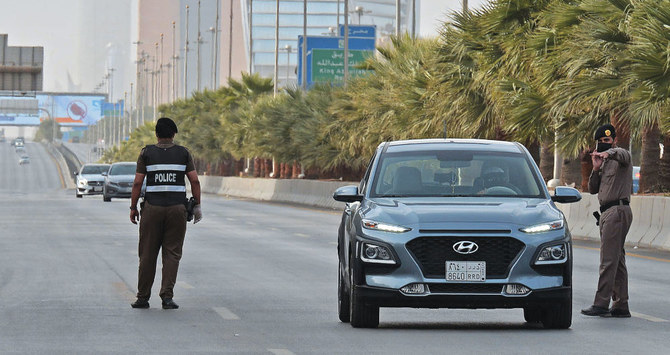
Policemen manning a checkpoint in Riyadh on the day of an emergency G20 videoconference to discuss a response to the coronavirus crisis. (AFP)
Short Url
Updated 27 March 2020
Follow

Battle with COVID-19 is ‘humanity against a virus’

  • The aim of the summit was to convince people who have not been taking the pandemic seriously that the situation is grave
  • Shoura member Zidane: “The summit showed great leadership from….King Salman,”

JEDDAH: After the leaders of the G20 held an unprecedented “virtual” summit on Thursday to discuss the coronavirus pandemic, Saudi Shoura Council member Dr. Sami Mohammed Zidane gave a concise analysis of the global crisis: “This is humanity against a virus.”

The Kingdom holds the presidency of the G20 this year, and the summit was hosted by King Salman in Riyadh, with the other leaders participating through video links due to the restrictions on international travel. They discussed the effects and implications of the pandemic and pledged to spare no effort in tackling its effects.

With the next full meeting of the G20 scheduled to take place in Riyadh in November, the virtual summit came at the right time, said Zidane, who is also a member of the board of directors of Saudi International Petrochemical Company.

“The summit showed great leadership from….King Salman,” he said. “I think it was needed and necessary on several levels. The global efforts against this horrible pandemic — that discriminates against no one, no race or age — are different. We are all equal.”

He highlighted some of the most important issues that were discussed during the summit, including the particular problems faced by people on lower incomes.

“The world is practically shut down and a lot of people with limited incomes cannot survive for too long,” said Zidane.

“Saving lives by containing the pandemic is important and it was addressed at the summit. First and foremost, the supply of medical equipment, such as ventilators, masks, gloves and protective gear for those who are vulnerable and can get sick, should be the priority.”

He added that another important aim of the summit was to convince people who have not been taking the pandemic seriously that the situation is grave.

He said that while such individuals can be viewed as rebels or as people that simply do not care, “I would say that, rather, it is an act of ignorance.”

The summit also served to reassure people that the G20 member nations, which are the world’s largest economies, are working together in the face of the global crisis, said Zidane.

“This is humanity against a virus and not something one can use missiles and arms against,” he said. High-level communication on a global level can give people great hope in the fight against the virus, he added.

Lina Al-Maeena, a fellow member of the Shoura Council, reiterated the importance of solidarity in the global response to the pandemic.

“We are all global citizens; there are no borders and we are all in this together,” she said. The G20 leaders had succeeded during the summit in presenting an image of “solidarity, generosity and unity,” she added, and the commitment shown by the world’s leading economies “proves that it is a time not just for looking at their own self-interest, but the interests of the whole of humanity.”

Al-Maeena said that pledge by the leaders to inject $5 trillion into the global economy in response to the crisis “is not just to conquer the coronavirus, but all the interrelated issues linked to the virus, whether they are social, economic, health or security.


Najran’s camels are embedded in local culture and traditions

Camels are not only a vital livestock resource in Najran, but also a cornerstone of local identity and tradition. (SPA)
Updated 25 December 2025
Follow

Najran’s camels are embedded in local culture and traditions

  • Several distinct camel breeds are found in the region
  • Animals permeate Arab consciousness, says expert

RIYADH: In Najran, camels are not only a vital livestock resource but also a cornerstone of local identity and tradition.

According to Hadi Benyan Al-Amer, head of Najran’s Camel Association, the region has several distinct camel breeds.

Principal among them is the Awarik, an ancient Arabian lineage linked to territories where arak trees flourish, the Saudi Press Agency reported on Thursday.

These light-colored, sparsely-haired camels possess remarkable resilience, and are prevalent across southern Arabia.

The Majahim are characterized by dark hues spanning black to brown, and excel in both milk yield and endurance.

The Asayil are prized for their sleek, lean physiques, and dominate in speed-based competitions.

Al-Amer said traditional water sources known as Odood, or traditional water wells and artesian wells, have sustained herders navigating the Empty Quarter’s grazing lands for generations.

These permanent water points, equipped with dedicated drinking basins for camels, showcase the animals’ extraordinary environmental resilience.

Among the principal wells accessible from Najran are Al-Minkhali, Abu Shadid, Hamra Nathil, Tamani, Umm Al-Wahat, and Khujaima.

Countless additional wells dot the Empty Quarter and adjacent territories, forming the backbone of camel owners’ far-reaching pastoral networks.

Dr. Hind bint Dawood Al-Shuqair of Najran University’s Arabic Language Department explained how camels have permeated Arab consciousness through legends and stories spanning thousands of years.

Representing endurance, power, and grace, they have become inseparable from Arab cultural identity.

Archaeological evidence at Al-Ukhdood, Mount Al-Tharwa and Hima, preserves through carvings and ancient artwork the deep bond between people and camels, Al-Shuqair said.

She drew attention to Saudi Arabia’s substantial investment in camel heritage, exemplified by proclaiming 2024 as the Year of the Camel.

This designation emphasizes their importance to national prosperity and cultural heritage while backing global initiatives to promote awareness of camels as valuable economic and cultural assets.

The Kingdom further demonstrates its commitment to protecting the animals through the annual King Abdulaziz Festival, the SPA reported.
