


LONDON: The UK government has changed elements of a forthcoming bill, a reaction to the outbreak of coronavirus in the country, after complaints from religious minorities that it would infringe on their burial rites.
The Coronavirus Bill is set to go before Parliament this week, and would give the government of Prime Minister Boris Johnson the most power of any UK government during peacetime.
Among the more controversial elements of the initial proposal was a section that would have given local authorities the power to cremate the bodies of coronavirus victims without consent, and “streamlining” the process by removing the need for a medical certificate to do so — something expressly illegal in the UK since 1961.
Such legislation would have put the government at odds not only with the families of victims who may oppose such a move, but also with several religious groups, including the UK’s Muslim and Jewish communities, as cremation is not permitted as a form of burial in either faith.
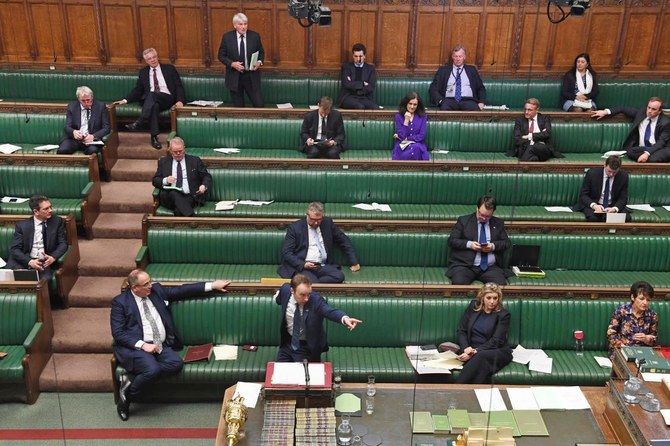
On Monday, the UK’s Health Secretary Matt Hancock told the House of Commons that this section of the bill was to be amended.
He told fellow MPs that the government recognized the need to “accede to the wishes of the families and faith communities,” and so would not be pushing this section of the bill.
MP Naz Shah, the shadow women and equalities minister from the opposition Labour Party, welcomed the move on Twitter.
“I’m so relieved that the government have listened to what we’ve said about religious burials for Muslim and Jewish people, and have brought forward an amendment to address our concerns,” she tweeted.
The Muslim Council of Britain (MCB) echoed Shah’s sentiments, with its Secretary-General Harun Khan praising her for her efforts in getting the government to reverse its position.
“The MCB warmly welcomes the UK Government’s amendment which recognizes the importance of ensuring faith communities are able to bury the deceased instead of cremating in the event of significant deaths due to coronavirus,” Khan said in a statement.
“During this national crisis, we are appreciative of this reassurance by our government and its important efforts to listen to and work constructively with faith communities.
“We pay tribute to the hard work of Naz Shah, MP for Bradford West, for raising the issue alongside others, and the All-Party Parliamentary Group on British Muslims for mobilizing support for this important change.
“The COVID-19 pandemic will continue to present unprecedented challenges, and at a time of national crisis, this type of constructive engagement will continue to yield positive results for the whole of society.”
Marie van der Zyl, president of the Board of Deputies of British Jews, echoed the MCB’s sentiments.
“We would like to extend our deep and sincere thanks to the government for working with us to amend this legislation to protect the final wishes and religious freedoms of the deceased. There could be few things more sacred,” Van der Zyl said in a statement.
“In particular, we are grateful to Health Secretary Matt Hancock, Communities Secretary Robert Jenrick, Paymaster General Penny Mordaunt, Communities Minister Simon Clarke and the Prime Minister’s Special Envoy for Freedom of Religion and Belief Rehman Chisthti for acting speedily to address the concerns raised by the Jewish and Muslim communities.
“Our thanks also go to Naz Shah MP for her own proposed amendment. This has been an inspiring example of interfaith solidarity and responsive government. It shows, even in these difficult times for our nation, why we have so much reason to be proud of this wonderful country.”


