

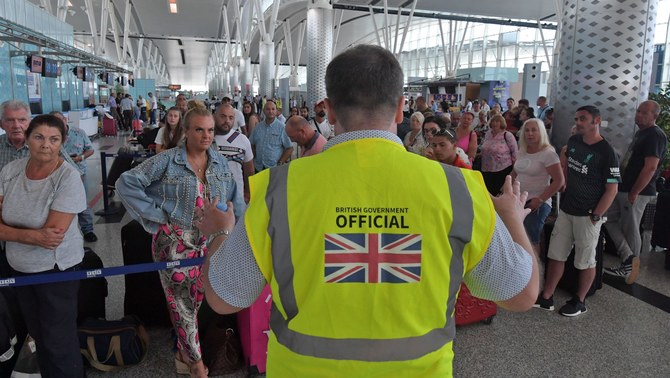

LONDON: Britons stranded in Tunisia are facing further delay to their return home after aircrew with TunisAir refused to fly to Europe due to concerns over coronavirus.
Many Brits are still stuck in the North African country after the Tunisian government suspended all international flights and shut its land and sea borders on March 18.
Tunisia has under 100 confirmed cases of coronavirus, but swiftly took stringent measures to prevent its spread.
The tough measures caught many holidaymakers by surprise, with European governments scrambling flights to recover their nationals.
But many Britons remain as the UK Embassy in Tunisia has struggled to organize repatriations.
The embassy said workers from TunisAir were unwilling to fly to Europe “on grounds of their individual safety and potential exposure” to coronavirus.
“Over the past few days, (we have) been working with the Tunisian government and Tunis Air to try to secure a flight to the UK,” the embassy said in a statement.
“However this option is now looking extremely difficult as Tunis Air are unable to find air crew who are prepared to fly to Europe on grounds of their individual safety and potential exposure,” it added.
“We will continue to look for ways to enable (Britons) to return to the UK as soon as is practically possible.”
Some Britons stuck in Tunisia have turned to begging the public for funds to cover flights home.
Crowdfunding page GoFundMe reported a 54 percent rise in the last week for campaigns related to people being stuck abroad.
Elizabeth Hazlewood, from Shrewsbury, was due to fly back from Tunisia this week but has been stranded since the government canceled outbound flights.
The 52-year-old support worker created a crowdfunding page to solicit support for her return home.
“I am running out of money rapidly. I really am stressed because of the situation and feel totally lost and alone,” she said.
The crisis in Tunisia is by no means the only example of Britons stranded overseas. Thousands are still desperately trying to secure flights home from around the world.
On Wednesday, UK Foreign Secretary Dominic Raab said the government is trying to organize flights with a number of countries including Australia, New Zealand, Singapore and Peru.
“Where commercial options are limited or prevented by domestic restrictions, we are in close contact with the airlines and local authorities in those countries to overcome those barriers to enable people to return home,” he added.
Meanwhile, Tunisia is ramping up measures to keep citizens safe from coronavirus. The government introduced a curfew from 6 p.m. to 6 a.m. from March 18. On Sunday, it launched restrictions to limit movements to those of “extreme necessity.”


