

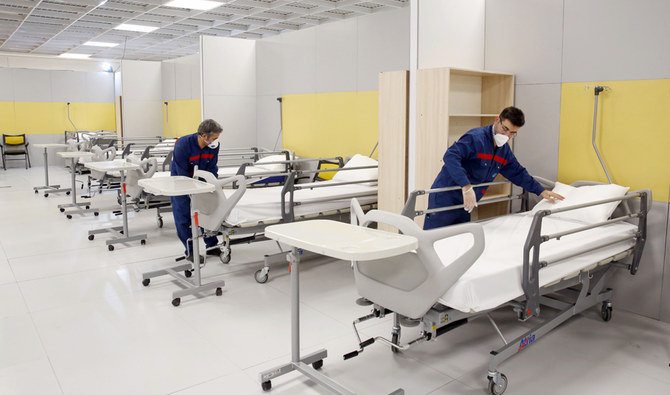

PARIS: Medical charity MSF is setting up a 50-bed emergency center to treat severe COVID-19 cases in Iran, the French organization said.
A team of nine MSF intensive care medics will staff the facility on the grounds of the Amin hospital in the central province of Isfahan, the charity said, as Iran grapples with the worst outbreak of coronavirus in the region.
“The size of the COVID-19 epidemic in Iran is particularly worrying,” MSF said.
France is already contributing to a package of medical aid for Iran alongside Britain and Germany, amid signs that the global fight against the coronavirus could help ease some diplomatic tensions.
In recent days, Tehran freed a French academic in a prisoner swap that also saw the release of an Iranian engineer held in France.
Iran on Sunday announced 129 new deaths, raising to 1,685 the official death toll in one of the worst-hit countries along with Italy and China.
Health Ministry spokesman Kianouche Jahanpour said more than 1,028 new cases had been recorded in the past 24 hours and a total of 21,638 people had now tested positive for the virus.
The US offer to help Iran in its fight against the new coronavirus pandemic is strange, Iran’s Supreme Leader Ayatollah Ali Khamenei said in a televised speech on Sunday.
Washington has offered humanitarian assistance to the Middle Eastern country most affected by the coronavirus.
Tensions between the two countries have been running high since 2018, when US President Donald Trump exited Tehran’s 2015 nuclear deal with six world powers and reimposed sanctions that have crippled the Iranian economy.
“Several times Americans have offered to help us to fight the pandemic. That is strange because you face shortages in America. Also you are accused of creating this virus,” said Khamenei, an anti-US hard-liner who has the final say in Iran.
NUMBER
1,685 - Iran on Sunday announced 129 new deaths, raising to 1,685 the official death toll in one of the worst-hit countries along with Italy and China.
“I do not know whether it is true. But when there is such an allegation, can a wise man trust you and accept your help offer? ... You could be giving medicines to Iran that spread the virus or cause it to remain permanently.”
Frictions increased when Trump ordered a US drone strike that killed the top commander of Iran’s Revolutionary Guards, Qassem Soleimani, on Jan. 3. Iran retaliated by hitting US targets in Iraq on Jan. 8.
“Our No. 1 enemy is America. It is the most wicked, sinister enemy of Iran ... its leaders are terrorists ... Liars and charlatans,” said Khamenei. Iranian authorities have blamed US sanctions for hampering its efforts to curb the outbreak and President Hassan Rouhani has urged Americans to call on their government to lift sanctions as Iran fights the coronavirus.
China, a party to Iran’s nuclear deal, has urged the US to lift sanctions on Iran immediately amid Tehran’s response to the coronavirus outbreak.
But the US sent Iran a blunt message this week: The spread of the virus will not save it from US sanctions that are choking off its oil revenues and isolating its economy.
Khamenei, who canceled his annual speech for Persian new year from Mashhad on March 20 because of the outbreak, said Iran would triumph over the virus. Iran “has the capability to overcome any kind of crisis and challenges, including the coronavirus outbreak,” said Khamenei, who called on people to stay at home. While many Iranians avoided traveling during the Persian new year holiday, police said millions have defied warnings issued by officials to avoid unnecessary trips aimed at curbing the spread of the virus.
The office of Tehran’s governor said all shopping centers will be closed in the capital from Sunday.
“Only pharmacies and shops that provide essential goods will remain open in Tehran,” Iranian state TV reported.


