BEIRUT: Lebanese troops began patrolling city streets and major roads on Sunday, setting up roadblocks and urging people to stay at home amid official warnings that the country is struggling to contain the coronavirus outbreak.
After the number of coronavirus cases in the country rose to 248, an increase of 18 on the previous day, Interior Minister Mohammed Fahmi said: “The situation is worrying. We must save ourselves, our families and our country before it is too late.”
Fahmi told people to “prepare for the worst while maintaining hope and faith that we will overcome this crisis by doing the right thing.”
Army helicopters circled Beirut and other major cities, using loudspeakers to urge people to stay home.
Lebanon’s Ministry of Health said that people waiting on test results for the virus should commit to home quarantine.
“Home quarantine has become an individual and social moral responsibility, and any compromise in its implementation will expose violators to legal and criminal prosecution,” the ministry warned.
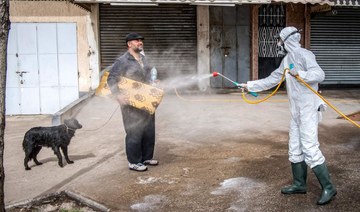
Lebanese army and security forces, together with police, set up checkpoints on major and and secondary roads to deter people from traveling. Troops are also keeping watch to prevent overcrowding in bakeries, pharmacies and grocery stores.
Fahmi told a press conference on Sunday that strict measures were taken because “some people are not complying with the necessary preventive measures to protect their relatives, families, friends, community and even their neighbors.”
He added: “Seven days ago, the government announced a general mobilization and took strict measures on all levels.
“Unfortunately, we have passed the stage of containing the coronavirus, and we will slip into the unknown if self-conviction is not present in every citizen to overcome this crisis. The law will apply to everyone, and every violation that poses a threat to public safety will be suppressed.”
HIGHLIGHTS
• The strict quarantine has turned Beirut and other cities into ‘ghost towns,’ with little activity and few vehicles on the roads.
• Lebanon’s Interior Ministry has issued a timetable allowing shops and factories to work for short periods each day.
Lebanon’s Interior Ministry has issued a timetable allowing shops and factories to work for short periods each day. It has also registered more than 300 cases of quarantine and closure violations.
The strict quarantine has turned Beirut and other cities into “ghost towns,” with little activity and few vehicles on the roads.
Dr. Abdul Rahman Bizri, a member of the Ministry of Health committee monitoring coronavirus, told Arab News: “The home quarantine period might be extended for a month or two. What is required is to limit social contact between people and reduce the burden on the health system.”
Bizri added: “No area is free of the epidemic and no area is fully infected. Some areas have a higher number of cases. Home quarantine aims to stop the transfer of the virus between regions.”
Prime Minister Hassan Diab issued a warning on Saturday that “the number of coronavirus cases is rising in an alarming manner, which suggests that a grave danger threatens our society.”
Claudio Cordone, director of UNRWA Affairs in Lebanon, addressed Palestinian refugees in Lebanon and announced “a state of emergency because of coronavirus.”
UNRWA is ready to help those who need testing or treatment at Rafik Hariri University Hospital, he said.
“Lebanese Red Cross teams, in coordination with the Palestinian Red Crescent Society, will transfer suspected cases inside and outside the camps to the hospital. UNRWA, with support from the Palestinian Embassy, will cover the costs of lab tests only for cases transferred via the hotline to the accredited hospital. If anyone wishes to get tested on their own, UNRWA will not cover the costs,” he said.