


KARACHI: For five years, Saudi-born Pakistani acupuncturist and skincare specialist Zehra Islam Zahid ran a successful beauty studio in Al Khabor in Saudi Arabia where some of her most loyal clients were Pakistanis.
Zahid thus decided to take a leap of faith and last week, she opened Xee Beauty in Karachi, Pakistan’s biggest city and the hometown of her parents. The company is registered in the United States, where Zahid attended university.
“I thought why shouldn’t I be in Pakistan because it is a big market,” Zahid told Arab News on Wednesday.
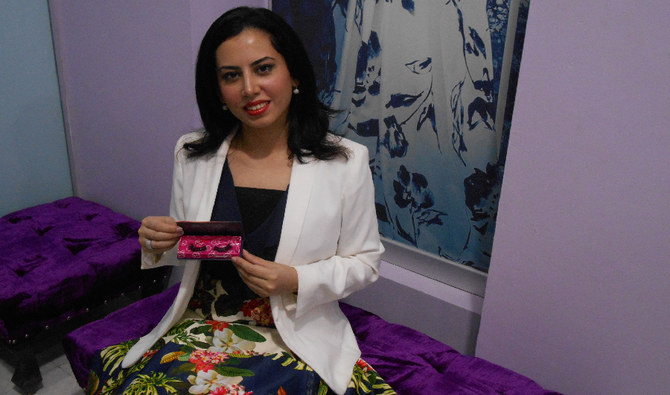
Saudi-born skincare specialist Zehra Islam Zahid poses for a photograph at Xee Beauty Parlor in Karachi on March 18, 2020. (AN Photo)
Among her many credits, Zahid claims she is the first beautician to introduce 3D mink lashes to Pakistani women. The technique refers to a cosmetic application of mink lash extensions used to enhance the length, curliness, fullness, and thickness of natural eyelashes.
But as an acupuncturist, Zahid’s passion, she says, has always been improving the inner health of women’s skin.
“My focus is a little different and that is the care of the inside of the skin through acupressure that would give much better results and require women to wear less make up. It is my passion and mission,” Zahid said.
“In Saudi Arabia, women wear a lot of makeup but they need more awareness about the benefits of beauty care that can be ensured without use of chemicals and machines,” Zahid said, saying she had focused on holding consultation sessions for her clients at the Saudi studio that taught them the principles of holistic beauty and organic methods, skills she had learnt during her training in the United States.
In Pakistan, too, she hopes to practice and inculcate awareness about healthy skincare techniques.
“In Karachi, there is little awareness among the ladies about skincare. They just apply layers of makeup,” Zahid said. “People in Pakistan are also ready to spend money. They know they need to care but how, there is little awareness of that.”
She said harsh summer and winter seasons in Pakistan exerted a toll on skin, which required women to get regular facials and oil massages. Zehra also suggested a regular intake of fruits, yogurt and plenty of water as well as light exercise.
“The lack of pollution in Saudi Arabia keeps the skins of women relatively clean and makes the work of beauticians easier but in Pakistan the environmental impacts and pollution cause damaging effects,” Zahid said. “That is why what I have learned in Saudi Arabia, I want to replicate in Pakistan.”


