

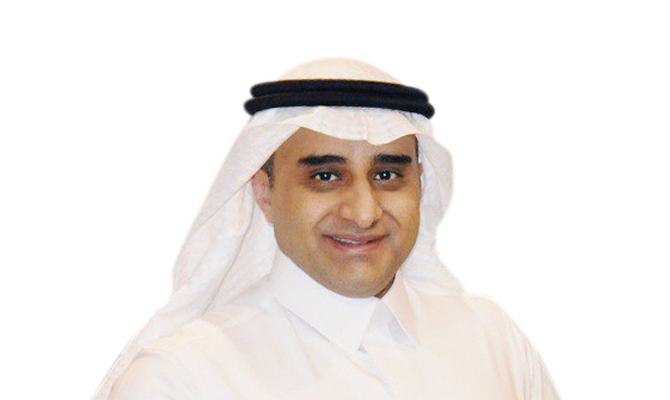
Abdulrahman Al-Asmari, vice president at Taif University

Abdulrahman Al-Asmari
Short Url
Updated 16 March 2020
Follow

Abdulrahman Al-Asmari, vice president at Taif University

Abdulrahman Al-Asmari has been vice president for academic affairs and development at Taif University since October 2016.

Al-Asmari received his doctorate in applied linguistics — computer-assisted language learning (CALL) — in 2008 from the University of Melbourne.

Al-Asmari’s academic career began in 2000 when he was an EFL instructor at the Saudi Royal Air force for a year.

He then worked as a teaching assistant at Taif Teachers College for 5 years. Later, he performed the same role at Taif University for two years until 2008. He also worked as an assistant professor at the same university until 2012.

Al-Asmari was then promoted to director of the English Language Center at Taif University until March 2017.

He is currently working at Taif University as a professor. His areas of expertise include EFL/ESL teaching, technology-enhanced language learning and teaching, language program evaluation, sociolinguistics, CALL software design and management, computer-based statistical data analysis, and computer-based qualitative data analysis.

Taif University has recently revealed the conversion of more than 12,000 divisions into a virtual classroom system. After the urgent activation of the academic plan, the departments transitioned to digital learning platforms and virtual classes.

Al-Asmari stressed that the university had been keen to activate all axes of e-learning for years and in multiple domains, whether through e-learning management platforms, or open education platforms, which are currently common on digital learning platforms. This, he claimed, improved attendance and learning outcomes.


Royal reserve intensifies efforts for environmental conservation

Updated 05 December 2025
Follow

Royal reserve intensifies efforts for environmental conservation

  • Protection contributes toward sustainability to align with Saudi Vision 2030

RIYADH: The King Salman bin Abdulaziz Royal Reserve Development Authority is intensifying efforts to protect the vegetation, wildlife, and public property within its reserve, the largest in the Kingdom at 130,700 sq. km.

Distinguished by its nature, terrain and archaeological sites (some dating back to 8000 B.C.), its protection contributes to environmental sustainability and aligns with Saudi Vision 2030’s goal of making the Kingdom a global environmental tourist destination, the Saudi Press Agency reported.

The authority’s efforts include enforcing regulations against violators, in partnership with the Special Forces for Environmental Security; rehabilitating damaged lands affected by overgrazing and desertification; planting nearly 4 million seedlings; rehabilitating 750,000 hectares of degraded land to restore plant life; and distributing tonnes of native wild seeds.

The authority has urged adherence to regulations, stressing continuous monitoring and enforcement against violations.

The royal reserve, a vast ecological haven across the Northern Borders, Jouf, Tabuk and Hail regions, is a vital hub for migratory birds. It is home to more than 290 bird species, with 88 percent being migratory and 12 percent resident.

This accounts for 58 percent of all bird species recorded in the Kingdom. The reserve also protects 26 bird species listed as threatened on the International Union for Conservation of Nature Red List.

The reserve serves as the Kingdom’s first stop for flocks arriving from Asia and Europe in the autumn, and their last station before departing in spring.

With its rich biodiversity, balanced environment and varied landscapes, the reserve also stands as a natural sanctuary, hosting remarkable species such as the steppe eagle, the eastern imperial eagle, and the houbara bustard.