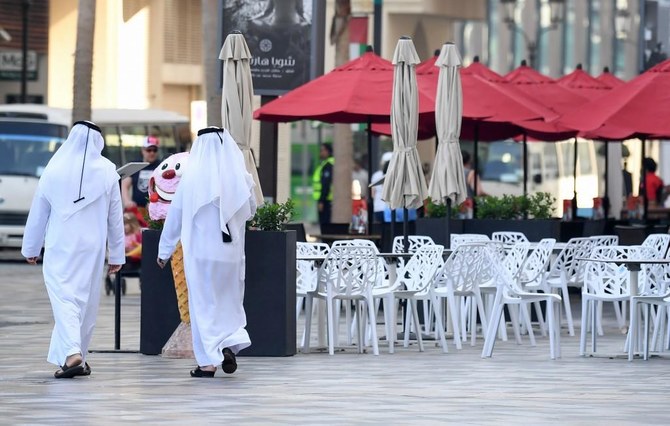
DUBAI: The central bank of the United Arab Emirates, home to the skyscraper-studded city of Dubai, on Sunday announced a $27 billion stimulus package to deal with the economic effects of the coronavirus pandemic.
The money will go toward supporting the country’s banks, and regulatory limits on loans will be eased.
Nations across the Middle East have pledged to stimulate their economies as they weather the global pandemic, which has led to widespread school closures, the cancelation of sporting and other events, as well as sweeping lockdowns in some hard-hit areas.
For most people, the new coronavirus causes only mild or moderate symptoms, such as fever and cough. For some, especially older adults and people with existing health problems, it can cause more severe illness, including pneumonia.
Most people suffer only mild to moderate symptoms and recover in a matter of weeks. But the virus is highly contagious and can be spread by individuals with no visible symptoms.
The virus has spread to more than 100 countries and infected more than 150,000 people worldwide and killed more than 5,700. Iran is home to the biggest outbreak in the Middle East, with nearly 13,000 cases and more than 600 deaths.
More than 70,000 people worldwide have recovered after being infected.
Countries across the Middle East have imposed sweeping travel restrictions, canceled public events and in some cases called on non-essential businesses to close for the coming weeks.
Dubai Parks & Resorts announced it would be closed through the end of the month.
Abu Dhabi shut down its amusement parks and museums through the end of the month, including Louvre Abu Dhabi.
Kuwait meanwhile shut down malls, salons and barbershops to slow the spread of the virus. Authorities allowed coffee shops to remain open, but said no more than five customers can wait in line at a time and must be a meter apart from each other.
Saudi Arabia separately announced its own $13 billion stimulus plan.


![]()

UAE pledges $27bn in stimulus as Middle East works to slow coronavirus
Short Url
https://arab.news/68tyk
UAE pledges $27bn in stimulus as Middle East works to slow coronavirus
- The money will go toward supporting the country’s banks and regulatory limits on loans will be eased
- Abu Dhabi shut down its amusement parks and museums through the end of the month, including Louvre Abu Dhabi.


Latest updates


© 2026 SAUDI RESEARCH & PUBLISHING COMPANY, All Rights Reserved And subject to Terms of Use Agreement.