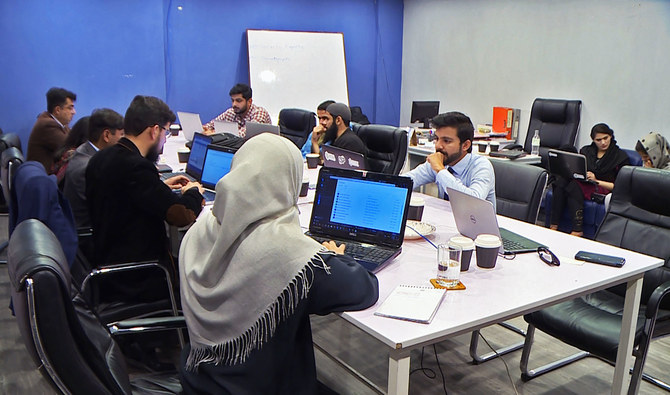
ISLAMABAD: Pakistan Information Security Association (PISA) on Wednesday participated in the annual cyberwarfare drill organized by the Asia Pacific Computer Emergency Response Team (APCERT) to test the capability of leading Computer Security Incident Response Teams (CSIRT) in the Asia Pacific and other regions of the world.
The exercise simulated real incidents and issues that exist on the Internet, informed an official statement released by the regional body, adding that the participants handled a case of a local business affected by malware infection triggered by data breach.
“This cyber drill is a competition between 25 countries to test their cyber capabilities,” said PISA President Ammar Jaffri while talking to Arab News. “There are tests called artifacts [products developed into different phases of software testing life cycle] and [the simulation is] like cyberwarfare or cyber games.”
“The people taking part in the cyber drill have to tell what was the pattern of the attack, what was the area of the attack, how much damage has been incurred, and how the damage has been mitigated,” Jaffri, a veteran cyber security expert who founded the Federal Investigation Agency’s National Response Center for Cyber Crime (NR3C) in 2007, continued.
He added that his team secured the third position in the cyber competition drill last year. However, the result of this year’s ranking is scheduled to be announced on March 13.
Experts have frequently pointed out that Pakistan lacks a comprehensive cybersecurity policy. In November last year, a European nonprofit organization, EU DisinfoLab, uncovered a huge Indian network of 265 fake media outlets spread across 65 countries that designed content “to influence [the policymaking processes of] the European Union and the United Nations by repeatedly criticizing Pakistan.” However, the country lacked the institutional mechanism to deal with the problem and only became aware of its magnitude after the EU DisinfoLab reported its findings.
Meanwhile, Pakistan has introduced special cyber laws to police the internet and social media platforms to block content that is deemed against local sensitivities.
Jaffri said that Pakistan needed to devise a policy framework and develop an institutional mechanism to handle online challenges since the country was gradually moving toward digital economy.
“Cyberspace is by default global,” he noted, “so we have to respond to the global initiatives as a country.”


![]()

Pakistani organization participates in cyberwarfare exercise
Short Url
https://arab.news/phrz7
Pakistani organization participates in cyberwarfare exercise
- The country’s gradual shift to digital economy has made it more vulnerable to online threats
- The cyber drill is a competition between 25 countries to test their cyber capabilities
Latest updates



Recommended


© 2026 SAUDI RESEARCH & PUBLISHING COMPANY, All Rights Reserved And subject to Terms of Use Agreement.