LOS ANGELES: As the saying goes, ‘Good things come to those who wait.’ For fans of writer-director Zeina Durra, the old adage holds true. The London-born talent — whose mother is Bosnian-Palestinian and whose father is Jordanian-Lebanese — made a splash back in 2010 at Park City, Utah’s iconic Sundance Film Festival with the release of “The Imperialists Are Still Alive!” The film was a provocative depiction of an Arab woman’s life post-9/11 New York City. Now, ten years later, Durra has released her second feature film, “Luxor.” Arab News sat down with the filmmaker to find out more.
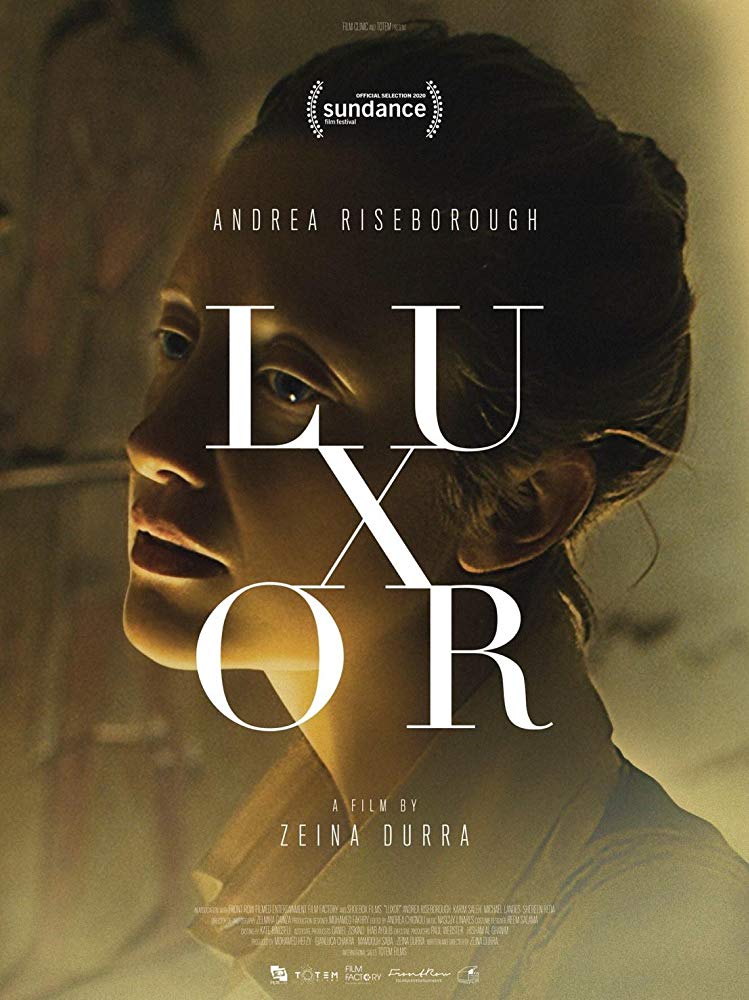
The idea for the film reportedly came to Durra in a dream. (Supplied)
The idea for the film reportedly came to Durra in a dream. The NYU Film School graduate had been working on another movie, which was unfortunately in the process of falling apart. In the midst of this crisis, her pregnancy and a bout of the flu, Durra had a dream of a woman walking through the city of Luxor. When she woke up, she began making calls and writing the script. Production was delayed by her third pregnancy but after her son was born, they began shooting.
The film centers on the character of Hana (Andrea Riseborough), a surgeon who, after harrowing work treating patients injured in the Syrian warzone, retreats from her station on the Jordanian Syrian border to the titular Egyptian city. Having lived there in her twenties, Hana attempts to find solace from the stress and horrors she witnessed during her work.
“I’m really obsessed with grief and how you heal from it because of my Middle Eastern and Bosnian background,” Durra said. “Wars and pain and suffering are almost seen as normal in these cultures. I think that’s subconsciously something I’ve always wanted to deal with.”
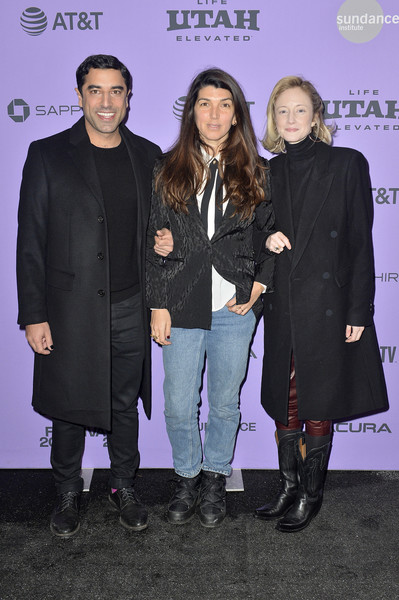
Karim Saleh, Zeina Durra and Andrea Riseborough at the premiere of “Luxor” during the Sundance Film Festival. (Supplied)
Hana’s sabbatical is interrupted by a chance encounter with Sultan (Karim Saleh), an old friend and former lover from their time studying together in Luxor. Riseborough and Saleh bring so much to the film, conveying complex emotions through body language and delivery and allowing the script’s quiet scenes and simple dialogue to flourish. There is definite chemistry between the characters as well as the actors, though the romance does not take center stage.
“The film is about her, and it’s about him creating this opportunity for her to look back at her choices,” Durra said. “He doesn’t save her. She saves herself. His presence is just an opportunity for her to think about how she wants to live again.”
In a way, “Luxor” is the inverse of “The Imperialists Are Still Alive!”, as the latter depicts a Middle Eastern experience in a Western country and the former shows a Westerner in the Middle East. Despite this, the film does not fall into the trap of orientalizing. “Luxor” is not portrayed as a stereotypical mysterious and exotic locale for Hana to escape her pain. It’s a real city crowded with tourists, but with a history and beauty that helps her to process and eventually overcome trauma.
Critical reception of “Luxor” has been largely positive, which is a major boon to Durra who confessed some of the struggles she has faced in trying to get her movies produced.
“I realize that a lot of people couldn’t understand a script written by a woman because it wasn’t in their experience,” Durra said. “It didn’t resonate with them, and obviously you finance what resonates with you.”
The struggles have proved fruitful, however, not only because of the success of Durra’s films, but also because they have brought increased opportunity to future generations of filmmakers.
“I had a lot to deal with, but it’s amazing now,” Durra said. “And I’m really happy for what this means for younger filmmakers. We’ve already been there fighting for them.”
“Luxor” is an introspective character study that makes brilliant and dignified use of its Middle Eastern setting. The two leads carry the film with nuanced performances that plumb the depths of trauma, guilt as well as the path to recovery.