GENEVA: Moscow has participated in war crimes connected with deadly air strikes in Syria, UN investigators said Monday, warning that Ankara could also be responsible for similar crimes against Kurds there.
The charges come as tensions soar between Turkey and Russian-backed Syrian forces following escalating clashes in the last rebel stronghold of Idlib, but predates the latest unrest.
The UN Commission of Inquiry on the rights situation in Syria said in its latest report that it had evidence that Russian planes participated in two air strikes, in Idlib and in rural Damascus last July and August, which killed more than 60 people.
The report, which covers the period from July 2019 to January 10 this year, said there was evidence to prove Russian planes took part in both attacks, and that since the attacks were not directed at military objectives they amounted to a “war crime.”
The investigators also said Turkey might be held criminally liable for serious violations by its allies, the Syrian National Army rebel fighters.
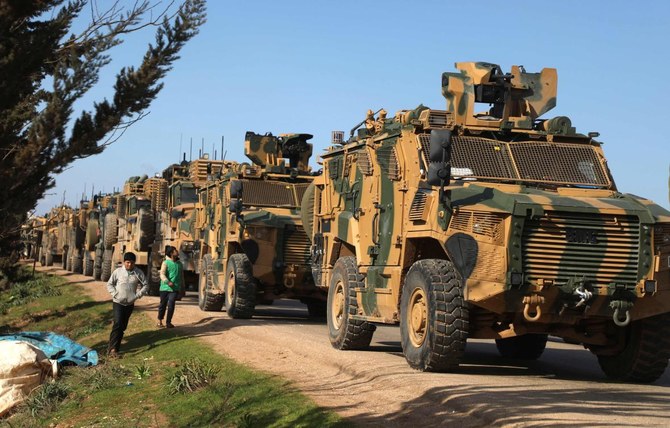
Turkish troops and their Syrian proxies overran a swathe of northern Syria last October, after a military campaign against Kurdish forces resulted in tens of thousands fleeing their homes.
The UN investigators referred to allegations that Ankara-backed Syrian rebels had carried out executions, home confiscations and looting.
They highlighted in particular the case of Hevrin Khalaf, the 35-year-old leader of the Future Syria Party, who on October 12 was pulled from her car and executed along with her driver.
They had been traveling from Qamishli when members of the Syrian National Army’s Brigade 123 pulled Khalaf from the car by her hair and mutilated her body before the executions.
The Commission said there were “reasonable grounds” to believe that the Syrian National Army fighters committed several war crimes, including “murder.”
If it could be shown they had acted under “the effective command and control of Turkish forces” it could entail the “criminal responsibility for such commanders who knew or should have known about the crimes,” it warned.
While the investigators acknowledged they had not uncovered evidence the Turkish forces gave orders leading to the violations, the report pointed out that liability could also fall on those who “failed to take all necessary and reasonable measures to prevent or repress their commission.”
The investigators also referred to an air strike on a civilian convoy the same day as the Khalaf’s murder and in the same region that killed 11 people and wounded 74.
And they highlighted the apparent targeting of non-military sites such as strikes near the Aluk water station that cut the water supply to 460,000 people.
Ankara has denied involvement, but the commission urged “Turkish authorities to launch (their) own investigations and make the findings public.”
The UN’s Syria commission, set up in 2011 shortly after the civil war began, has repeatedly accused the various sides of war crimes and in some cases crimes against humanity. Monday’s report was the 19th to date.
It also indicated a range of violations by Damascus-backed forces, including targeting civilian sites such as schools and medical facilities in western Syria.
The investigators expressed alarm at the growing humanitarian tragedy at Syria’s border with Turkey, where they said some 1.5 million people displaced by violence around Idlib had become stranded in desperate conditions.
“It is scandalous that the international community has not been able ... to deal with the situation,” commission chair Paulo Pinheiro told reporters.
“You have children in open air with their families, without a tent, without shelter, without blankets,” he said, lamenting that “children are freezing to death.”
In nearly nine years of conflict, more than 380,000 people have been killed and millions have been displaced from their homes.


![]()

UN probe highlights Russia, Turkey roles in Syria ‘war crimes’
Short Url
https://arab.news/2ryhb
UN probe highlights Russia, Turkey roles in Syria ‘war crimes’
- The UN Commission of Inquiry on the rights situation in Syria said in its latest report that it had evidence that Russian planes participated in two air strikes
- The investigators also said Turkey might be held criminally liable for serious violations by its allies, the Syrian National Army rebel fighters


Latest updates




Recommended


© 2026 SAUDI RESEARCH & PUBLISHING COMPANY, All Rights Reserved And subject to Terms of Use Agreement.