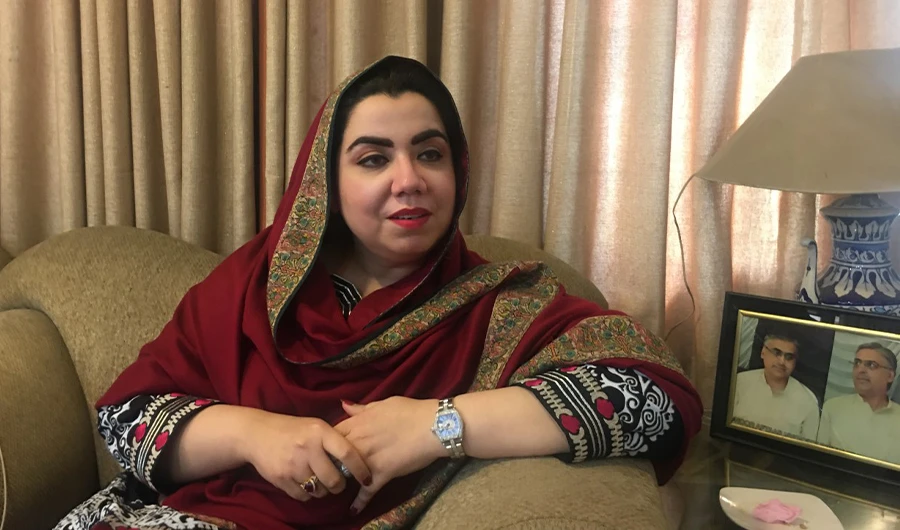
First elected female lawmaker in Peshawar carries family legacy

Samar Haroon Bilour talks to Arab News during an interview at the Bilour family house in Peshawar, Feb. 24, 2020. (AN photo)
Short Url
Updated 28 February 2020
Follow

First elected female lawmaker in Peshawar carries family legacy

  • Samar Haroon Bilour won a provincial assembly seat in 2018
  • She seeks to prove herself as the people’s representative

PESHAWAR: Following in the footsteps of her slain husband, Samar Haroon Bilour entered politics to continue the family’s legacy and soon became the first woman to win a general seat in Peshawar the capital city of Khyber Pakhtunkhwa province.
She was not prepared to enter this chapter of her life, but circumstances forced Samar into it when Haroon Bilour was killed in a suicide blast at an election rally in Peshawar, two weeks before the 2018 general election.
“I was not ready to enter into politics when Haroon was assassinated. The whole family was shattered and my both sons pushed me to take part in elections,” Samar narrated to Arab News how she took over her husband’s place at the Awami National Party (ANP).
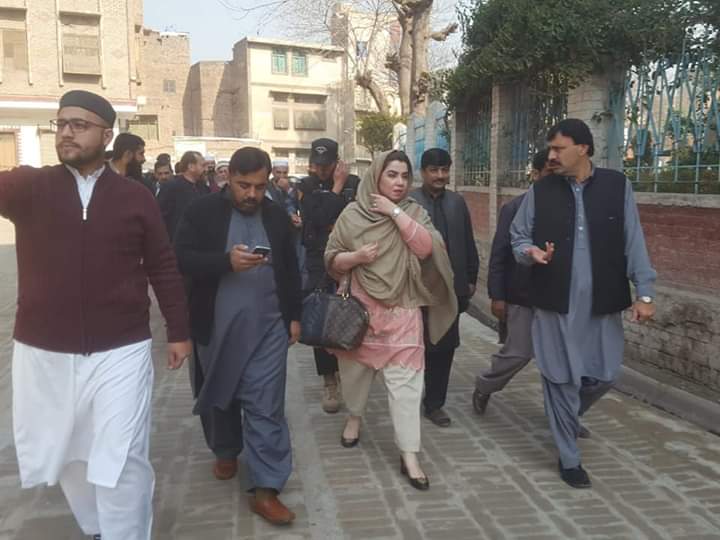


Samar Haroon Bilour is visiting her constituency in Peshawar on Feb. 23, 2020. (Photo courtesy: Samar Haroon Bilour)

Haroon’s father, Bashir Ahmad Bilour, a lawmaker and former provincial minister, was also killed by a suicide bomber during an ANP meeting six years earlier.
The 2018 election was Samar’s first formal foray into politics, but state affairs is not a new realm for her.
“Being the eldest daughter of a politician, I certainly had an interest in politics and it was in my blood,” Samar said, referring to her father, Irfanullah Marwat, who multiple times served as member of the Sindh Assembly.
While the Bilour family’s political fame and supporter base in Khyber Pakhtunkhwa helped Samar win the election, she has not rested on laurels and works to strengthen her political stature.
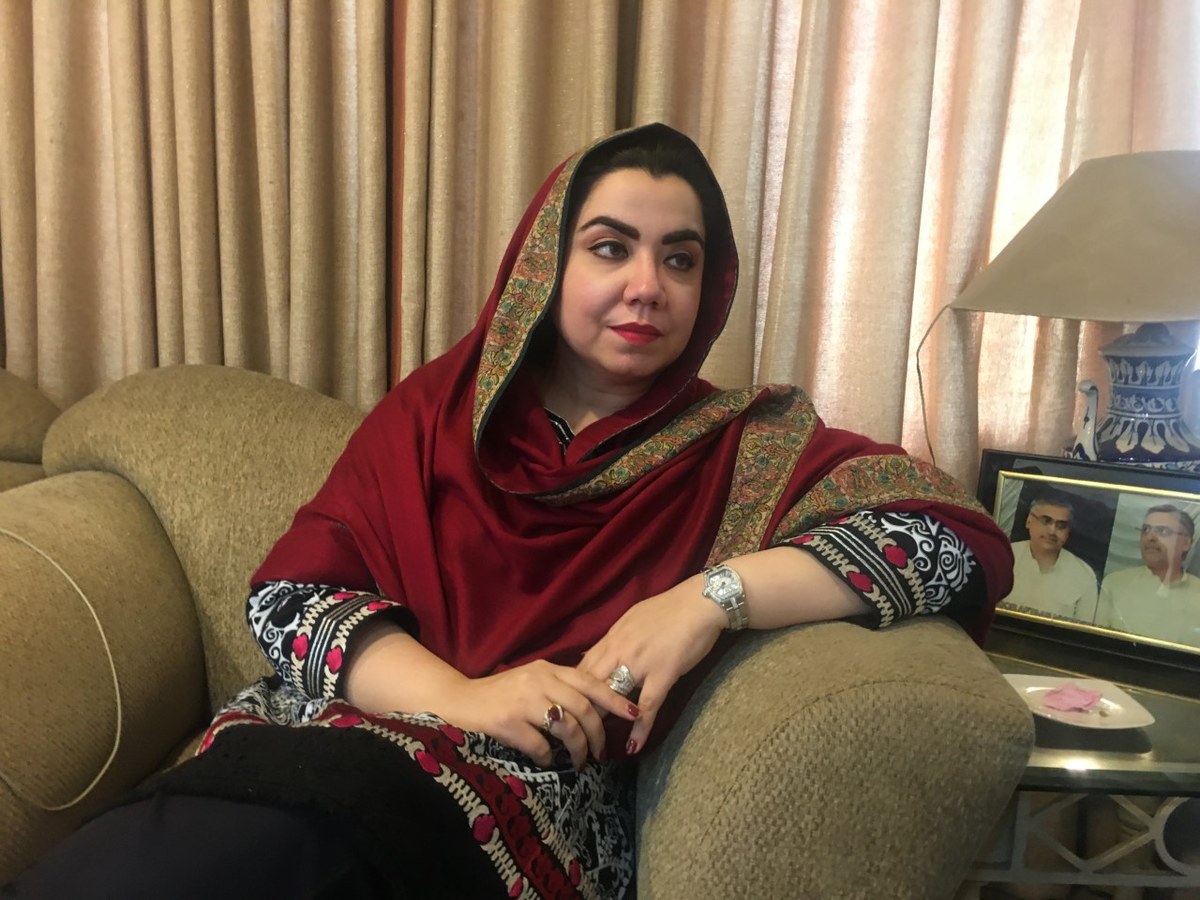


Samar Haroon Bilour talks to Arab News during an interview at the Bilour family house in Peshawar, Feb. 24, 2020. (AN photo)

“I am working passionately, very hard, I don’t want my time to pass at the assembly’s hall or in seminars,” she said, explaining that as she seeks to prove herself as the people’s representative.

Being the first female elected lawmaker from Peshawar, Samar had to establish her place and gain the trust of people.
“This is a male dominated setup, I have to deal with men every day. Now I have settled myself in this culture. People approach me with their problems and discuss them with me. My own life and happiness suffered a lot, but this is my role destined by God,” she said.
Samar’s constituents see in her an heir to the Bilour family’s legacy.
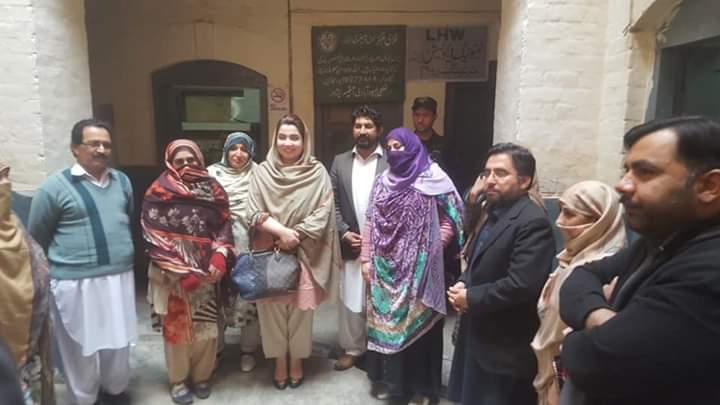


Samar Haroon Bilour is visiting her constituency in Peshawar on Feb. 23, 2020. (Photo courtesy: Samar Haroon Bilour)

Wahab Momand, who runs a business in Peshawar and has for decades supported the Bilours, said that “Samar carries the same progressive nationalist political agenda as her martyred husband and father-in-law.”
“They suffered a lot for their stance against militants and for safeguarding the Peshawar valley,” Momand said.
Sumbal Ahmad, a college teacher from Peshawar said that Samar means a lot to women’s representation in the province, as now they have a lawmaker to reach out to.
“Meeting male members of the parliament is odd and difficult. But now it is very easy for women to meet approach Samar and share their issues with her,” Sumbal said.
“She is now a vital voice of the people.”
Pakistan to launch AI screening in January to target fake visas, agent networks

Updated 05 December 2025
Follow

Pakistan to launch AI screening in January to target fake visas, agent networks

  • New system to flag forged-document travelers before boarding and pre-verify eligibility
  • Move comes amid increasing concern over fake visas, fraudulent agents, forged papers

ISLAMABAD: Pakistan will roll out an AI-based immigration screening system in Islamabad from January to detect forged documents and prevent illegal overseas travel, the government said on Thursday. 

The move comes amid increasing concern over fake visas, fraudulent agents and forged papers, with officials warning that such activity has contributed to deportations, human smuggling and reputational damage abroad. Pakistan has also faced scrutiny over irregular migration flows and labor-market vulnerability, particularly in the Gulf region, prompting calls for more reliable pre-departure checks and digital verification.

The reforms include plans to make the protector-stamp system — the clearance required for Pakistani citizens seeking overseas employment — “foolproof”, tighten labor-visa documentation, and cancel the passports of deportees to prevent them from securing visas again. The government has sought final recommendations within seven days, signalling a rapid enforcement timeline.

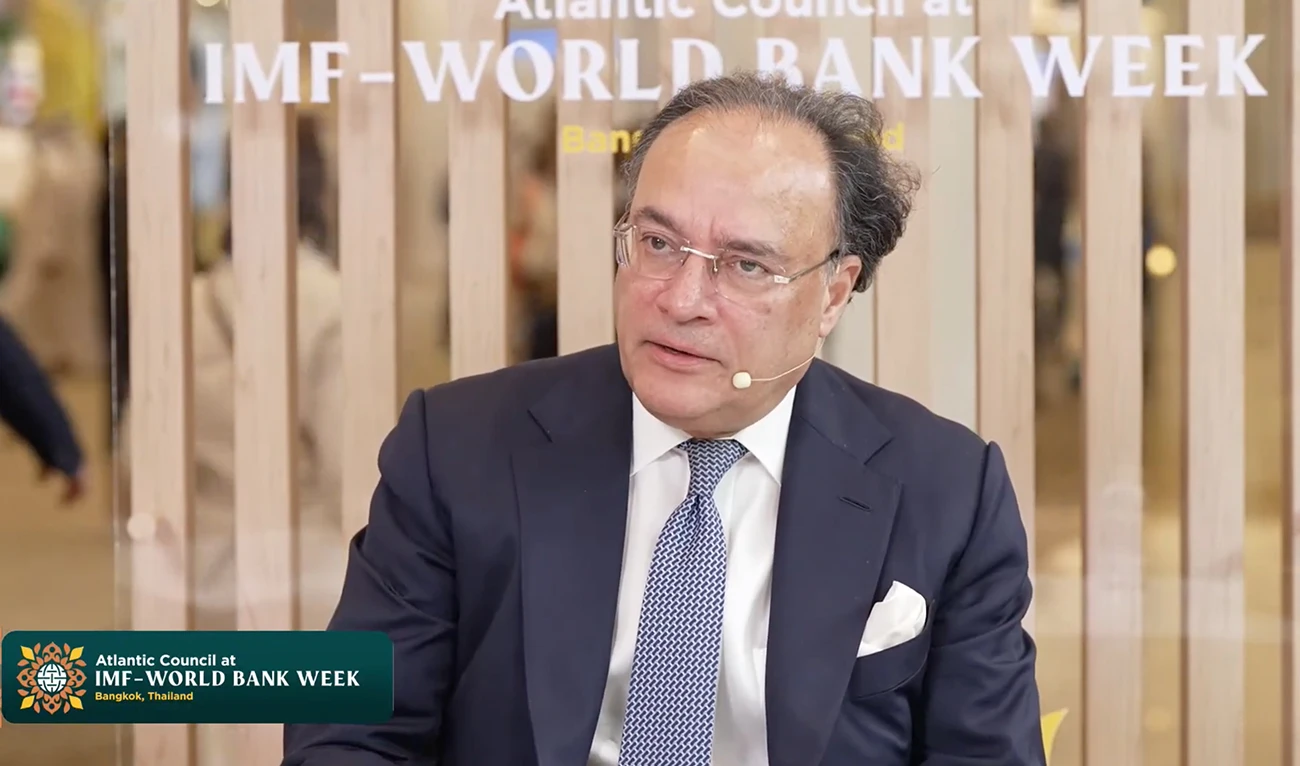
“To stop illegal immigration, an AI-based app pilot project is being launched in Islamabad from January,” Interior Minister Mohsin Naqvi said following a high-level meeting chaired by him and Minister for Overseas Pakistanis Chaudhry Salik Hussain.

Naqvi said the new screening technology is intended to determine travelers’ eligibility in advance, reducing airport off-loads and closing loopholes exploited by traffickers and unregistered agents.

The interior minister added that Pakistan remains in contact with foreign governments to improve the global perception and ranking of the green passport, while a uniform international driving license will be issued through the National Police Bureau.

The meeting also approved zero-tolerance measures against fraudulent visa brokers, while the Overseas Pakistanis Ministry pledged full cooperation to streamline the emigration workflow. Minister Hussain said transparency in the protector process has become a “basic requirement,” particularly for labor-migration cases.

Pakistan’s current immigration system has long struggled with document fraud, with repeated cases of passengers grounded at airports due to forged papers or agent-facilitated travel. The launch of an AI screening layer, if implemented effectively, could shift the burden from manual counters to pre-flight verification, allowing authorities to identify risk profiles before departure rather than after arrival abroad.

The reforms also come at a moment when labor mobility is tightening globally. Gulf states have begun demanding greater documentation assurance for imported labor, while European and Asian destinations have increased scrutiny following trafficking arrests and irregular-entry routes from South Asia. For Pakistan, preventing fraudulent departures is increasingly linked to protecting genuine workers, reducing deportation cycles and stabilizing the country’s overseas employment footprint.