Traditional Saudi game jumps to the digital world

1 / 4
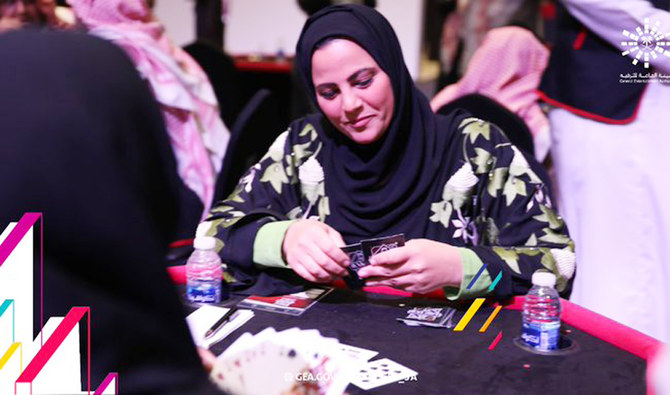
First prize winners of this year’s tournament came home with cash prize of SR750,000 and a BMW. (Photo/Social media)
2 / 4
3 / 4
4 / 4
Short Url
Updated 25 February 2020
Follow

Traditional Saudi game jumps to the digital world

  • First prize winners of this year’s tournament, Fahad Al-Shibani and Saud Al-Shibani, came home with cash prize of SR750,000 and a BMW

RIYADH: Baloot, a card game similar to bridge, has developed from a traditional game — usually played at family gatherings — to an online game for your mobile phone.
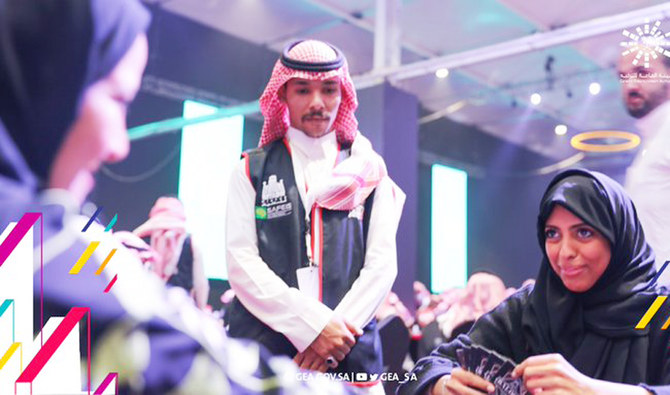
The Saudi Arabian Federation for Electronic and Intellectual Sports launched in Riyadh the third baloot tournament, which has attracted more than 18,000 participants including 40 female teams. The total prize money is SR2 million ($533,234).
The third baloot tournament showed an unprecedented number of players this year, bolstered by the participation of female players.
First prize winners of this year’s tournament, Fahad Al-Shibani and Saud Al-Shibani, came home with cash prize of SR750,000 and a BMW. Second prize winners received cash prizes of SR500,000 and third place players won SR100,000.
The electronic version is now more popular among Saudis than the original, which requires at least four players.
“The main feature that these baloot apps provide is that I can play the game anytime and anywhere, I don’t need to wait until I find three more people to complete the team,” said Saad Al-Amri, an undergrad student from Abha. “I also don’t lose control as I sometimes do when I play it with my relatives,” he added.
However, Al-Amri admits that playing baloot online made him more addicted to the game, saying that some days he spends 3 hours playing.
Baloot apps are not new and the market continues to grow. Apple’s App Store boasts over 30 Baloot apps. In Android’s Google Play store, the number of apps is even higher, ranging from platforms for playing the game, to apps that teaches the rules, to calculators that help users track their scores in the traditional version.
On top of the list of apps are two famous versions called “Kammelna” and “Baloot VIP,” with both reaching over 1 million downloads.
There are other apps that are less popular but also have strong downloads figures. “Tarbeeat Baloot” and “iBaloot” have just over half a million and 100,000 downloads respectively.
According to the website of “Kammelna,” a Saudi app, they started working on it in 2008, and currently have more than 1 million subscribers, with an updated ranking list for the best 100 players published daily.
Baloot apps can charge paid subscriptions, ranging from monthly, quarterly, semiannually or annually. Some apps sell points to customers who can replace them with special features in the game.
Subscriptions start from around SR30 per month, giving users additional features such as access to a special playing room and the ability to start private conversations with other players. Some apps have unique tournaments to encourage users to compete with each other and win points that they can use in future games.


Threat to Kingdom’s security is ‘red line’ that will be ‘addressed and neutralized,’ Saudi envoy says

Updated 14 January 2026
Follow

Threat to Kingdom’s security is ‘red line’ that will be ‘addressed and neutralized,’ Saudi envoy says

  • Abdulaziz Alwasil tells UN Security Council the situation in southern Yemen is ‘a just cause with social and historic dimensions’ that can only be resolved through dialogue
  • Recent military activity in the south was unilateral, resulting in an escalation that harms the interests of Yemeni people and undermines efforts to address issues in the south, he said

NEW YORK CITY: Any attempt to threaten Saudi Arabia’s national security is a “red line” and will be met with decisive action, the Kingdom’s ambassador to the UN told the Security Council on Wednesday.

Speaking during a meeting of the council to discuss Yemen, Abdulaziz Alwasil said the situation in the south of the country is “a just cause with social and historic dimensions” that can only be resolved through dialogue.

“We stress that any attempt to threaten our national security is a red line, and we will not hesitate to take the necessary actions and steps to address it and neutralize it,” he added.

Alwasil reaffirmed Saudi Arabia’s support for Yemeni President Rashad Al-Alimi, the Presidential Leadership Council, and the Yemeni government in their efforts to achieve security, stability, development and peace while preserving national unity.

He said military activity by Southern Transitional Council forces in Hadramout and Al-Mahra on Dec. 2, 2025, was unilateral, did not have the approval of the Presidential Leadership Council, and was not carried out in coordination with the Coalition to Restore Legitimacy in Yemen.

It had resulted in an unjustified escalation that harmed the interests of the Yemeni people, undermined efforts to address the issues in the south, and ran counter to the coalition’s objectives, Alwasil added.

The Kingdom, working with its coalition partners, the Presidential Leadership Council and the Yemeni government, had moved to contain the situation by dispatching a military force to coordinate arrangements with the Southern Transitional Council in Aden, he said.

The aim was to ensure the return of the southern council’s forces to their previous positions outside of Hadramout and Al-Mahra, and the handover of camps to legitimate government forces and local authorities in line with agreed procedures, Alwasil added.

He expressed regret over the military operations that took place in Hadramout and Al-Mahra, close to Saudi Arabia’s southern border, which he said posed a direct threat to the Kingdom’s national security, as well as the security of Yemen and regional stability. Such steps were extremely dangerous, he added, and contradicted the principles on which the Coalition to Restore Legitimacy in Yemen had been founded.

Alwasil welcomed a prisoner and detainee exchange agreement signed in Muscat on Dec. 23, which he described as an important humanitarian measure to alleviate suffering and build confidence.

He praised Oman for hosting and sponsoring the consultations and supporting negotiations, and commended the efforts of UN’s special envoy for Yemen, Hans Grundberg, the International Committee of the Red Cross and all others that has played a part.

Regarding the political efforts to resolve the crisis, Alwasil said Saudi Arabia welcomed President Al-Alimi’s call for an inclusive conference in Riyadh to bring together all stakeholders to discuss just solutions to the situation in southern Yemen.

Preparations for the conference have begun, he added, in cooperation with the Yemeni government and southern representatives, reflecting the close ties between the two countries and their shared interests in stabilizing Yemen.

He urged all southern stakeholders to participate actively and constructively in the talks, to help find comprehensive and just solutions that meet the legitimate aspirations of the people of southern Yemen.

Alwasil called on all Yemeni forces and stakeholders to cooperate and intensify their efforts to reach a lasting political settlement that would ensure security and stability.

He described the southern issue as “a just cause with social and historic dimensions,” adding that “the only way to address it is through dialogue that leads to a comprehensive political solution” based on nationally and internationally agreed terms of reference.