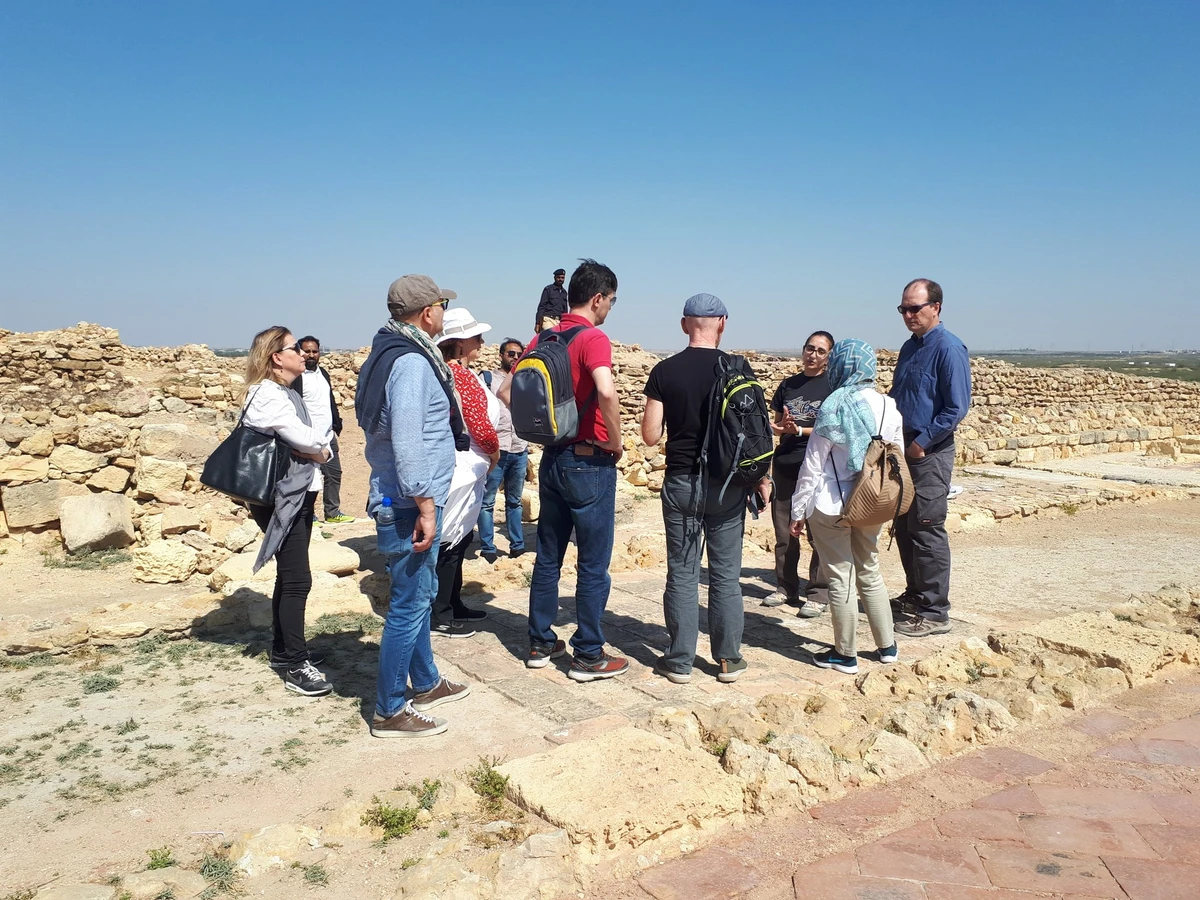
- The ancient town was gateway for Arab conquerors in South Asia
- Antiquities recovered from Bhanbhore include 6,675 ivories, Italian archaeologist Dr Simone Mantellini said
KARACHI: Archaeologists from Italy and Pakistan believe that the discovery of a large elephant ivory stock in Bhanbhore seems to suggest that there was a big factory for the commodity in the area, officials said on Thursday.
An ancient city located about 65 kilometers east of Karachi, Bhanbhore provided a gateway to Arab conquerors who arrived in South Asia hundreds of years ago and dominated the region.
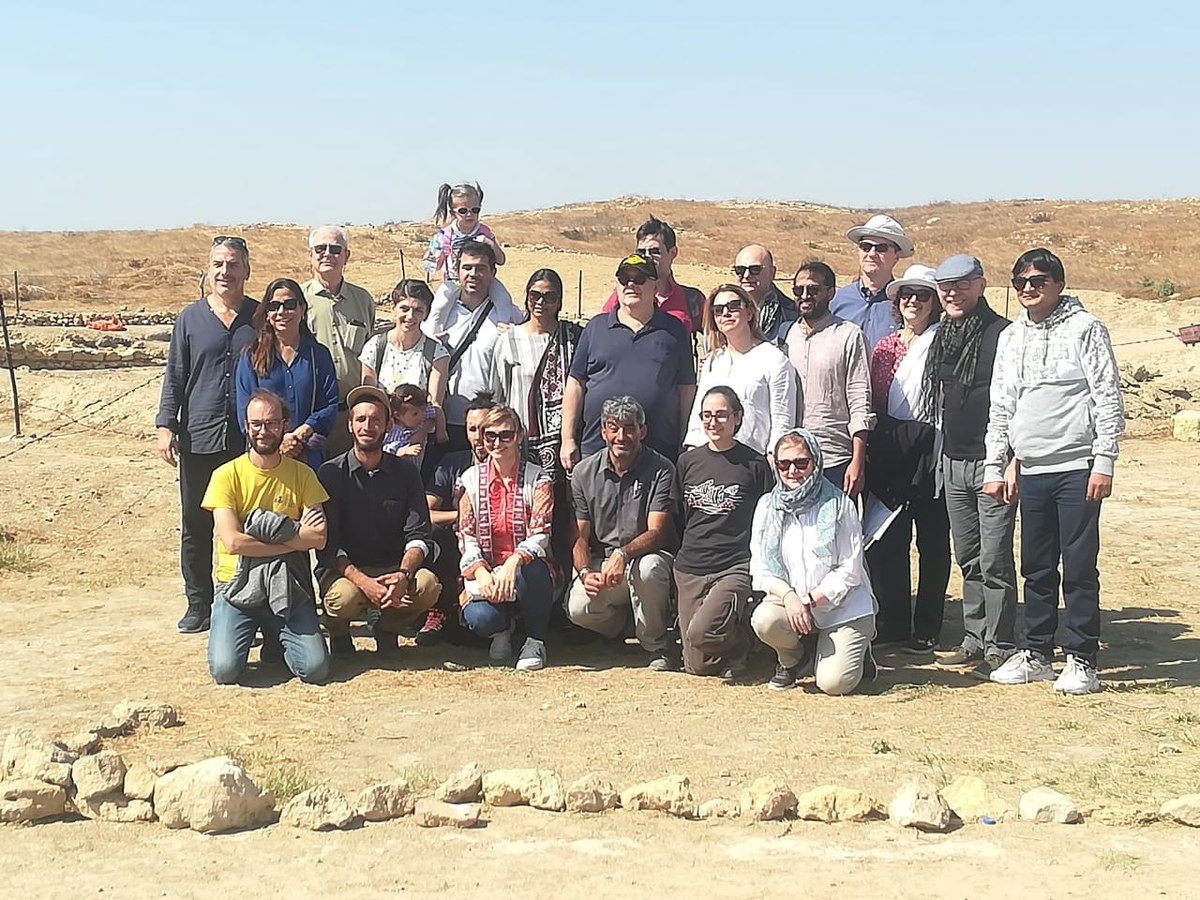
Italian and Pakistan archaeologists visit ancient Bhanbhore city on February 8, 2020 (Photo Courtesy: Consulate general of Italy Karachi)
“Technical experts of archaeology from Italy and Pakistan have come to the conclusion that Bhanbhore was a trade and industrial city where a big factory of elephant ivory existed,” Sindh’s Director Heritage Muhammad Shah Bukhari told Arab News on Thursday, adding that the findings were disclosed in a technical seminar in Karachi a day earlier.
Sharing the findings with the participants of the technical seminar on Wednesday, Italian archaeologist Dr. Simone Mantellini said that the antiquities recovered from Bhanbhore included 6,675 ivories, the largest such recovery anywhere in the world. “Nowhere else in the world have ivories been found in such a large quantity. Ivories were found in Iraq but those were small in number,” Mantellini said, adding that such a huge recovery proved there was a factory for the commodity in the city.
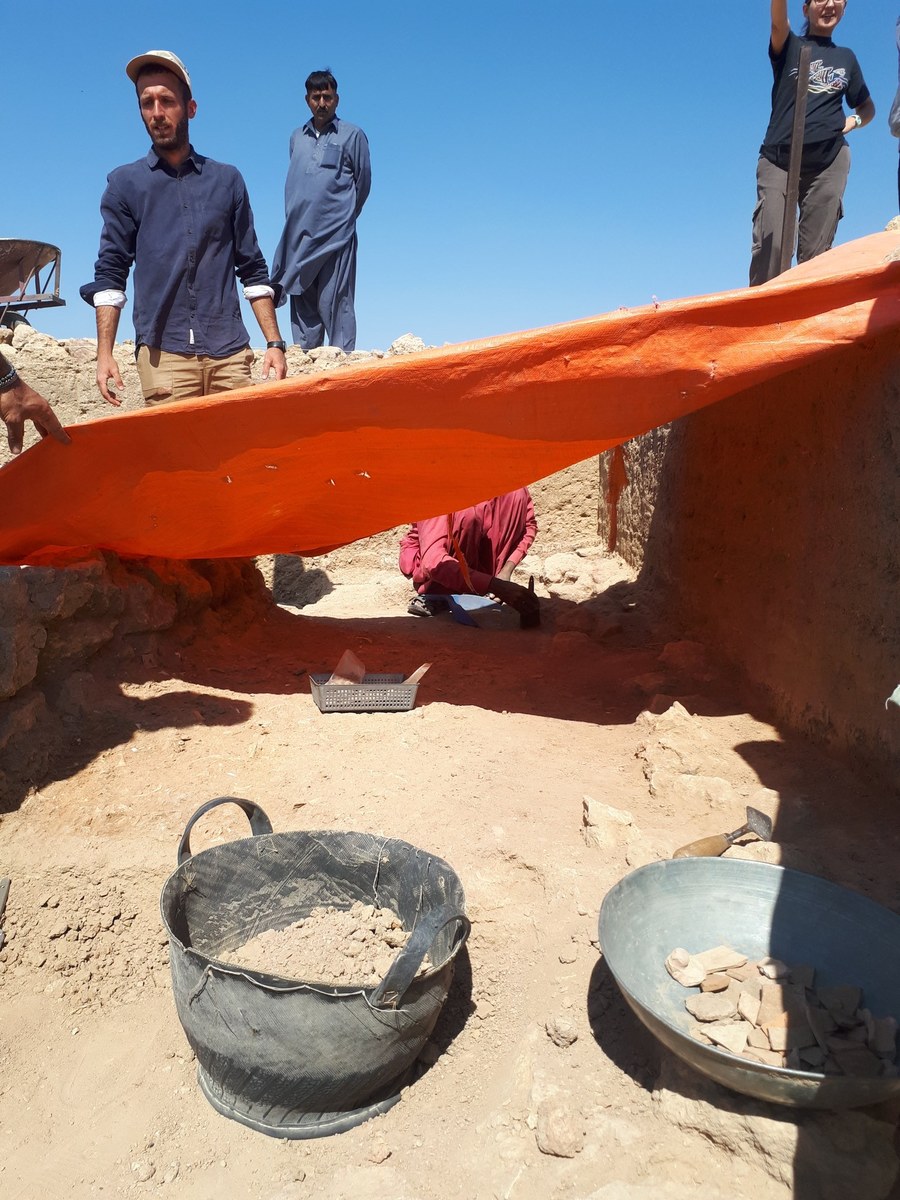
Italian and Pakistan archaeologists visit ancient Bhanbhore city on February 8, 2020 (Photo Courtesy: Consulate general of Italy Karachi)
The first excavation survey of Bhanbhore was carried out by Sindh’s Department of Archaeology and Museums in 1965. More recently, the government launched another round of exploration in 2012 in collaboration with Italian and French missions in Pakistan.
After each excavation, Bukhari added, a technical study was done by the Italian mission in collaboration with the Department of Culture, Tourism, Antiquities of the University of Khairpur, Sindh University, and Bahria University.
Bhanbhore and Arabs
Bhanbhore is said to have witnessed several political upheavals since its emergence in the first century BCE. Yet, the place was immortalized by an Arab general who changed the course of history by invading this town.
Long before the mighty Indus river meandered away from the settlement, forcing the residents of Bhanbhore to abandon their dwellings, Muhammad bin Qasim, an Umayyad warrior, defeated Sindh’s Brahmin ruler, Raja Dahar, in 711 CE and conquered large swathes of land. Today, Pakistan’s second busiest harbor, Port Qasim, is named after the Arab general.
“The south gate of Bhanbhore Fort from which Muhammad bin Qasim entered the citadel was later called the ‘gateway of Islam’ in South Asia,” Qazi Asif, a researcher, said.
Although a French archaeologist, Monique Kervran, says her findings of Bhanbhore confirm that Debal – ruled by Raja Dahar – and Bhanbhore are names of the same place, Dr. Asma Ibrahim, a Pakistani archaeologist, says her research unearthed an underwater city nearby that was most likely Debal.
“The excavation work is still to be carried at the [underwater] city some 12 kilometers from Bhanbhore in the sea where a panel of Kufic inscription – along with one big and one small mosque – has been found,” she told Arab News.
The outline of the underwater city, she added, could be observed between 6 am and 8 p.m. on the 20th and 21st of a lunar month.
Ibrahim, whose research is yet to be published, informed that the excavated material of glass from Bhanbhore confirmed that it was imported from the Middle East since there was no kiln in this region in olden days.
“It was one of the major industrial and trade centers of the world,” she said, adding: “While the archaeological sites in Bhanbhore await more excavation, there are strong imprints of Arab Muslims.”