LONDON: Since time immemorial, Arabs and their ancestors have laid claim to some of the world's most renowned inventions. From coffee, to soap and Algebra, the world can pay tribute to Arabs for their role in creating and exporting some of today’s most used inventions.
The same can be said about Arab food creations. With Burger King’s latest announcement of the possible introduction a French fries sandwich in New Zealand, Arabs across social media were quick to remind the world of the sandwich batata (French fries sandwich) and attempt to lay claim to the delicious creation.
In Beirut, nestled among Hamra’s brandless shops and street vendors, through the chaos of taxi horns and grilled corn vendors, stands Lebanon’s Malak Al-Batata (King of Fries) on Hamra Main Street. The sign, which has changed throughout the years from an artistic vintage look to a more modern logo with the rounded face of a king, can be identified from afar — a beacon for hungry travelers along the road.
The neon red menu charts all the sandwiches the “king” is ready to serve, especially the shop’s namesake best seller — the batata sandwich.
For a mere LL 3,000 ($2), a diner can get the large, toasted, fry-filled sandwich and even watch the chefs prepare it behind the glass counter in typical deli fashion.
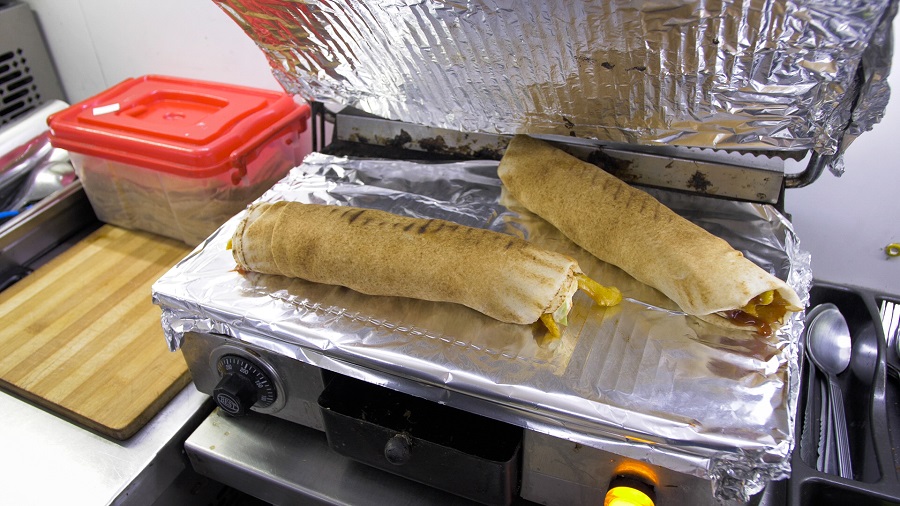
(Arab News)
Open up a pita, stuff it with crunchy coleslaw, sweet ketchup, crispy golden French fries, then give it a slight toast and the best example of the whole being greater than the sum of its parts is achieved.
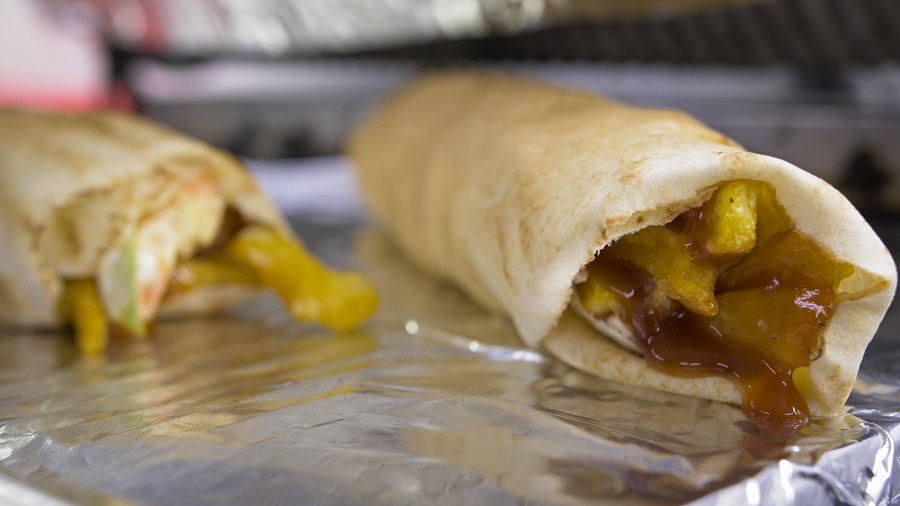
(Arab News)
When news spread of Burger King’s French fry sandwich, Arabs took to social media in their droves to defend the beloved batata sandwich.
“They’ve appropriated the batata sandwich,” tweeted Abed Ayoub, the legal and policy director at the American-Arab Anti-Discrimination Committee.
They’ve appropriated the batata sandwich. https://t.co/TsvNOt8tS9
— Abed A. Ayoub (@aayoub) February 18, 2020
“The only true kings of this sandwich (are) Malak Al-Taouk and Malak Al-Batata. Y’all are frauds,” tweeted Ibn Battouta Jr.
The only true kings of this sandwich is Malek El Taouk and Malek El Batata
Y'all are frauds https://t.co/RWiEBbrTIE
— Ibn Battouta Jr (@Ghassann555) February 18, 2020
“Feeling like a hipster (because) in Lebanon we (have) been eating sandwich batata since like 1914,” another user, Batenjeen, tweeted.
Feeling like a hipster cs in Lebanon we been eating sandwich batata since like 1914 https://t.co/oQBT7elR5L
— radioactive khabibi (@batenjeen) February 18, 2020
While Arabs may lay claim to this invention — and have been quick to call Burger King out for being late to the game — they aren’t the only ones with similar sandwiches.
The UK version is named the chip butty, while the South African fare is called the chip roll — both of which are made with chips (fries) on buttered white bread or a bread roll, often with an added condiment such as brown sauce, ketchup, mayonnaise or malt vinegar.
In 2018, Business Insider rolled out a video showcasing the Turkish version of the batata sandwich called the Patso, which is cheesy bread stuffed with French fries and topped with ketchup and mayonnaise.
The video prompted a similarly strong reaction form the Middle East, with many teasing the US’s “lateness to the game.”
“Bro I’ve been eating this for 21 years,” Mustiddies tweeted back in 2018, adding that, “Whenever my mom wouldn’t have the energy to cook, she’d shut us up with a fries sandwich.”
Bro sarle 21 sene bekela
Kel ma emme ma ykun ela jalad totbokh betsakketna be sandwich batata wyd https://t.co/MZbpLXGgaC— Mustiddies (@muztava_k) April 8, 2018