

UN, EU tell Qatar to rethink free-speech curbs

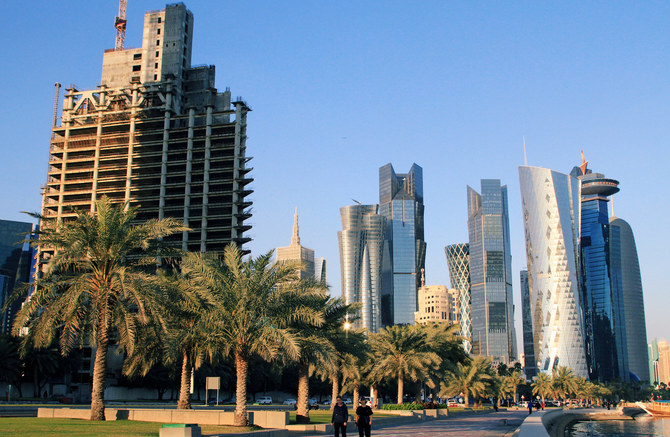
Qatar’s “lese majeste” laws on disrespect toward the country’s rulers violate citizens’ right to free speech. (REUTERS)
Short Url
Updated 18 February 2020
Follow

UN, EU tell Qatar to rethink free-speech curbs

  • EU raises issue of free speech with Doha, calling new laws "vaguely worded"
  • Latest criticism comes in wake of human rights concerns over 2022 World Cup hosting

The UN and the EU’s special representative on human rights have criticized Qatar for passing legislation curbing free speech.

Eamon Gilmore called the laws, which criminalize the spreading of “false” information, “vaguely worded.”

He said he had raised the issue with Qatar’s Foreign Ministry and the country’s National Human Rights Committee.

A 2014 law on cybercrime prevention originally allowed those convicted of offenses to be imprisoned for up to three years.

That upper timeframe was increased to five years for cases in which “ill intent” could be demonstrated.

The difficulty arises in the definition of “false news,” which is not specified in the law itself, leaving it open to liberal interpretation.

Gilmore said he is “concerned about some pieces of legislation which relate to freedom of expression and freedom of the press.”

He added: “Freedom of expression is a very important part of the way in which the EU sees human rights. We attach a very high priority to it. We urge that those laws be amended, changed or withdrawn.”

Qatar’s cybercrime laws were raised by the UN during the country’s most recent Universal Periodic Review.

It said Qatar’s “lese majeste” laws on disrespect toward the country’s rulers violate citizens’ right to free speech.

This comes in the wake of criticism from international organizations in the build up to Qatar’s hosting of the 2022 FIFA World Cup.

Human Rights Watch on Sunday said Qatar’s censorship of unpaid workers fell short of international standards, in the aftermath of a report that said many foreign laborers working on construction sites had gone unpaid for a five-month period, and had been threatened with arrest, deportation and non-payment of outstanding wages if they went on strike.


Strikes kill nine Iran-backed fighters near Iraq-Syria border: security officials

Updated 12 sec ago
Follow

Strikes kill nine Iran-backed fighters near Iraq-Syria border: security officials

  • Iraqi authorities denounced the “blatant attacks” on bases that belong to the Hashed Al-Shaabi
  • Nine fighters were killed and another 10 wounded in the strikes

BAGHDAD: Air strikes killed at least nine Iran-backed fighters in Iraq on Thursday near the Iraqi-Syrian border, two senior security officials told AFP.
Iraqi authorities denounced the “blatant attacks” on bases that belong to the Hashed Al-Shaabi, a former paramilitary group now integrated into the regular army, which also encompasses brigades from Iran-backed armed groups.
Nine fighters were killed and another 10 wounded in the strikes that targeted a base housing the US-blacklisted Harakat Ansar Allah Al-Awfiya, two security officials said.
“The base was destroyed, and the rescue teams who arrived at the site were also targeted,” one of the officials said on condition of anonymity.
The base belongs to the Hashed Al-Shaabi or the Popular Mobilization Forces (PMF) whose positions have been repeatedly targeted in attacks blamed on the United States and Israel since the start of the war.
The PMF said nine of its members were killed in Thursday’s attack.
It accused the US of striking its sites, and said that these bases “had no role in targeting US bases in Iraq or elsewhere.”
The PMF added that “all fighters killed were carrying out their official duties, and some were stationed near the borders.”
And it called the Hashed Al-Shaabi an “essential part of Iraq’s security apparatus.”
Iraq has long been a proxy battleground between the United States and Iran, with the country’s successive governments struggling to balance relations between the two rivals.
It was immediately dragged into the Middle East war triggered when the United States and Israel attacked Iran on February 28.
The Islamic Resistance in Iraq, a loose alliance of several Iran-backed groups, have been claiming daily attacks against US bases in Iraq.
Iraq’s Prime Minister Mohammed Shia Al-Sudani denounced what he called “blatant attacks” on the PMF, whose members were “performing their sacred duty within the missions of our security forces.”
“This systematic and repeated aggression, and the targeting of sites and headquarters without distinction, is not merely a military violation. It represents a desperate attempt to create confusion” and weaken Iraq’s security.