

151 Saudi students compete in prestigious scientific olympiad

1 / 4
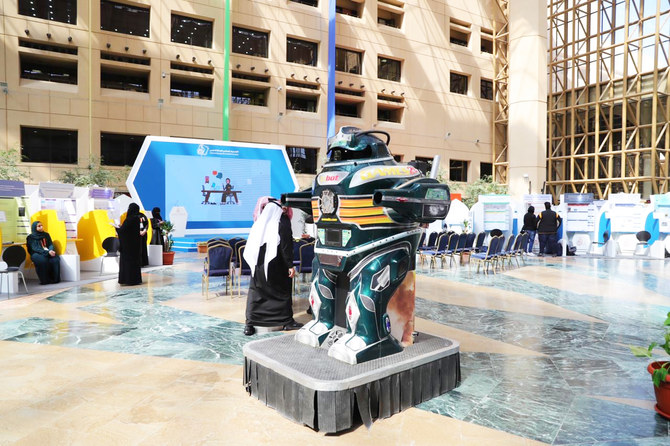
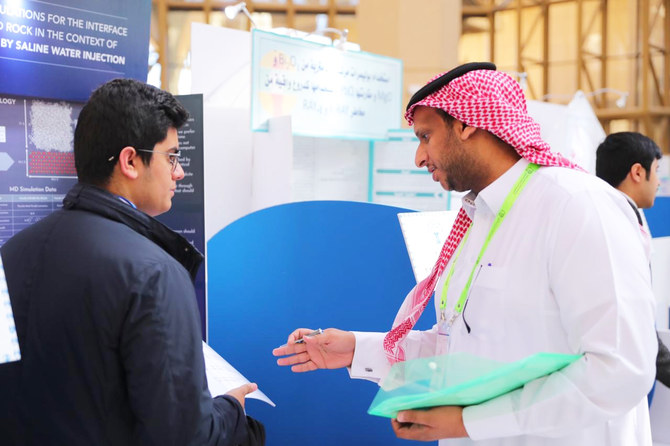
The Saudi students chosen to compete at the ISEF 2020 gathering in California will be up against 2,000 students representing 90 countries. (SPA)
2 / 4
The Saudi students chosen to compete at the ISEF 2020 gathering in California will be up against 2,000 students representing 90 countries. (SPA)
3 / 4
The Saudi students chosen to compete at the ISEF 2020 gathering in California will be up against 2,000 students representing 90 countries. (SPA)
4 / 4
The Saudi students chosen to compete at the ISEF 2020 gathering in California will be up against 2,000 students representing 90 countries. (SPA)
Short Url
Updated 13 February 2020
Follow

151 Saudi students compete in prestigious scientific olympiad

  • 27 winning contestants will be revealed on Saturday
  • Winners will compete in the ISEF 2020 in California in May

RIYADH: A prestigious national Olympiad aimed at identifying the next generation of Saudi scientists, engineers and entrepreneurs on Wednesday kicked off in Riyadh.

A total of 151 male and female students will compete in the National Olympiad for Scientific Creativity (Ibdaa 2020), organized by the King Abdul Aziz and his Companions Foundation for Giftedness and Creativity (Mawhiba) in collaboration with the Saudi Ministry of Education.

The winning 27 contestants will be revealed at a closing ceremony to be held on Saturday under the patronage of Riyadh Gov. Prince Faisal bin Bandar.

Students participating in the competition have already completed their projects at King Saud University in line with the scientific ethical regulations adopted by a jury of eight members, and judging will take place on Thursday and Friday.

The Olympiad entrants will be presenting their research in 21 different scientific fields and a committee of 31 academic experts will pick the winning projects to go through to represent the Kingdom at the International Science and Engineering Fair (ISEF 2020) being staged in the US in May.

Those chosen to compete at the ISEF gathering in California will be up against 2,000 students representing 90 countries.

Through the Ibdaa competition, the Mawhiba and Ministry of Education partnership aims to identify and develop young Saudi talent. 

More than 75,000 students from throughout the Kingdom applied to take part in the contest which involves thousands of educational supervisors, ministry officials, and scientific experts in supporting students with their research projects.


Saudi Arabia looks to become carbon trading hub for Global South

Updated 6 sec ago
Follow

Saudi Arabia looks to become carbon trading hub for Global South

  • Kingdom eyes partnerships with Asian companies

TOKYO: Saudi Arabia is looking to become a carbon trading hub for the Global South and is eyeing partnerships with Asian companies to trade on its exchange, Japan’s Nikkei newspaper has reported.

Saudi Arabia’s Voluntary Carbon Market recently signed a memorandum of understanding with Japanese trading house Marubeni “for collaboration on carbon markets,” and has also linked up with Climate Bridge International, a Singapore-headquartered carbon finance company, as an advisory partner.

Fadi Saadeh, acting CEO of Saudi Arabia’s Voluntary Carbon Market company, said it was important for Saudi Arabia to have a market to trade carbon credits that arise from the phasing out of coal.

A carbon credit represents a tonne of CO2 or CO2-equivalent greenhouse gases reduced or removed by verified projects like reforestation or carbon removal schemes. In the voluntary carbon market, companies can buy the credits to offset their emissions to meet their net-zero goals, while the sellers of the credits can use the funds received to invest in more green projects.

VCM was set up in 2022 by Saudi Arabia’s Public Investment Fund and the Saudi Tadawul Group, the country's exchange operator.

Saadeh said VCM was geographically well located to capture demand from the Global South and could leverage existing relationships and investments that companies like Saudi Aramco have forged over the years.

“In Saudi Arabia three years ago there were zero project developers for carbon credits,” Saadeh said. “Today, because of VCM and the ecosystem around the world, we have more than 25 project developers in Saudi Arabia.” He added that the energy transition would take time.