

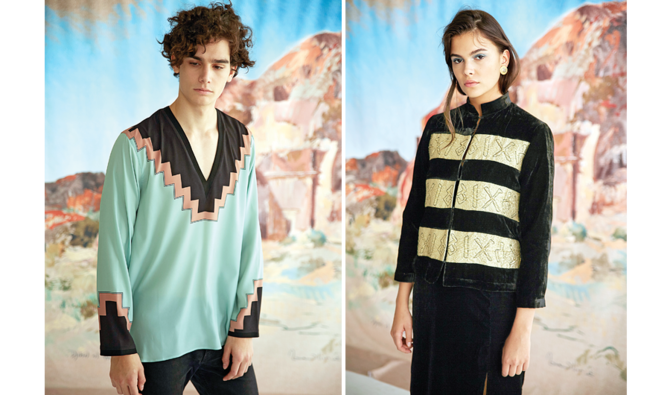

JEDDAH: Saudi-based label Hindamme by Mohammed Khoja is continuing its East meets West ethos with the launch of its new “AlUla” collection.
The collection is a contemporary interpretation of the ancient desert Kingdom belonging to the Nabataean civilization.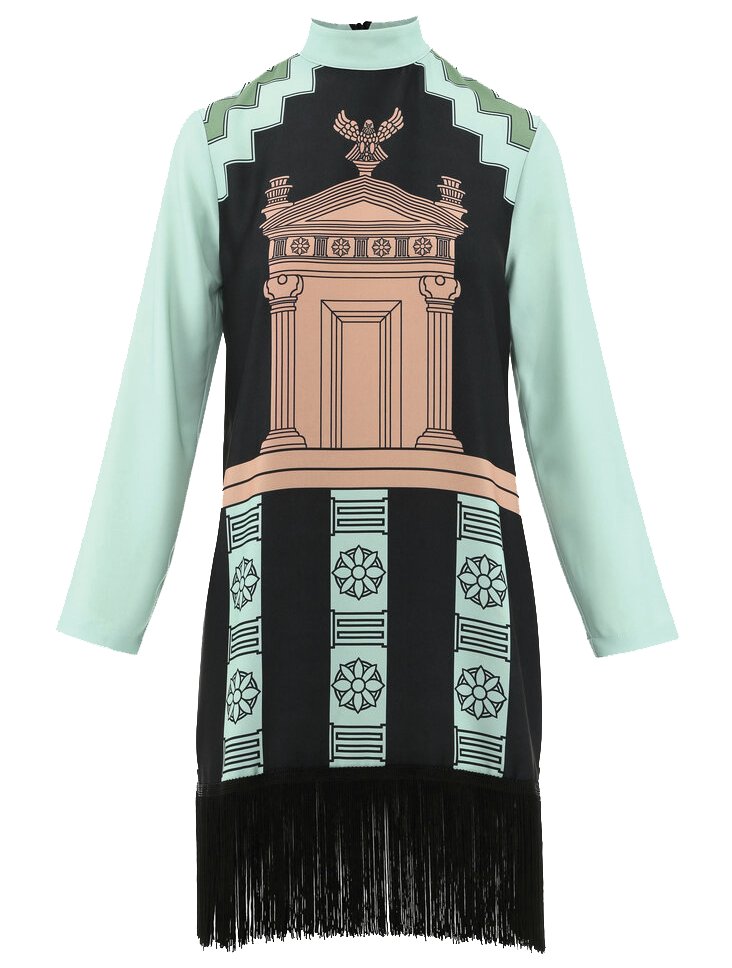
It features 23 pieces — making it Hindamme’s biggest collection yet — from silk velvets and golden pleats to Greco-Roman-style embroideries that are contemporary yet timeless.
“I think that it’s formal, yet it’s also very wearable at the same time. It’s a fusion of high-end formalwear meets streetwear,” Khoja told Arab News.
He said he was inspired by the natural colors from AlUla’s environment.
“The materials I’ve used also reflect that same theme because I’ve taken an artisanal approach. The color schemes are inspired by the natural colors of AlUla; there are a lot of blues, greens and obviously a lot of sand and terracotta texture colors that reflect the red rocks.
“I take a lot of the architectural inspiration as well. I deconstruct a lot of the stairs and I reapply them in a way that creates an interesting print.”
Khoja explained that this collection is special to him both as a Saudi and a designer.
“As Saudis, we are in a phase where we are rediscovering and appreciating our history. I feel like it’s a really important thing to reflect on to define our aesthetic in fashion and other forms of creativity.”
He added: “I tend to absorb everything around me, especially the environment, culture and history.”
HIGHLIGHTS
• It features 23 pieces from silk velvets and golden pleats to Greco-Roman-style embroideries.
• Hindamme partnered with the Winter at Tantora festival and has been working on the collection since early 2019.
• The collection will be exhibited at the festival, which is running until March 7.
Khoja used many special textiles specific to the Nabataean civilization within the ready-to-wear collection.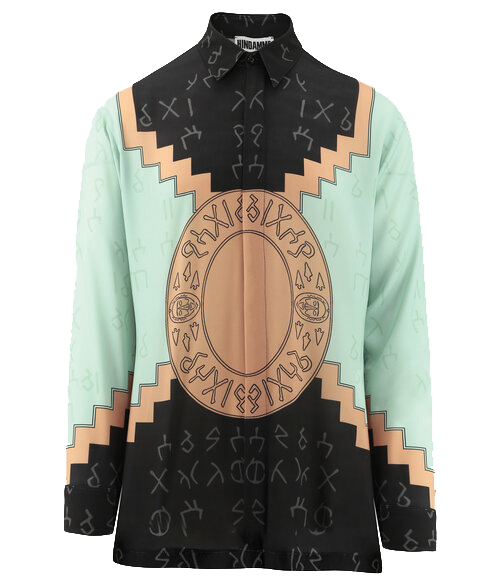
“I used a lot of handwoven tapestry that illustrates the Nabataean language. I focused a lot on the Nabataean civilization more than the Lihyanite because they were the original builders of Mada’in Saleh.
“I felt like it was an important piece of history to tribute and I wanted to create something that means more than just clothes,” he said.
The Saudi designer wanted to give a history lesson through the collection.
“I like to think it’s a ‘fashion meets history’ sort of collection. I am fascinated by the Nabataeans and I think that they were a really excellent example of East meets West, because they were part of a larger Roman Empire, they influenced the Romans and vice versa. Even geographically they were located in a very important area for trade so there were a lot of important civilizations that have passed by this territory which we are proud of.”
Hindamme partnered with the Winter at Tantora festival and has been working on the collection since early 2019.
“I started designing and illustrating some of my concepts and then, when I started to finalize the design, I decided to approach Winter at Tantora and see if they would like to collaborate on the collection. 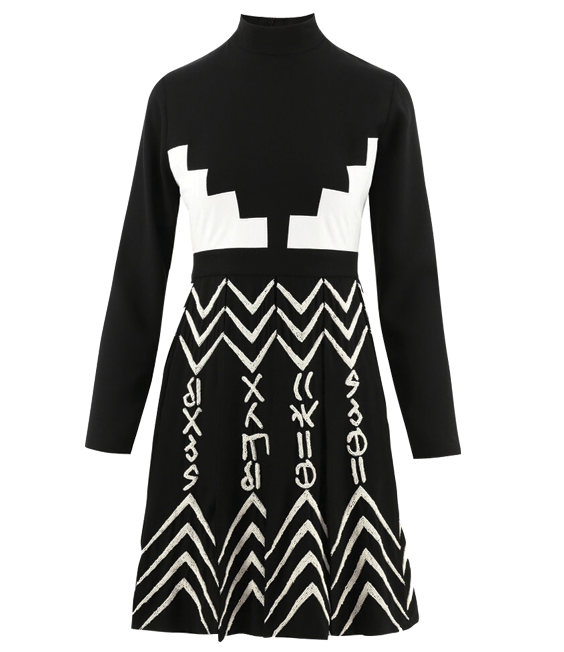
“They’ve been extremely supportive. They were able to link me up with historians and professors who have dedicated their lives to studying the civilizations that have passed by AlUla.”
It was important for Khoja to accurately convey the image of AlUla in his collection.
“I was able to make sure that if I was referencing or being inspired by that civilization and its aesthetic, that I was paying tribute to it. It was crucial to have a sense of cultural accuracy.”
The collection will be exhibited at the festival, which is running until March 7.


