

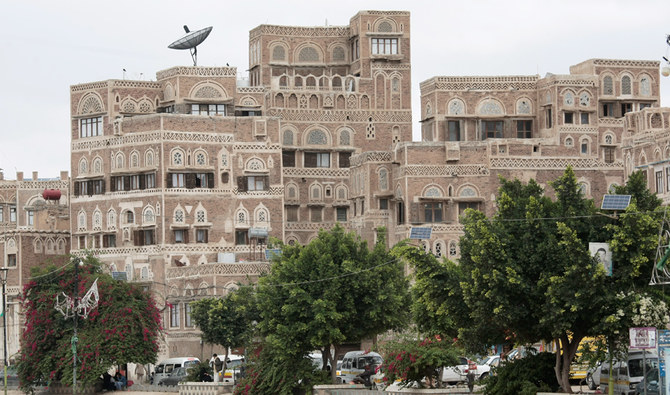

AL-MUKALLA: The internationally recognized Yemeni government on Saturday repeated its call for international aid organizations to move their offices from Houthi-held Sanaa to the southern port city of Aden.
Salem Al-Khanbashi, Yemen’s deputy prime minister, said Aden was much safer and that the government would facilitate the work of UN bodies if they agreed to relocate.
“We think that this time is ripe for them to move their offices to Aden,” Al-Khanbashi told Arab News, adding that the government had received positive signals from agencies.
The government’s appeal came as UN bodies move to cut back major aid operations in northern Yemen due to Houthi harassment of aid workers, a step that could exacerbate the humanitarian crisis in the war-torn country.
The Iran-backed Houthis have accused UN aid workers of espionage and distributing rotten food. The UN says aid is failing to reach desperately needy people in Houthi-held areas.
Al-Khanbashi said public facilities, such as Aden’s seaport and airport, could cope with the influx of aid as security services would provide protection. “We have long demanded them to move their offices from Sanaa to Aden. We hope that they positively respond to our appeal this time.”
Aden, which is the second largest city in Yemen and is the government’s base, has experienced peace and stability since late last year when a power-sharing deal eased tensions between the government and the separatist Southern Transitional Council.
A Saudi-led military committee has begun disarming military units in Aden and moved heavy weapons to the battlefields.
FASTFACT
Aden, which is the second largest city in Yemen and is the government’s base, has experienced peace and stability since late last year.
Fighting has intensified on the battlefields in the last couple of days as government forces push to seize control of mountains in Sanaa, Jawf and Taiz.
The fiercest fighting was reported in the northern province of Jawf, where government forces attacked Houthi locations with support from Saudi-led coalition warplanes.
State media outlets said that Houthi artillery fire on Thursday destroyed emergency rooms and ambulances of a hospital in Jawf’s Jaref region as government forces stormed a mountain in Al-Mazamat region in the same province. Airstrikes by Saudi-led warplanes killed six Houthi militants on Al-Mazamat and destroyed Houthi ammunition and equipment. State TV quoted the governor of Jawf, Ameen Al-Oukaimi, as saying that government forces had taken the offensive on the battlefields and were making gains.
“The national army soldiers are more determined than before to purge Houthis from Jawf. Their morale is very high,” the governor said.
Fighting also broke out on Friday and Saturday in the southern province of Dhale, where government forces killed more than 20 Houthis and injured many others. In the western province of Hodeida, Houthis attacked government forces in Duraihimi district in an attempt to retrieve bodies of fighters who were killed in previous attacks.
Fighting in Yemen has escalated since the beginning of this year, despite diplomatic efforts aimed at reaching a peace deal.


