TIRANA: Albania will not “stay at Europe’s door and cry” for it to open, Prime Minister Edi Rama told AFP, stressing that the Balkan state must focus on its own future while Brussels sorts out thorny questions over its admissions process.
The country of 2.8 million hoped to get the greenlight to start EU entry talks in October, but France, Denmark and the Netherlands vetoed the move.
Neighbouring North Macedonia’s bid was also put on hold due to resistance chiefly from Paris.
The French-led “non” outraged many in the Balkans and in the EU, where most member states had wanted to reward the two countries for pushing through significant reforms.
Brussels is now redoubling efforts to get all member states on board to approve the start of Albania and North Macedonia’s talks at a summit in May.
Prime Minister Rama, however, is not holding his breath.
“I do not expect anything,” Rama, a painter and former basketball player, told AFP in an interview conducted in French.
“We should do the things that should be done” regardless of decisions in Brussels, he said, adding that the country cannot “continue to live with this anxiety of waiting for something that is out of our hands.”
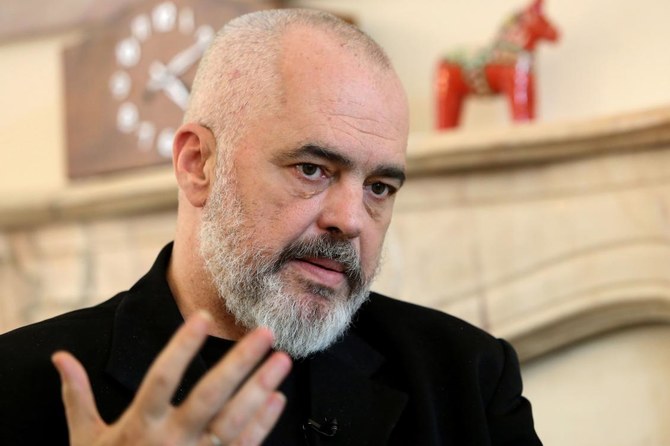
“We will not stay at Europe’s door and cry,” said the 55-year-old, who was wearing a long black coat and sneakers.
“We are not on this path because the French or the Germans are asking us, but because it is the only reasonable path for the future of our children and for the future of this country,” he said.
Rama added that the EU’s own reforms are far from Tirana’s control, though “it is important for us too that Europe changes.”
Europe “is suffering, it doesn’t work as it should, that’s clear.”
In order to placate French demands to rework the EU’s entry requirements before opening the gate to new members, the European Commission proposed a tougher and more political admissions process this week.
For Tirana, the main areas under scrutiny are its efforts to root out corruption and organized crime, as well as to strengthen rule of law.
The country has carried out intensive justice reforms since 2016, with hundreds of judges and prosecutors vetted for any links to crime or other unethical conduct.
While Brussels has applauded this process, a progress report in 2019 still noted that “corruption is prevalent in many areas” in the Balkan state. The next report is due at the end of the month.
“Albania did more than any other country for the opening of negotiations,” insisted Rama, who has been in power since 2013.
But the country will “continue to do its homework (because) we are not doing it for them, we are doing it for ourselves,” he added.
On that front, the government recently adopted a decree to bolster the fight against organized crime.
It has also asked parliament to crack down on corruption and crime in the construction sector — an issue that came to light after a deadly earthquake in November damaged more than 80,000 buildings, killing 51 people.
Authorities say they will put an end to decades of unchecked urbanization, especially in coastal tourist areas where many developers have built without proper permits or respect for safety codes.
The cost of the earthquake reconstruction effort is estimated at a billion euros (dollars), with which Albania is set to receive help at a donor conference later this month in Brussels.
“We greatly appreciate the will to organize this conference and we hope it will be successful,” Rama said.
Asked if the earthquake was a wake-up call for Albania generally, Rama said he was a “realist.”
“This is a huge opportunity for the country to demonstrate it is doing things differently,” he said.
“But to say that Albanians will become Swedes, I don’t think it will happen.”


![]()

Albania will not ‘cry at Europe’s door’, PM says
Short Url
https://arab.news/b6v76
Albania will not ‘cry at Europe’s door’, PM says
- The country of 2.8 million hoped to get the greenlight to start EU entry talks in October, but France, Denmark and the Netherlands vetoed the move
- Neighbouring North Macedonia’s bid was also put on hold due to resistance chiefly from Paris


Latest updates


© 2026 SAUDI RESEARCH & PUBLISHING COMPANY, All Rights Reserved And subject to Terms of Use Agreement.