ISLAMABAD: Pakistan’s foreign office on Thursday applauded the Organization of Islamic Cooperation (OIC) for projecting the Kashmir cause, adding that the intergovernmental body had adopted several resolutions to highlight the dispute over the years.
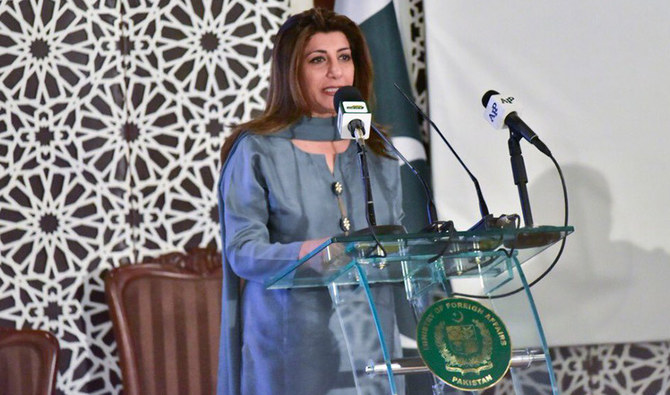
“Historically, the OIC has been one of the strongest components of the Kashmir cause and several OIC resolutions have been passed on different aspects of the Jammu and Kashmir dispute,” Foreign Office spokeswoman Aisha Farooqui said in her weekly media briefing in Islamabad.
She said the OIC contact group on Kashmir had played a dynamic role in bringing the issue to the forefront, creating awareness among members of the international community and raising the matter at various global forums.
“Since August 2019, the OIC contact group has played an important and active role in its ministerial meeting that was held in September last year on the sideline of the United Nations General Assembly in New York. An independent report was also issued by the OIC to condemn the human rights violations in Kashmir,” Farooqui said, adding that Pakistan’s position on OIC’s role in the Muslim ummah was very clear and consistent.
“Pakistan will remain engaged with the OIC at the leadership level on the Jammu and Kashmir issue, and several ideas have been discussed at that level with the organization on a regular basis,” she added.
Pakistan’s former foreign secretary Aizaz Ahmed Chaudhary hailed the OIC’s efforts to raise awareness about the Kashmir issue, but said that more pressure should be exerted on India to end the ongoing lockdown of the part of Kashmir under its administration.
“OIC has always raised the Kashmir issue and spoke for the rights of Kashmiri people. We should acknowledge the role played by OIC during the past decades,” Chaudhary told Arab News over the phone, adding that OIC should do more as this is not only a Pakistani cause, but one of the whole Muslim Ummah.
“There is need to exert more pressure on India. All OIC member states should take this issue at bilateral and multilateral forums to end human rights violations and the blockade of Kashmiri people by Indian government,” he said.
Sheikh Abdul Mateen, information secretary of All Parties Hurriyat Conference (APHC), said the OIC should hold special sessions of its foreign ministers exclusively on Kashmir as soon as possible.
“OIC should call special session only on the Kashmir issue as early as possible to raise a forceful and collective voice for the Kashmiri brothers and sisters who are immensely suffering under the blockade and (due to) other human rights violations, especially after Aug. 5,” Mateen told Arab News.
He said the European Union (EU) had taken up this issue exclusively and the OIC should do the same.
“More than 560 EU members talked about human rights violations in occupied Kashmir. Kashmir is a collective issue of the whole Muslim Ummah, so we hope that OIC special session will be called very soon to raise a forceful and strong voice against Indian atrocities in Kashmir,” he said.


![]()

Pakistan foreign office calls OIC 'strongest proponent of Kashmir cause'
Short Url
https://arab.news/zauan
Pakistan foreign office calls OIC 'strongest proponent of Kashmir cause'
- Says the OIC contact group on Kashmir has played a dynamic role in highlighting the issue
- Activists urge OIC to follow EU and hold special sessions exclusively on Kashmir
Latest updates


© 2026 SAUDI RESEARCH & PUBLISHING COMPANY, All Rights Reserved And subject to Terms of Use Agreement.