
KSA plans to be world’s most progressive golf destination

Saudi Arabia hopes to become the leading nation for golf. (File/Shutterstock)
Short Url
Updated 05 February 2020
Follow

KSA plans to be world’s most progressive golf destination

  • The Kingdom plans to become the most innovative market in the sport within the next 10 years
  • The Kingdom is aiming to have up to 27,000 registered golfers

JEDDAH: With the conclusion of the European Tour event and the inauguration of the Saudi Golf Summit at King Abdullah Economic City (KAEC) on Tuesday, Saudi Arabia is taking one of the most significant development moves in golf’s recent history.

The Kingdom plans to become the most innovative market in the sport within the next 10 years, said Majed Al-Sorour, CEO of the Saudi Golf Federation and Golf Saudi.

“Golf isn’t just a game,” Al-Sorour told Arab News, “it is related to various sectors and it creates well-paid jobs that attract Saudis.” 

He added that golf requires commitment, dedication, self-governance, etiquette and discipline and that due to these values, he wants golf “to become part of the fabric of modern Saudi Arabia.”

The Kingdom is aiming to have up to 27,000 registered golfers and to ensure that over one million Saudi nationals have actively tried golf.

Golf Saudi wants to inspire and provide opportunities to every player regardless of ability, status or gender. 

To help develop national talents, the organization is working on establishing golfing camps for children with a minimum of one camp per week at each golf course, with each camp consisting of roughly 30 children. 

In order to achieve its plan, Golf Saudi is working in collaboration with the public and private sector, “Partnership government ministries is fundamental for progress, we are working with the ministries of transportation, education, environment and communication,” Al-Sorour said.
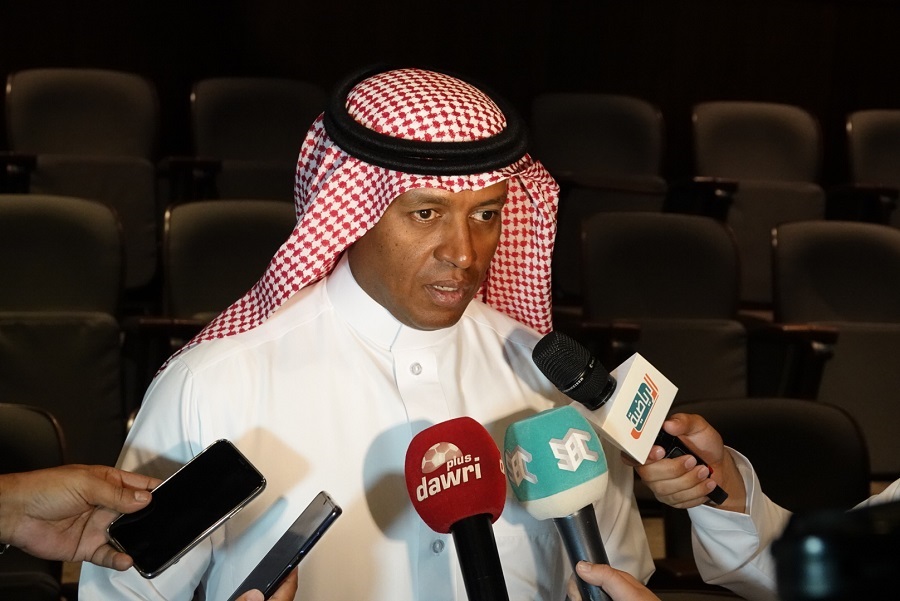


Majed Al-Sorour, CEO of the Saudi Golf Federation and Golf Saudi said the Kingdom plans to become the most innovative market in the sport within the next 10 years. (AN Photo/Huda Bashata)

He continued: “We are working with giga projects and independent developers, so the nation’s golf portfolio will be stronger than ever.”

Golf Saudi has developed a tourism framework to align this strategy with tourism stakeholders in the country. Golf course development plans are reaching their latter stages at the Diplomatic Quarter in Riyadh and the Red Sea Project.

Moreover, other giga and mega projects in the Kingdom will also include golf facilities at Diriyah Gate and Neom.

Al-Sorour said that the national golf team is gradually improving, and he anticipated that it will be able to compete on a global level within five years: “Golfers need time for training to develop properly.”

Golf Saudi is collaborating with the Ministry of Education to include golf in the basic and higher education system.

“We cannot spread the game’s culture without cooperating with the education ministry,” said Al-Sorour.

“We are having constant meetings and trying to create a partnership to integrate golf in the school curriculum.

The European Tour event took concluded this year at KAEC’s award-winning Royal Greens Golf and Country Club. It has won a number of international awards recognizing the golf, clubhouse and luxurious facilities.

Anas Najmi, head of the quality of life sector in KAEC, told Arab News that the top factor of spreading any game is having the infrastructure and the right facilities.

“Everyone knows about golf as a widely spread game on a global level, we have tried over the past period to ensure that we have enough world-class infrastructure with the highest standards so we can host activities, tournaments and championships,” Najmi said.

KAEC, with its award-winning facilities and first-of-its-kind golf academy in the region, has been attracting more locals interested in playing golf.

“We see a trend of lots of students wanting to know more about golf and willing to learn and practice, it is a game for many ages,” Najmi told Arab News, adding: “We have a huge interest in helping visitors and golf enthusiasts.”

Naomi continued: “We are strategically positioned in the heart of a population of 10 million, the recently inaugurated train station connects the city to Jeddah, Madinah and Makkah within an hour.

“We get lots of delegations from universities and schools, both public and international.”


National program identifies 165 native plants for afforestation efforts in Asir

Updated 58 min 49 sec ago
Follow

National program identifies 165 native plants for afforestation efforts in Asir

  • The survey is part of broader plans focused on restoring degraded land, using native vegetation 

JEDDAH: Saudi Arabia’s National Afforestation Program has identified more than 165 species of native plants suitable for afforestation in the Asir region, highlighting the ecological diversity of one of the Kingdom’s most environmentally varied areas, the Saudi Press Agency reported.

The findings form part of broader national efforts to expand vegetation cover, address land degradation, and support sustainability goals linked to the Saudi Green Initiative and Vision 2030.

According to the program, the identified species are distributed across a wide range of natural environments in Asir, including mountainous terrain, highlands, slopes, valleys, plains, rocky landscapes, and coastal areas stretching from the Red Sea to Tihama.

The species belong to numerous plant families, including Fabaceae, Anacardiaceae, Burseraceae, Capparaceae, Ebenaceae, Euphorbiaceae, Malvaceae, Myrtaceae, Oleaceae, and Primulaceae, among others.

Plants suitable for afforestation range from large and small trees to perennial and annual shrubs, herbs, succulents, bulbs, and climbing plants. 

Among the most notable species identified are the grey mangrove, mastic tree, mooring or ben tree, juniper, sycamore fig, wild olive, henna, wild jasmine, hawthorn, and arak.

The Saudi Arabian Botanical Society described the announcement as an important step in protecting plant diversity and strengthening the ecosystem conservation in the Kingdom. 

Munirah bin Hamad Al-Hazani, founder and president of the society, said that prioritizing native species is central to sustainable afforestation.

“Focusing on the cultivation of native plants adapted to diverse environments forms the cornerstone of sustainable afforestation projects, as it plays a pivotal role in enhancing vegetation cover, combating land degradation, and conserving natural and financial resources,” she told Arab News.

Al-Hazani added that long-term success depends on cooperation between government bodies and the nonprofit sector, alongside community involvement and environmental awareness programs.

The National Afforestation Program has increasingly emphasized community participation, working with government agencies, private companies, and nonprofit organizations to support planting initiatives and environmental education. Its approach includes promoting volunteerism and discouraging harmful environmental practices, while focusing on the use of native plants adapted to local conditions.

Parallel efforts are underway in other regions of the Kingdom to support vegetation restoration through research and infrastructure development. In Jouf, often referred to as the Kingdom’s food basket, the King Salman bin Abdulaziz Royal Reserve Development Authority has established a Central Nursery and a Wild Seeds Research and Production Station to address the growing demand for reliable sources of native seeds and seedlings.

The project was launched in 2023 under the directive of Prince Abdulaziz bin Saud bin Naif, the minister of interior and chairman of the authority’s board of directors. 

Since then, the facilities has become a key component of vegetation restoration efforts within the reserve.

The authority has focused on building operational capacity by recruiting and training specialists to manage cultivation and research activities. The research and production station includes 14 mother-seed production fields containing over 400,000 trees and shrubs. 

Planting began in late 2024, with more than 30 native plant species represented, selected for their role in the reserve’s natural ecosystem. 

The facility also includes two seed storage units with a combined capacity of 3,000 kilograms. Seeds are collected annually from multiple sites within the reserve and used for seedling production habitat rehabilitation.

The Central Nursery spans 6,000 square meters and includes 30 greenhouses spanning 1,500 square meters, as well as two shade houses used during summer months. A plant hardening facility, designed to prepare seedlings for natural environmental conditions, covers 10,000 square meters and is divided into seven sections. The nursery’s annual production capacity reaches 1.5 million seedlings, representing more than 15 native plant species. 

Together, these initiatives underscore the growing role of native plant research and propagation in Saudi Arabia’s afforestation strategy, particularly as the Kingdom works to balance environmental restoration with long-term sustainability goals.